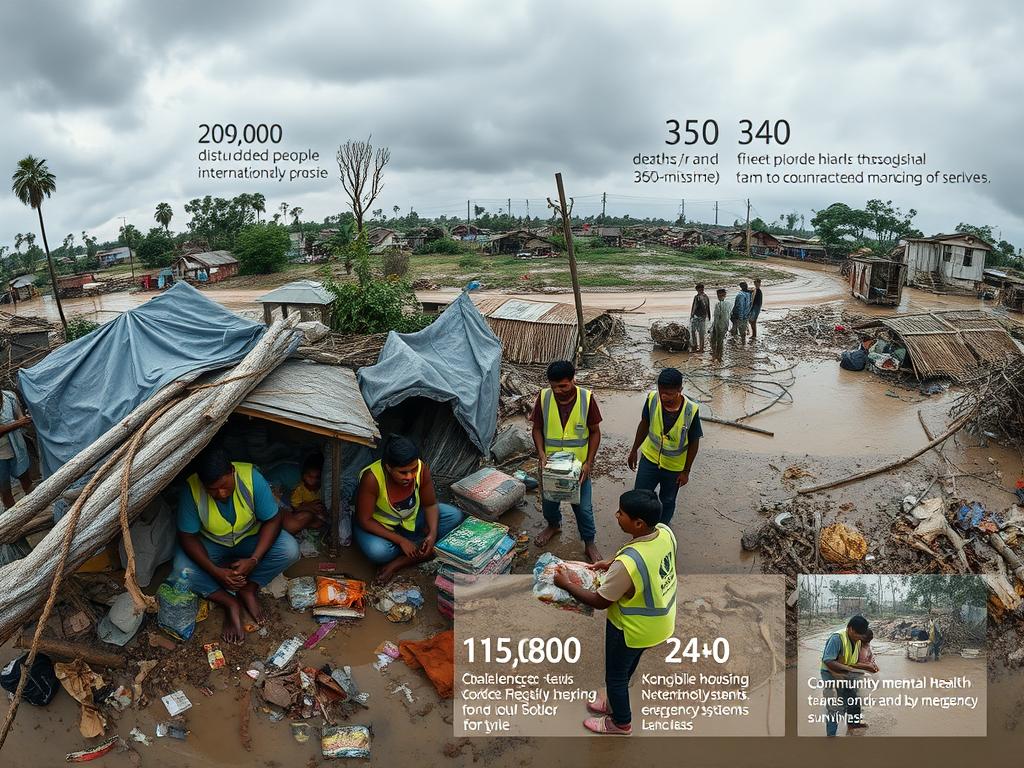
Sri Lanka is reeling from the catastrophic impacts of Cyclone Ditwah, which has left a trail of destruction and despair. With an astounding 209,000 individuals displaced and the loss of over 350 lives, the island nation is facing one of its gravest humanitarian challenges in recent history. The cyclone has not only uprooted communities but has also triggered an international response to aid Sri Lanka in this dire time of need.
The International Organisation for Migration (IOM) has swiftly mobilized to assist Sri Lanka’s call for global support. As rescue efforts continue, the IOM is deploying resources to provide critical aid, including shelter, food, and medical assistance to the displaced populations. The organization’s proactive approach underscores the importance of international solidarity and highlights how collaborative efforts can alleviate the aftermath of such natural disasters.
Statistics surrounding Cyclone Ditwah’s impact are staggering—over 360 people remain unaccounted for, raising grave concerns about the cyclone’s long-term implications on the country’s social and economic fabric. While physical reconstruction is crucial, addressing the psychological trauma faced by survivors will need a multifaceted approach, encompassing mental health support and community rebuilding initiatives.
An analysis of Sri Lanka’s response to Cyclone Ditwah reveals both strengths and areas needing improvement. The nation’s early warning systems have undoubtedly helped save lives, but the scale of displacement has exposed vulnerabilities in housing infrastructure and emergency preparedness. As climate change continues to exacerbate the frequency and intensity of such disasters, building resilient and sustainable development plans must be prioritized to safeguard communities against future calamities.
As the world watches Sri Lanka’s recovery efforts, this tragedy serves as a stark reminder of our shared environmental challenges. In times of crisis, the global community must rally not only to provide immediate relief but to forge pathways towards resilience and preparedness. Cyclone Ditwah’s legacy should prompt a renewed commitment to international cooperation, ensuring that nations can withstand and recover swiftly from the inevitable adversities posed by nature.