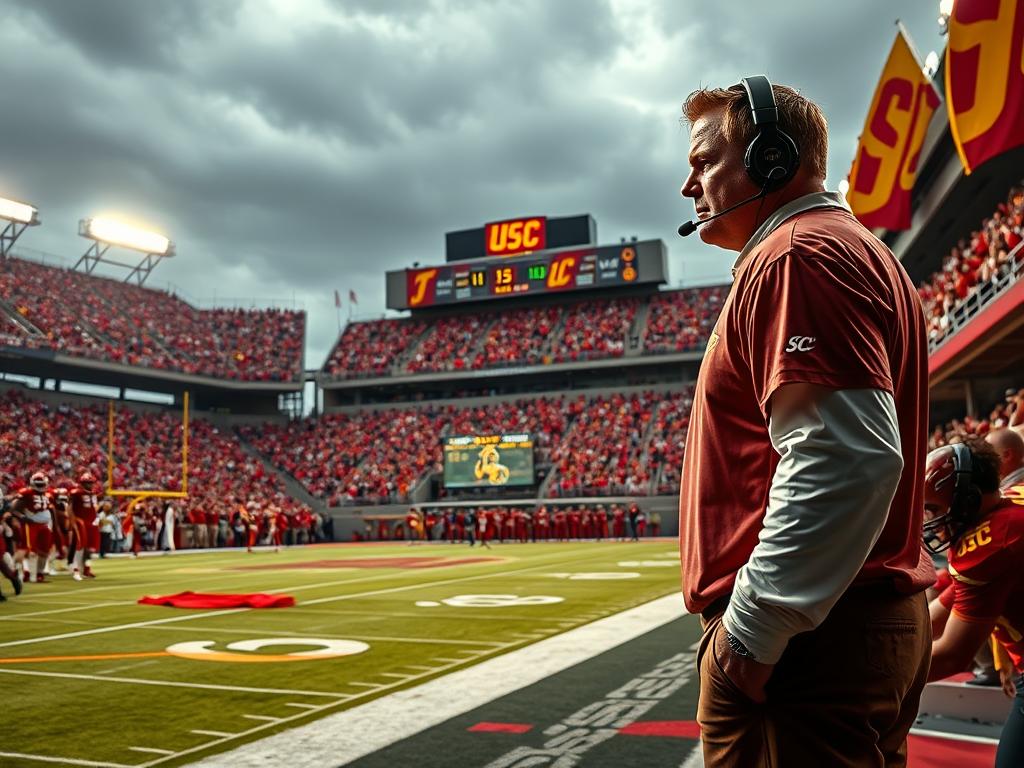
Conference titles elude them, national recognition remains a distant dream, and the Trojans’ faithful are left grappling with a gnawing sense of disappointment. The arrival of Lincoln Riley at USC was marked by high hopes and the promise of revitalizing a storied football program. Riley’s tenure, now in its fourth year, was supposed to herald a new era of success on the grand stage. Yet, after another disheartening performance in a crucial matchup, the question looms larger than ever: Is Lincoln Riley the right coach to lead USC back to glory?
The narrative surrounding USC’s seasons under Riley has been frustratingly repetitive. Initial optimism, often bolstered by impressive recruiting classes and occasional flashes of brilliance, dissolves into underachievement when it matters most. Critics point to Riley’s inability to win pivotal games that shape a team’s national reputation as a persistent flaw. It’s one thing to cruise past lesser opponents, but true elite status is forged in the crucible of high-stakes games, where successes breed legends and failures inflict lasting scars.
Perhaps the core issue lies not in Riley’s coaching acumen, which is widely respected, but in the alignment of team dynamics and strategy. In critical moments, the Trojans often appear outmatched, suggesting a gap not just in talent but in preparation and adaptation. It’s worth considering whether Riley’s current system maximizes the existing roster’s strengths or if stubborn adherence to a particular style is limiting potential outcomes. Great coaches adapt not only to opponents but also to the unique strengths of their players.
Moreover, the pressure of replicating the success of USC’s storied past weighs heavily. The Trojans’ fan base, rich in tradition and expectation, demands results that echo the triumphs of yesteryear. It’s a task made all the more daunting by the highly competitive nature of college football, where regional dominance is no longer sufficient for national relevance. Under Riley, the team needs to demonstrate prowess not just within its conference but on the broader stage, a test they have consistently failed.
As the season progresses, Riley remains under the microscope, each loss magnifying calls for accountability and change. While it is premature to definitively conclude that USC needs a new direction, it’s clear that time is running out for Riley to redefine his legacy with the Trojans. He must prove that the sum of all these seasons is more than ephemeral promise, and that his vision can indeed translate to the high-caliber success USC craves. The real challenge now is whether Riley can push past this tipping point and finally deliver on unmet expectations.