When we think of extreme weather, our minds often conjure images of hurricanes, tornadoes, and storms on Earth. Yet, the solar system is home to winds of far greater intensity, illustrating nature’s raw power on a cosmic scale. The planets that orbit our sun showcase a variety of atmospheric phenomena; however, some stand out for their staggering wind speeds that far exceed anything we experience on our home planet.
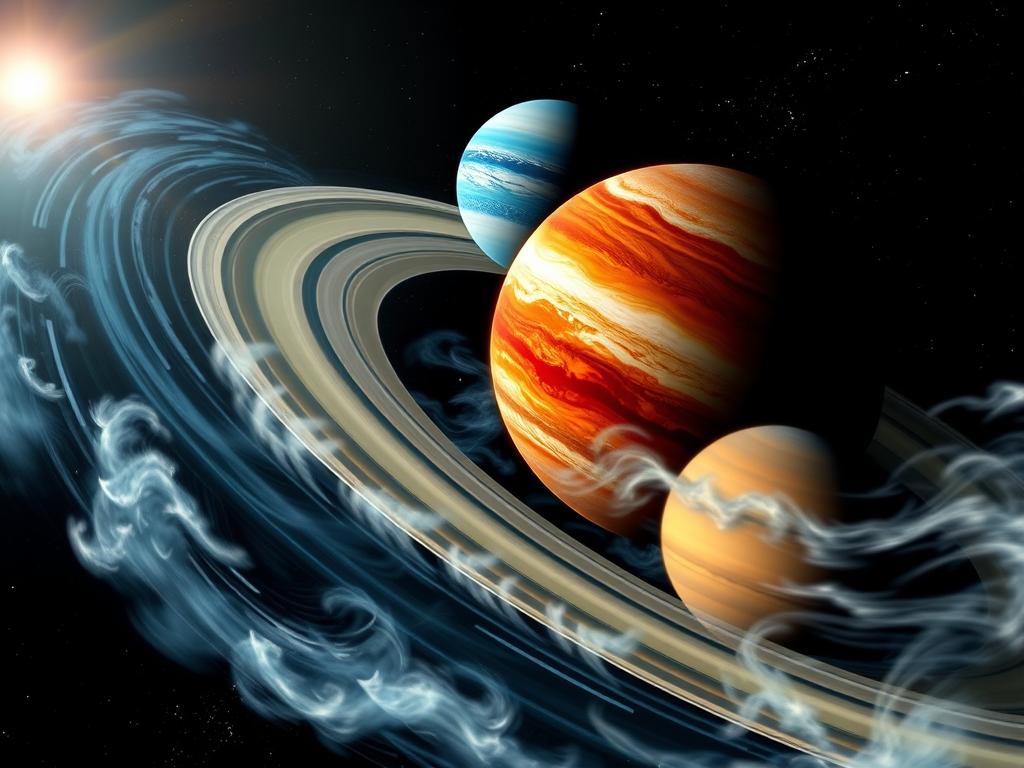
Among the giants of the solar system, Jupiter and Saturn reign supreme, not just in size, but also in terms of their atmospheric dynamics. The Great Red Spot of Jupiter, a colossal storm larger than Earth itself, has winds that reach astounding speeds. These swirling winds have raged for centuries, and scientists continue to study their persistence and origins. Similarly, the jet streams of Saturn, particularly those encircling its equator, are known for their breathtaking velocities, making Saturn a fascinating subject for planetary meteorology.
Moving away from the gas giants, we find yet another planet with extraordinary atmospheric activity: Neptune. Despite its frigid temperatures, this distant world holds a surprising secret—home to the fastest winds in the solar system. Enormous storms whirl across its deep blue surface, reaching speeds exceeding 1,200 miles per hour. Understanding these winds challenges our perception of atmospheric dynamics, especially considering that Neptune’s remote location means it receives minimal sunlight to drive such intense weather patterns.
The study of these incredible winds is not only of academic interest but also critical for understanding the atmospheric processes that might exist on exoplanets orbiting other stars. By examining the wind phenomena on gas giants and icy planets alike within our solar system, scientists can better theorize about the atmospheric conditions on planets outside our own stellar neighborhood, offering insights into the habitability and dynamics of those distant worlds.
In contemplating the fastest winds of our solar system, we are reminded of the varied and dynamic nature of the universe. These atmospheric marvels encourage us to look beyond our Earth-centric understanding of climate and weather, showing that the cosmos holds mysteries that push the boundaries of science. As we continue to explore and understand these planetary winds, we not only uncover more about the planets themselves, but also about the inherent forces that govern all celestial bodies.