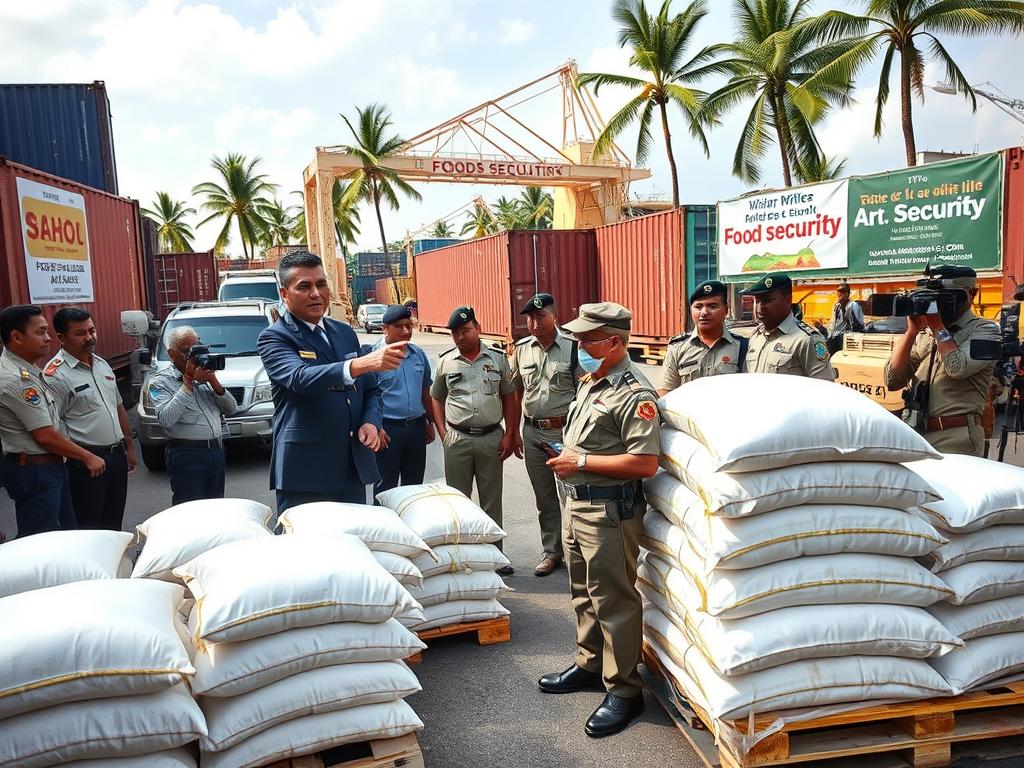
In a significant move to thwart the influx of unlawfully imported goods, Indonesia’s Agriculture Minister, Andi Amran Sulaiman, has recently conducted an operation in partnership with Aceh Governor Muzakir Manaf. This proactive mission successfully stopped 250 tons of rice from entering Sabang without the necessary permissions. Such decisive action underscores the country’s commitment to maintaining the integrity of its import regulations and supporting local agricultural markets.
The collaboration between the national government and regional authorities marks a pivotal moment in the nation’s fight against illegal trade. By securing active involvement at the provincial level, the operation not only ensured a swift response but also set a precedent for how local and national governments can work together effectively. This partnership highlights the importance of unity in addressing challenges that affect national food security and economic stability.
Minister Sulaiman’s firm stance—illustrated by his zero-tolerance policy towards illegal imports—emphasizes the government’s dedication to safeguarding Indonesia’s economic interests. Illegal imports can severely disrupt local markets, undercutting prices and affecting the livelihoods of domestic farmers. By sealing the imported rice, the government is not only enforcing laws but also protecting its citizens who rely on agriculture as a primary source of income.
This incident brings to light the broader issue of import regulation compliance and the need for more robust monitoring systems. While the swift action taken by the authorities is commendable, it also serves as a reminder of the ongoing challenges in regulating the vast, dynamic flow of goods across Indonesia’s borders. Moving forward, there may be a need for enhanced surveillance technology and increased manpower to preemptively identify and intercept illegal activities.
In conclusion, the coordinated seizure of illegal rice imports represents a strong unified effort to uphold Indonesia’s economic and legal frameworks. It is a reflection of the government’s commitment to preserving the nation’s agricultural integrity and supporting its local farmers. By continuing to foster collaboration between local and national bodies, Indonesia can more effectively navigate and counteract the complexities of illegal trade, setting a standard for vigilance and cooperation in the region.