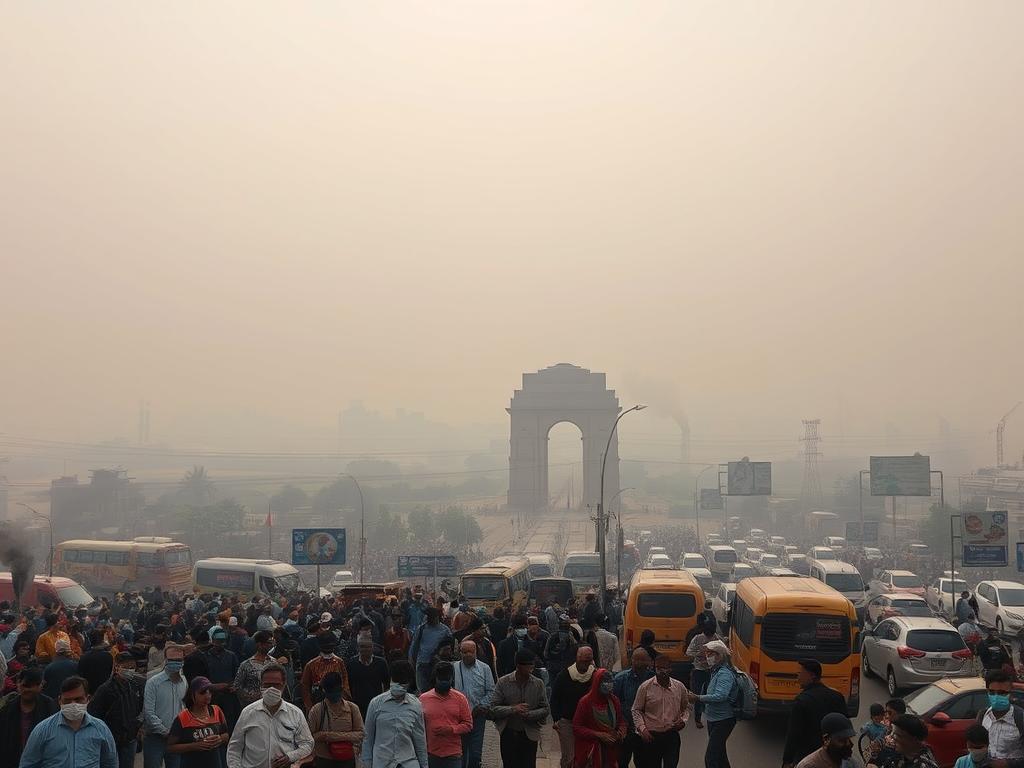
Delhi, the bustling capital of India, faces an all-too-familiar plight as its air quality index (AQI) plummets into the ‘very poor’ category. With areas like Wazirpur, Mundka, and Bawana recording the most dismal figures, residents find themselves wading through a haze of pollution. This decline serves as a stark reminder of the recurring environmental challenges that shadow the city’s vibrant life. The dense smog painted over the skyline isn’t just an atmospheric phenomenon; it reflects underlying urban and industrial activities that are yet to be effectively managed.
The city’s air pollution problem escalates particularly during this time of year, an outcome of several compounding factors. The post-monsoon season invariably brings still air and cooler temperatures, which prevent pollutants like PM2.5 and PM10 from dispersing. Additionally, agricultural stubble burning in nearby states, vehicular emissions, and industrial activities culminate in this noxious mix. While Delhi grapples with the immediate need to combat this environmental hazard, tackling its root causes is imperative for long-term relief.
As residents navigate through this pollution crisis, day-to-day activities become increasingly challenging. For the health-conscious and those with pre-existing conditions, the pervasive pollution presents a severe risk. Masks and air purifiers, while helpful to some degree, serve as temporary, individualistic measures. The broader question remains: how can a densely populated city like Delhi implement effective strategies to reduce emissions significantly?
The current state of Delhi’s air quality underscores the critical need for policy interventions and public awareness. The government, along with environmental bodies, must prioritize clean energy initiatives and enhance public transport systems to reduce vehicular emissions. Stricter regulations on industrial emissions and incentives for sustainable agricultural practices can also play a pivotal role. The collective action towards these solutions could pave the way for a healthier, more breathable future for Delhi’s inhabitants.
In conclusion, while the city struggles with alarming levels of air pollution once more, it’s crucial for all stakeholders to adopt a forward-thinking approach. This involves not only immediate response measures but also developing long-term strategies that address the source of the issue. With the health of millions at stake and the environment hanging in balance, Delhi’s fight against pollution is not just about clearer skies, but ensuring a healthier future for all its citizens.