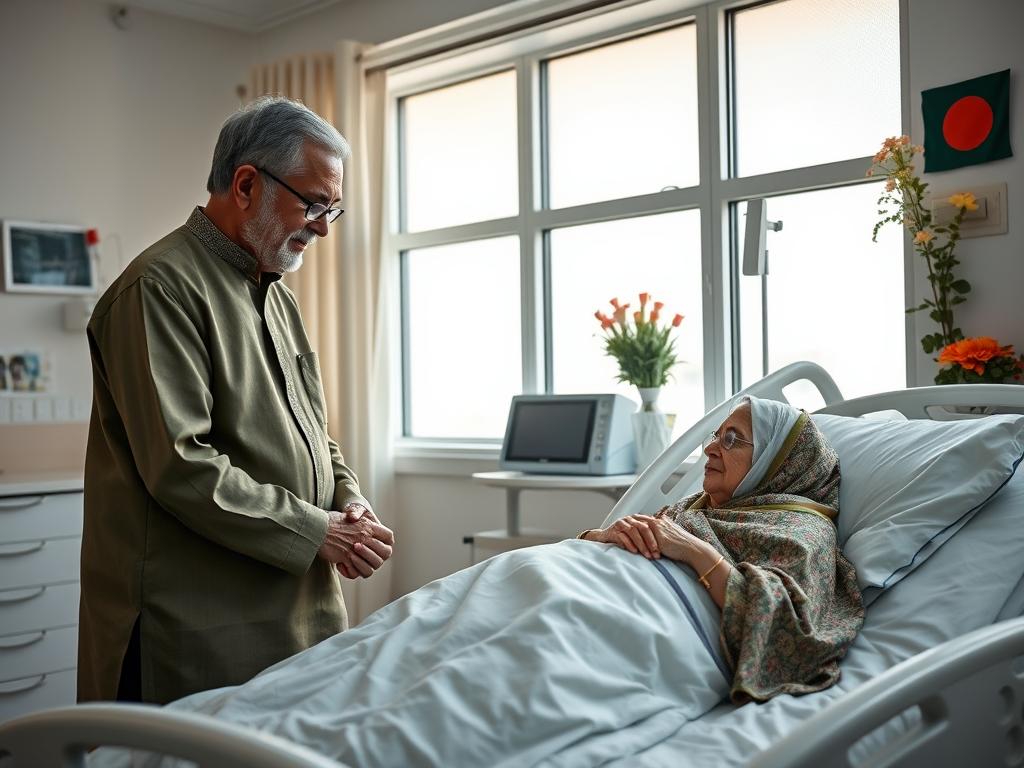
In a politically significant move, Bangladesh’s Chief Adviser Muhammad Yunus made a personal visit to the Evercare Hospital this week. The purpose of his visit was to check on the health of ailing former Prime Minister Khaleda Zia, a prominent figure in the nation’s political landscape. Zia, who has served as a central figure in Bangladesh’s politics for decades, has been ailing with health issues that have kept the nation’s attention riveted on her condition.
Yunus’s visit is noteworthy not just for its compassionate overtones but also for the statement it makes on political civility amongst rivals. In times of severe political polarization, Yunus’s act serves as a reminder of the need for unity and empathy, transcending party lines. This comes at a time when many countries are grappling with divisive politics, and the gesture illustrates how leaders can rise above differences to focus on human values.
Khaleda Zia has been more than a political adversary; she represents resilience in the face of challenges. Her tenure as the first female leader in Bangladesh set a precedent and encouraged further female participation in the political sphere. Thus, her health becomes a matter of public interest, merging the lines between personal and national concerns. Yunus’s call for patience from her family and party allies highlights the commitment required from everyone involved to prioritize her well-being.
Bangladesh is at a political and socio-economic crossroads, and Yunus’s visit can be seen as a small but crucial moment of solidarity. His leadership accomplishments and current role position him as a bridge-builder in these tense times. His emphasis on patience not only resonates with the immediate situation concerning Khaleda Zia but also serves as advice for the entirety of Bangladesh’s political community — a lesson in the power of thoughtful, measured responses to crisis situations.
In conclusion, Yunus’s compassionate outreach acts as a moral spark in the political theater of Bangladesh. By prioritizing empathy over enmity, he reminds us all of the human aspect that often gets overshadowed in the political tug-of-war. As Bangladesh moves forward, such gestures may pave the way for a more humane and understanding political climate where differences are acknowledged but are not allowed to overshadow our shared humanity.