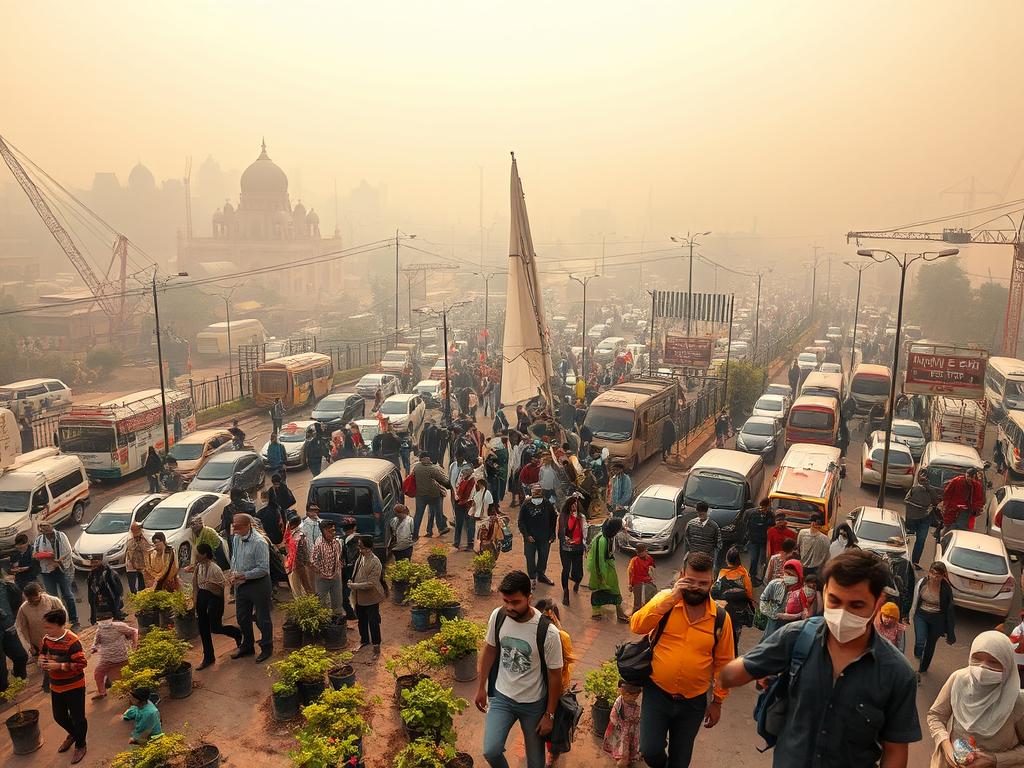
As the sun rises over India’s capital, Delhi, the skyline fades under a blanket of thick, stifling haze. With the air quality index (AQI) skyrocketing to a staggering 497, this is not just a statistic but an urgent wake-up call for the city’s millions of residents. Daily life for many has become a struggle as they face the adverse effects of pollution firsthand. This pervasive issue, which sees no immediate resolution, poses a significant threat to public health, particularly affecting the city’s most vulnerable populations.
Walking through the bustling streets, it’s impossible to ignore the pervasive symptoms among locals—coughing, eye irritation, and labored breathing are becoming as common as the daily chai. As people make their way to work or school, equipped with masks more comprehensive than those used during the pandemic, they can’t shake the feeling of discomfort that lingers like the smog around them. Schools have been issuing advisories, and offices are considering remote operations once again as everyone seeks refuge from the deteriorating air quality.
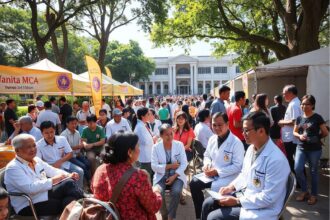
It’s not just the immediate health concerns that worry residents. Long-term exposure to such toxic air can lead to chronic respiratory diseases, and affects heart health, and more. The city’s healthcare system is bracing for an influx of patients presenting with pollution-related ailments, placing an additional burden on already strained resources. Parents are particularly anxious, knowing that their children’s health is more susceptible to these hazardous conditions, due in part to developing lungs and immune systems.
Environmentalists and activists have long been sounding the alarm on Delhi’s air crisis, pushing for more sustainable urban planning and enforcement of environmental regulations. Some short-term measures, such as road rationing and construction bans, have been proposed, but these do little to address the root causes of the problem. While policy change is essential, so too is public awareness and grassroots efforts aimed at reducing pollution from the ground up. Community involvement in tree planting drives or advocating for cleaner transportation alternatives could be potent allies in this fight.
Ultimately, the grim reality is that Delhi’s pollution problem is a complex interplay of factors, requiring coordinated efforts across various sectors. As residents endure each day beneath the blanket of haze, it becomes increasingly clear that change is imperative. The solutions may be long-term and arduous, but they are necessary for the health of the city and its people. How the capital navigates this crisis will serve as a case study for urban centers worldwide grappling with similar issues, proving that no one is exempt from the demands of environmental stewardship.