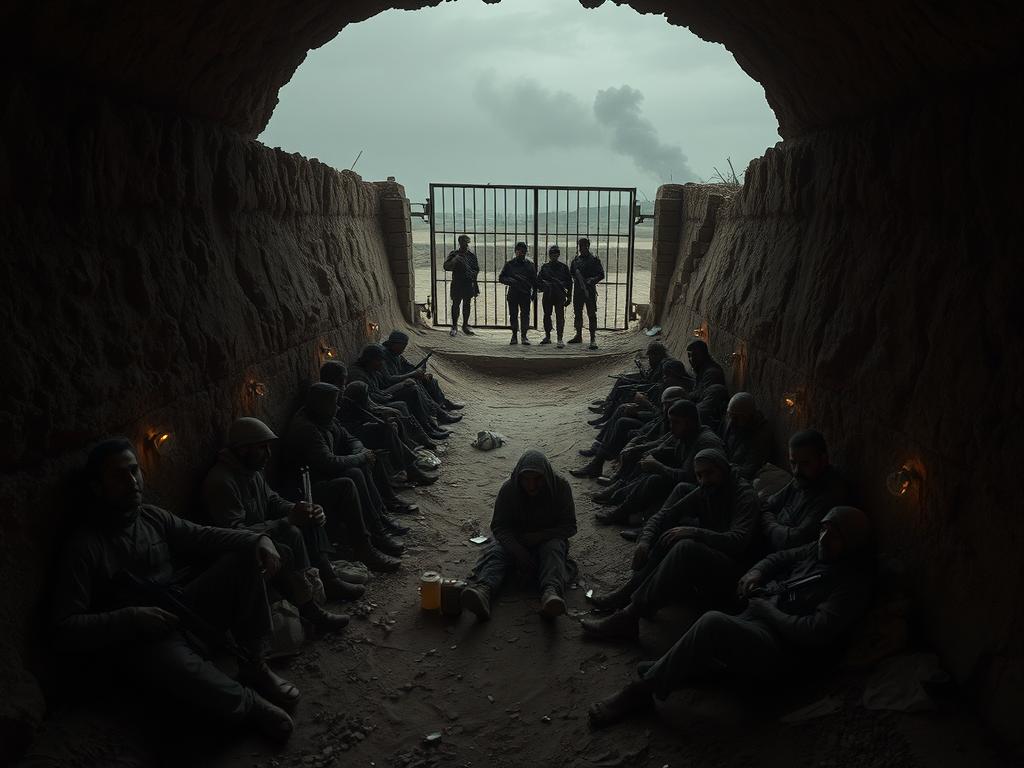
The situation in Gaza’s southernmost city, Rafah, has reached a critical juncture as reports emerge of nearly 80 Palestinian fighters trapped in tunnels under Israeli control. For months, these fighters have faced extreme isolation, cut off from communication, food, and water sources. This grim scenario raises urgent humanitarian and political questions, thrusting the world’s gaze once more onto this beleaguered region.
Despite the tense circumstances, the lack of communication with these fighters deepens the mystery of their status and well-being. Factions in Gaza have lamented the loss of contact, igniting concerns about their fate and the wider implications for the ongoing conflict. Cut off from all aid, these individuals symbolize the broader struggle and desperation faced by many in the occupied territories.
Israel’s military forces have claimed responsibility for the deaths of 30 fighters in recent confrontations and continue to demand that the remaining must surrender. This standoff highlights the power dynamics at play, revealing the stark reality of life in such a volatile environment. The demand for surrender serves as a reflection of Israel’s broader strategy to cement its control over contested areas, often at significant humanitarian cost.
The silence emanating from the tunnels underscores a lingering fear, as well as resilience in the face of adversity. As the days pass, the plight of these fighters becomes a harrowing reminder of the human cost of protracted conflict. It is not merely a tactical situation but a humanitarian crisis that calls for urgent international attention and action.
Conclusively, the siege in Rafah is a microcosm of the larger Israeli-Palestinian conflict, exemplifying unresolved tensions and the cyclical nature of strife in the region. While military solutions continue to dominate, a sustainable resolution lies in meaningful dialogue that acknowledges human dignity and rights. As the international community watches, it must move beyond passive observation and engage actively in fostering peace and stability in such tumultuous zones.