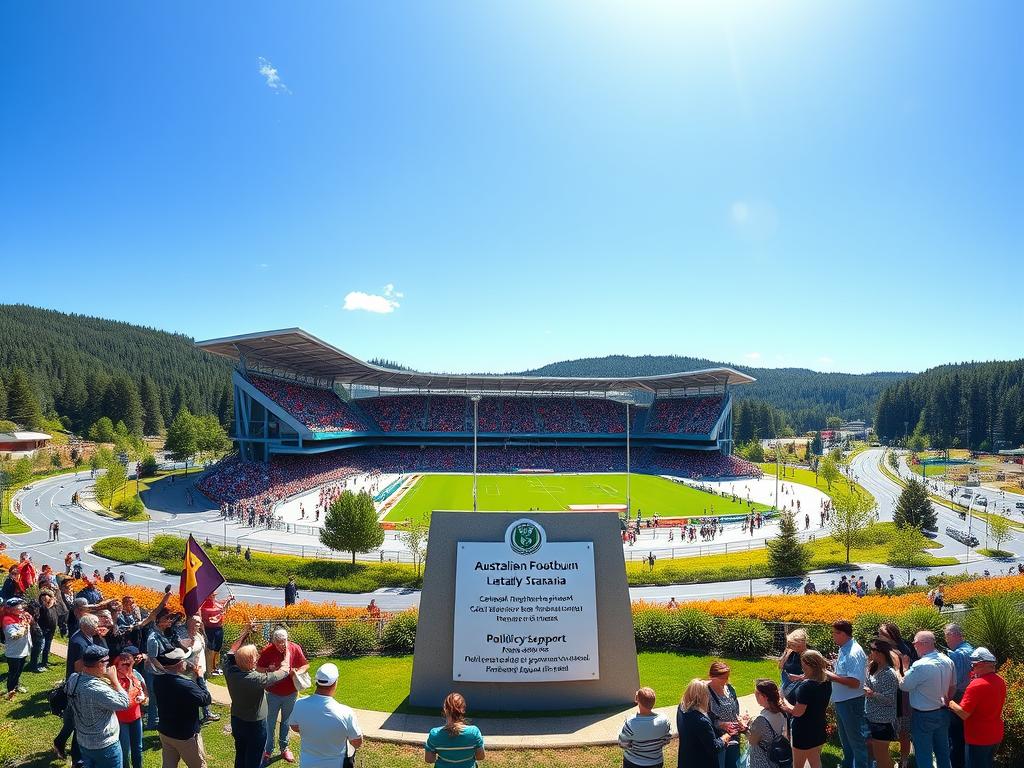
The landscape of Australian Football League (AFL) venues is on the precipice of a landmark shift with the recent political backing for a proposed stadium in Tasmania. This change has been significantly bolstered by a key independent parliamentarian, whose support could be the critical factor in securing the stadium’s approval. As the dust begins to settle on this contentious issue, the possibilities beckon for a transformation in the region’s sports culture.
For months, the stadium proposal has been a topic of fervent debate among Tasmanian residents, policymakers, and sports enthusiasts. Proponents argue that the establishment of an AFL-standard stadium in Tasmania would not only boost local sports tourism but also provide much-needed infrastructure that can serve a variety of events. However, detractors worry about the economic implications and the environmental impact such a project might entail. With the new political support, the scales seem to be tipping in favor of its construction.
The pivotal backing from the independent member of parliament could potentially light the green signal for the project’s approval in the legislative chambers. This unexpected endorsement underscores the complex dynamics of regional politics, where individual votes often carry a heavier weight than in more populous areas. Historically, such independent interventions have been known to tilt the parliamentary balance, leading to significant policy shifts.
As the potential for an AFL stadium in Tasmania inches closer to reality, it’s worth considering the broader implications of this development. Will the new stadium stimulate local job creation and enhance community engagement, or does it risk straining public funds and resources? The question of sustainability also looms large—how will this project align with Tasmania’s environmental commitments? These are some of the critical issues that stakeholders will need to navigate as the dialogue progresses.
In conclusion, the support for the AFL stadium marks a pivotal moment for Tasmania, signaling a possible new chapter in its sporting heritage. While the political shift is promising for proponents, it’s crucial to maintain a balanced approach that prioritizes community interests and environmental integrity. As Tasmanians look towards a future that might include cheering their own team in a state-of-the-art local arena, the decisions made today will resonate in the region’s societal narrative for generations to come.