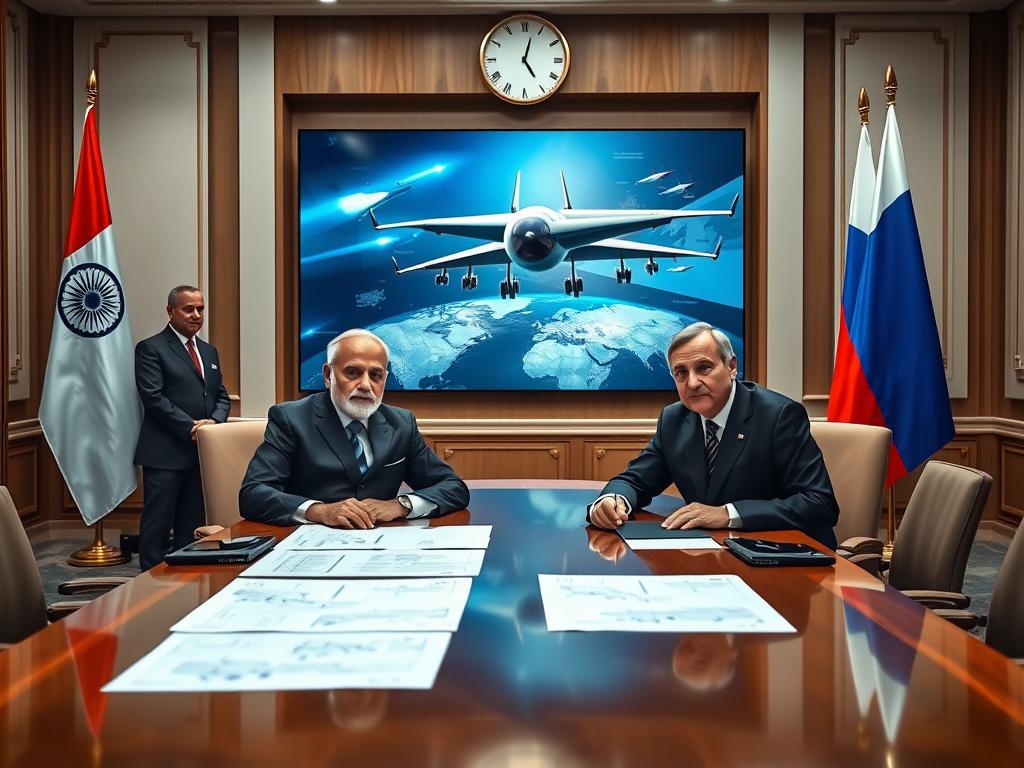
As global power dynamics continue to shift, India and Russia stand at a key juncture in their defense partnership with an upcoming summit set for December 4. This meeting is more than just an annual formality; it represents an opportunity for both nations’ defense ministers to delve into the future of their military ties, highlighted by discussions around the potential acquisition of Russia’s cutting-edge S-500 missile system. Such conversations underscore a mutual interest in redefining strategic alliances in the face of evolving threats and technological advancements.
The importance of this summit cannot be overstated. While the S-500 system—a next-gen missile defense solution—grabs headlines, underlying issues such as the pending delivery of previous S-400 orders will also take center stage. India’s eagerness to acquire additional S-400 squadrons speaks volumes about its long-term strategic defense objectives. By addressing these logistical challenges, both nations can set the stage for a smoother transactional relationship, ensuring that future procurements are delivered on time and to specifications.
Beyond the discussions of defense acquisitions, the meeting presents an invaluable moment for the two countries to reassess their military strategies in light of recent global events. The India-Russia defense rapport has always been robust, but the necessity to adapt to current geopolitical tensions necessitates a recalibration of approaches. Engaging in open dialogues about challenges such as cybersecurity threats and regional instabilities will bolster cooperative decision-making processes, fostering a more resilient partnership.
From India’s perspective, the exploration of advanced defense systems like the S-500 is about more than just enhancing military capabilities; it’s about establishing a deterrent that can support its regional influence. Russia, conversely, can further cement its position as a key arms supplier in Asia, particularly amid increased competition from other global players. By continuing to forge and strengthen these bilateral ties, both nations can navigate the complex geopolitical landscape with greater confidence and mutual benefit.
In conclusion, the Modi-Putin meeting this December promises to be a pivotal event for India-Russia relations. As global scenarios evolve, it is crucial that both countries seize this moment to solidify their defense cooperation and address any operational hiccups from previous dealings. By achieving a balance between acquiring new technologies and resolving past challenges, India and Russia can fortify their strategic partnership for years to come—ushering in a new era of collaboration that is deeply rooted in shared interests and mutual respect.