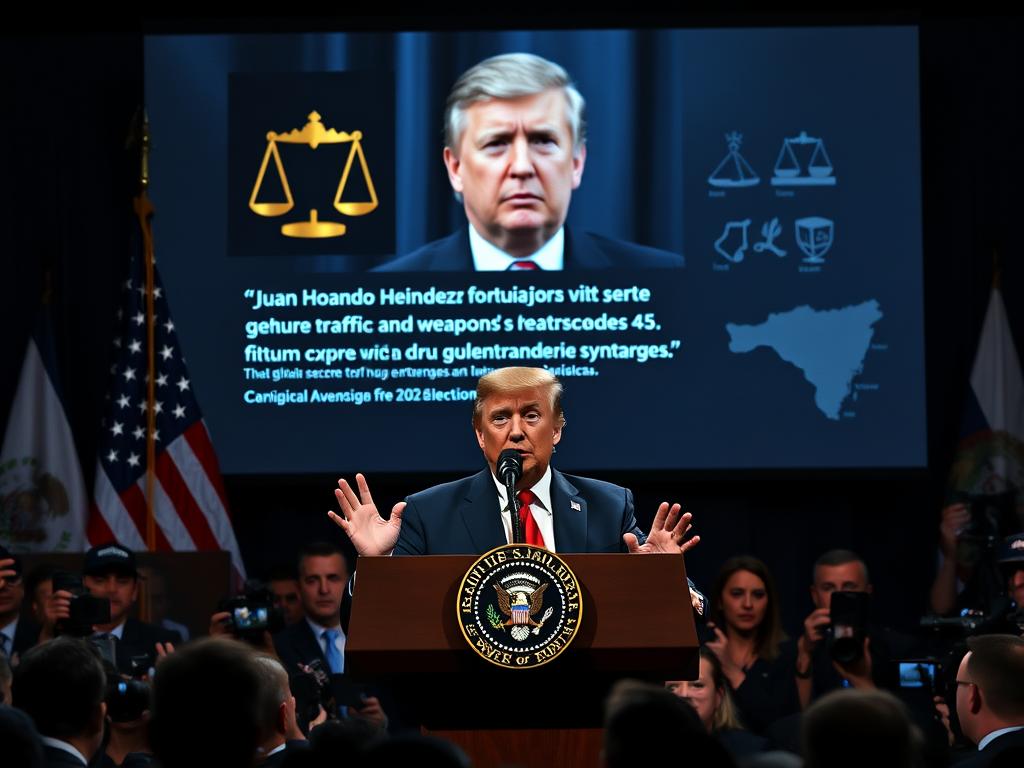
In a striking political move, Donald Trump, former President of the United States and potential 2024 presidential candidate, announced his intention to pardon former Honduran President Juan Orlando Hernandez. Hernandez, sentenced in 2024 for significant offenses including drug trafficking and weapons charges, was handed a hefty 45-year imprisonment. Trump’s comments have stirred an international debate, echoing across both diplomatic and political arenas.
Trump’s plan to grant pardon raises questions about the justice served in Hernandez’s conviction. Proponents of the pardon argue that it underscores unfair trials and highlights the complex interplay of geopolitical influences in Central American judicial proceedings. Critics, however, fear it might set a problematic precedent, undermining efforts to curtail drug-related crimes that plague the region, and ignore the accountability of leaders accused of such severe infractions.
This announcement is not just a legal matter; it holds significant political weight. Trump’s move could be viewed as an attempt to strengthen his political alliances with various Latin American leaders, possibly securing their support should he run in the 2024 elections. Moreover, it taps into his broader strategy of reinforcing the notion of a powerful executory branch capable of affecting international policies and leveraging diplomatic relationships.
On a deeper level, Trump’s proposal to pardon Hernandez spotlights ongoing challenges within the American justice system, particularly concerning how it addresses international figures ensnared in the U.S. legal network. It further poses a critical examination of how justice is meted out internationally and the delicate balance of power between nations. This potential pardon could challenge the efficacy of international law enforcement cooperation, specifically regarding global crime syndicates linked to the drug trade.
In conclusion, Trump’s announcement is more than just a headline—it is an invitation to reassess how justice, diplomacy, and political strategy entwine in the contemporary geopolitical landscape. The potential repercussions of pardoning Hernandez stretch beyond borders, urging a collective reflection on justice and governance on a global scale, while also offering a glimpse into Trump’s vision of international relations that may redefine the future cross-national political discourse.