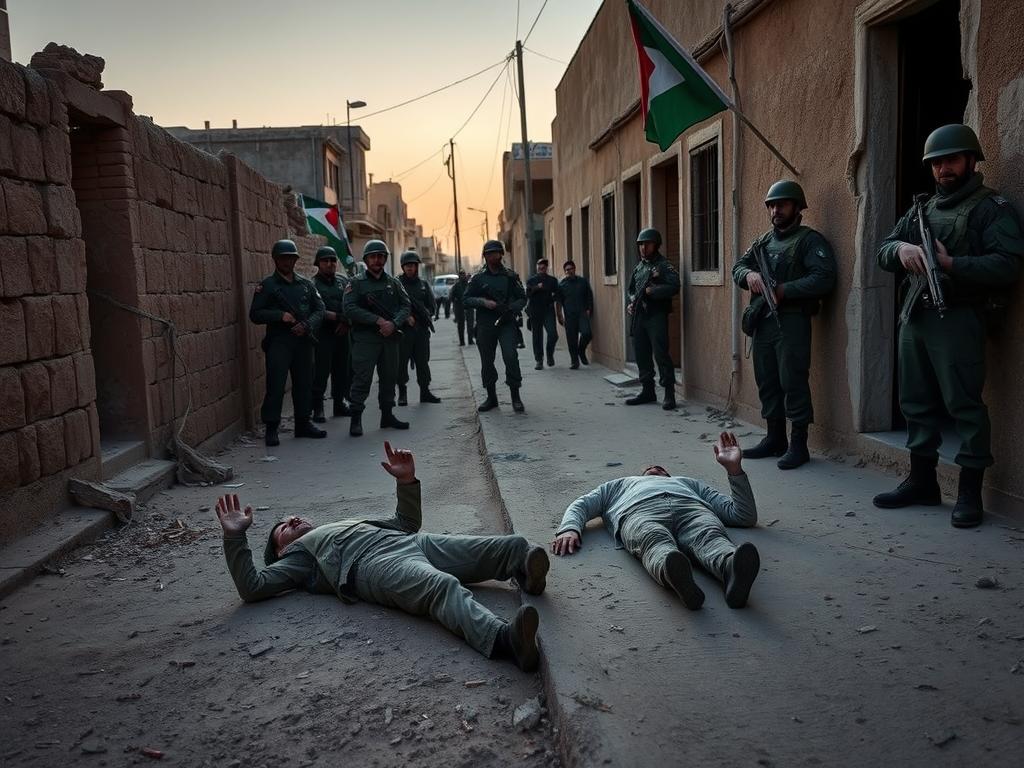
In a recent and deeply troubling incident in the West Bank, two Palestinian men were shot and killed by Israeli forces in a situation that leaves many questions and ethical concerns. Reports suggest that the men appeared to be surrendering at the time of the shooting, sparking outrage and calls for accountability. This event adds to the ongoing tension between Israeli forces and Palestinian residents, contributing to an already volatile region rife with conflict and mistrust.
The complexity of the Israeli-Palestinian conflict cannot be understated. These events epitomize the tragic cycle of violence where life hangs by a thread, often cut short in a brutal instant. The reported circumstances surrounding the deaths of these two men suggest a breakdown in communication and protocol, which could exacerbate the hostility and resentment felt by Palestinians in the occupied territories. Fighting a seemingly endless battle, both sides are trapped in a narrative of fear and retribution.
This incident reignites the debate over military conduct and the rules of engagement employed by the Israeli Defense Forces (IDF). Questions arise regarding the procedures in place when dealing with surrendering combatants. International laws and human rights protocols demand careful consideration in such situations, highlighting the need for transparent investigations and accountability to prevent further erosion of trust.
For many observers, this tragedy serves as a stark reminder of the urgent need for renewed dialogue and peace initiatives. With continued instances of violence eroding prospects for reconciliation, the international community’s role becomes critical in advocating for solutions that prioritize human rights and dignity for all. The situation demands that global leaders take active measures to address the root causes of such incidents and support efforts towards a lasting peace.
Ultimately, the deaths of these two Palestinian men underscore the human cost of conflict—a cost often borne by those with little power to change their circumstances. As the situation unfolds, it becomes imperative to remember that behind the headlines are families and communities yearning for peace and security. True resolution lies not in the perpetuation of violence but in the willingness to engage in meaningful dialogue, as well as a commitment to justice and the humane treatment of all individuals involved in this protracted struggle.