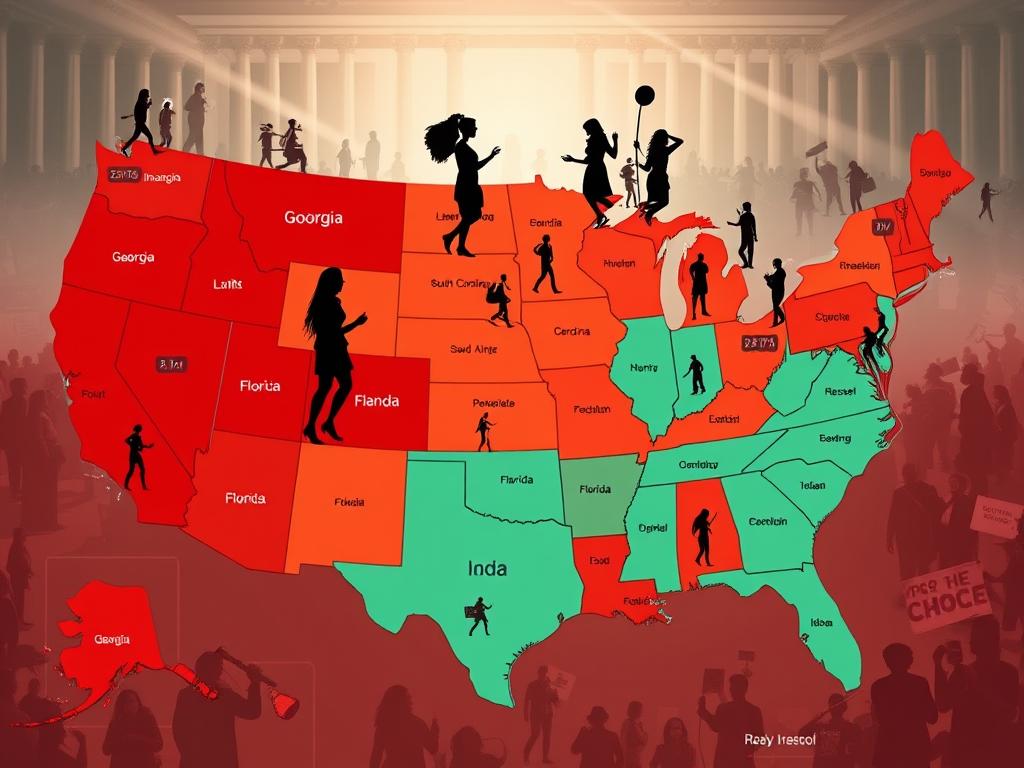
The reversal of Roe v. Wade by the US Supreme Court has transformed the landscape of abortion rights into a diverse and complex patchwork of state-specific regulations. This landmark decision did not merely alter a legal ruling; it divided the nation into jurisdictions with varying degrees of access to reproductive healthcare. In this new era, understanding where each state stands on abortion rights is more crucial than ever. While some states have moved quickly to restrict access, others have fortified protections, highlighting a growing divide.
Currently, 13 states have enacted near-total bans on abortion, significantly limiting women’s access to reproductive health services. These measures reflect the strong anti-abortion sentiment in these regions, often influenced by political, religious, and cultural factors. This phenomenon is not uniform across the country; instead, it is emblematic of the power states wield following the federal ruling. Such profound legal changes have sparked intense debates, affecting not only political discourse but also personal lives, as individuals navigate the restrictions imposed on their healthcare choices.
In contrast, Georgia, South Carolina, Florida, and Iowa have opted for restrictions that terminate abortion access after approximately six weeks of pregnancy. These laws often catch individuals unaware, as many women do not yet realize they are pregnant at this early stage. The conception of these laws is rooted in the belief of protecting fetal life shortly after detection of a heartbeat, yet they clash with the medical community’s understanding of pregnancy development. The debate in these states highlights significant tensions between legislative action and the complex realities of reproductive health.
While some states increase restrictions, others are countering this wave by enshrining abortion rights into their state constitutions or reinforcing already existing protections. Such actions underscore the supportive stance these states take towards bodily autonomy and reproductive freedom. The strategic enactment of these laws offers a beacon of hope for those advocating for accessible healthcare and underscores the importance of state-level action. This protective trend signifies not only a defensive measure but an affirmation of women’s rights amidst growing challenges.
The evolving patchwork of abortion laws in the United States underscores the critical need for informed engagement and activism at both state and national levels. As states continue to craft their own policies in reaction to broader federal shifts, citizens will play an essential role in shaping the future of reproductive rights in their communities. Navigating this complex landscape requires vigilance and active participation, as the balance between rights and restrictions remains a dynamic and contentious battleground.