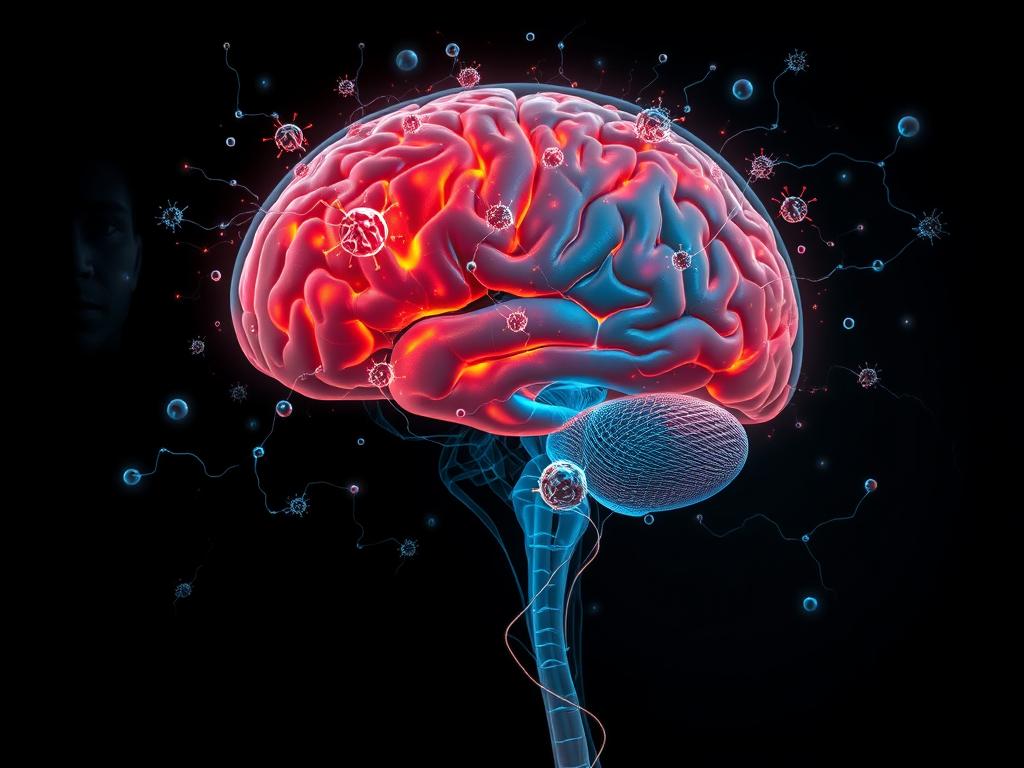
In an astonishing twist of biological fate, the body’s immune system, our steadfast defender against intruders, can sometimes turn its arsenal inward, declaring war on its own nervous system, particularly the brain. This uprising within our skull can lead to brain inflammation, setting off a chain of neurological disturbances that manifests in confusion, memory lapses, and at its most severe, psychosis. The phenomenon underscores the delicate balance our immune system maintains, positioning itself as both a protector and, occasionally, a misguided aggressor.
The brain, ensconced securely within our skull, isn’t typically a battleground for our body’s defensive cells. However, when this balance tips—triggered by infections, autoimmune diseases, or unknown factors—the immune response can mistakenly target the brain’s own tissues. These misguided assaults are not just a tale of biology gone awry; they reveal the profound complexities and occasional vulnerabilities of our immune networks.
The manifestations of brain inflammation are as varied as they are distressing. Sudden bouts of confusion can transform everyday tasks into indecipherable puzzles. Memory becomes unreliable, casting shadows over recent events and causing a person to question their grasp on reality. In the most alarming scenarios, this neurological storm can usher in psychosis, a state where what is perceived diverges dramatically from what is deemed real, rattling one’s perception of the world.
Understanding why and how our immune system redirects its forces against the brain is still largely an open frontier in medical research. Scientists are discerning patterns and identifying clues, such as specific antibodies that might give away this internal mutiny’s intention. Furthermore, advances in medical imaging and diagnostics are providing clearer windows into this clandestine operation, guiding interventions that may one day preempt such crises.
In conclusion, the episode of immune-mediated brain inflammation is a stark reminder of the body’s complex interplay of systems, teetering frequently on a razor’s edge. The same mechanisms designed to protect us can, without warning, challenge our identity and mental health. As we continue to delve into the intricacies of the immune system, the hope is that we can harness its power, steering it back to its rightful purpose of safeguarding rather than posing an internal threat. Our growing knowledge promises not only to heal but to preemptively strike such conditions before they unsettle lives.