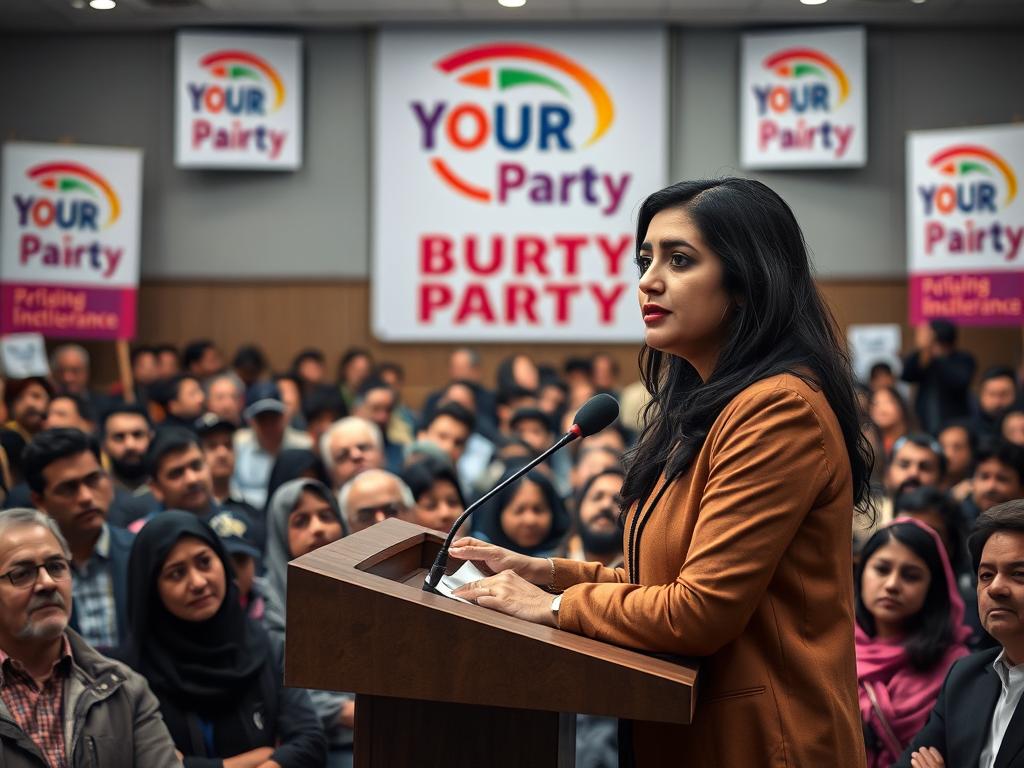
Your Party’s inaugural conference, which was meant to be a celebration of fresh political ideas, has turned into a battlefield of internal discontent, with co-founder Zarah Sultana vocalizing her disapproval against the apparent hostility and divisive tactics employed within the party. Sultana, who has long advocated for a more inclusive political atmosphere, expressed her dismay at the internal discord that overshadowed what should have been a milestone for the party.
The discontent was not merely about disagreements in ideology but also about the manner in which dissent was handled. Sultana highlighted an alarming incident where a Muslim woman was forcibly removed from the conference, describing the scene as particularly troubling and indicative of deeper systemic issues within the organization. This event, she argues, is symptomatic of a broader trend of intolerance and intimidation against minority voices within the party.
In many ways, Sultana’s criticisms come at a pivotal moment for Your Party. As they navigate through their foundational phase, the challenge lies not just in formulating policy but in ensuring that internal governance reflects the diversity and openness they purportedly stand for. Her public rebuke signals a call for introspection and reform, urging party members to practice what they preach regarding unity and support for marginalized communities.
Factionalism within political parties is not a new phenomenon, but its presence in nascent organizations like Your Party highlights a potential derailment from their original vision. The pressures of political survival often lead to aggressive tactics, but Sultana cautions against such moves, suggesting that embracing a more compassionate and diplomatic approach could foster a healthier and more resilient political entity.
Concluding her remarks, Sultana emphasized the importance of having difficult conversations about power dynamics and representation within the party. She advocates for the establishment of mechanisms that allow for accountability and constructive dialogue. If Your Party wishes to become a true representative force, it must heed these internal calls for justice and equality, ensuring that its formative years are not overshadowed by division and exclusion.