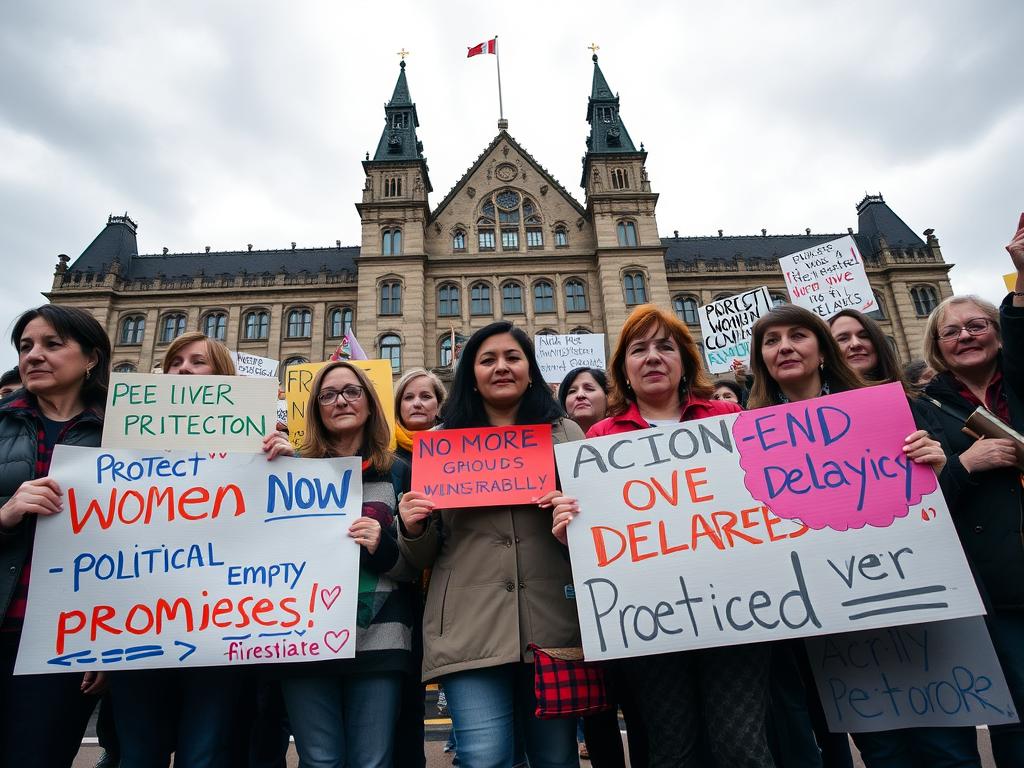
The political landscape in Ottawa is heating up as over a dozen women’s advocacy organizations have expressed their dissatisfaction with the Liberal government’s delay in implementing a critical aspect of firearm legislation. This particular measure, designed ostensibly to bolster safety and protect vulnerable groups, has been eagerly awaited for nearly two years since its passage. The mounting impatience among these advocacy groups represents not just a criticism of policy delays but highlights a larger issue within the political machinery that seems to overly rely on rhetoric rather than actionable follow-through.
The provision in question is reportedly aimed at increasing the regulation of firearms in order to better safeguard communities, particularly those where domestic violence is prevalent. Women’s groups have long emphasized that improved gun control is a vital part of curbing violence against women and ensuring a safer society. The prolonged deferment of this measure has left many advocates questioning whether the government’s commitment to women’s safety aligns with its legislative actions.
It’s crucial to understand the broader implications of these delays. When such legislation isn’t implemented promptly, it sends a disheartening message to those affected by firearm-related violence. For many women and vulnerable groups, these regulatory protections are not mere political promises; they are a lifeline. The frustration voiced by women’s advocacy groups is a stark reminder of the distance between legislative intentions and tangible outcomes, particularly when these measures are deemed essential for the safety of marginalized communities.
From an analytical standpoint, the delay may well be indicative of the tumultuous nature of complex policy implementation. However, while government processes can be cumbersome, the need for urgency in matters of public safety should not be understated. The Liberals’ failure to activate this key provision reflects not only a lapse in administrative efficiency but also raises questions about prioritization within the policy agenda. Such delays could potentially erode public trust, especially when public safety is perceived as being compromised.
In conclusion, the criticism from women’s advocacy groups should spur an introspective response from policymakers. It is an opportunity for the Liberals to re-evaluate their timelines and commitments to essential legislative measures. Truly protecting communities and upholding public safety requires more than just passing laws; it requires timely and unwavering action. As the outcry grows louder, it becomes imperative for the government to reconcile its promises with its practices to ensure that those most in need of protection are not left waiting.