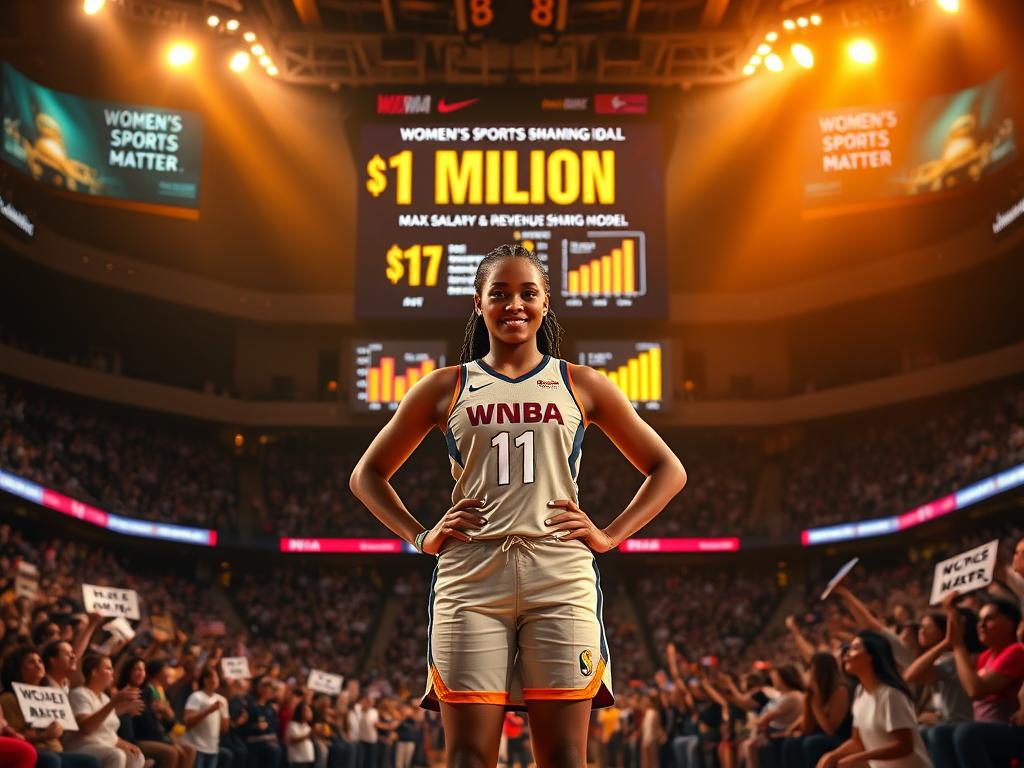
In an unprecedented move poised to significantly impact women’s sports, the WNBA is reportedly restructuring its salary framework to include a potential $1 million max base salary for its top players, accompanied by a revenue sharing scheme that could elevate earnings beyond $1.2 million. This development is a clear testament to the growing value and recognition of female athletes and their contribution to the sports industry.
The announcement comes at a time when conversations about gender pay equity are gaining traction across various sectors, including professional sports. Historically, female athletes have earned substantially less than their male counterparts, often due to disproportionate visibility and investment. The WNBA’s decision to increase base salary and integrate revenue sharing marks a pioneering shift that could challenge long-standing norms.
Revenue sharing introduces a new layer of engagement—a model already popular in men’s sports—ensuring that players benefit directly from the league’s financial success. This structure not only aligns athletes’ interests with the WNBA’s growth but also provides an incentive for players to actively promote their sport. Such a system could enhance the league’s revenue streams and foster a more vibrant sports culture.
However, this move raises several intriguing questions about the future landscape for women’s sports. Will increased salaries lead to heightened competition and attract top talent globally? How will other leagues respond, and might this spark a broader movement towards pay equity? As the WNBA pioneers this path, it sets a precedent that other sports associations will inevitably scrutinize and perhaps emulate.
In conclusion, the WNBA’s innovative salary and revenue sharing model represents more than just numbers on a check—it is a bold statement in the ongoing campaign for gender equality in the sports world. While this initiative alone won’t eradicate pay disparities, it undeniably pushes the conversation forward, nudging the world closer to a future where female athletes receive due recognition and compensation for their skills and contributions.