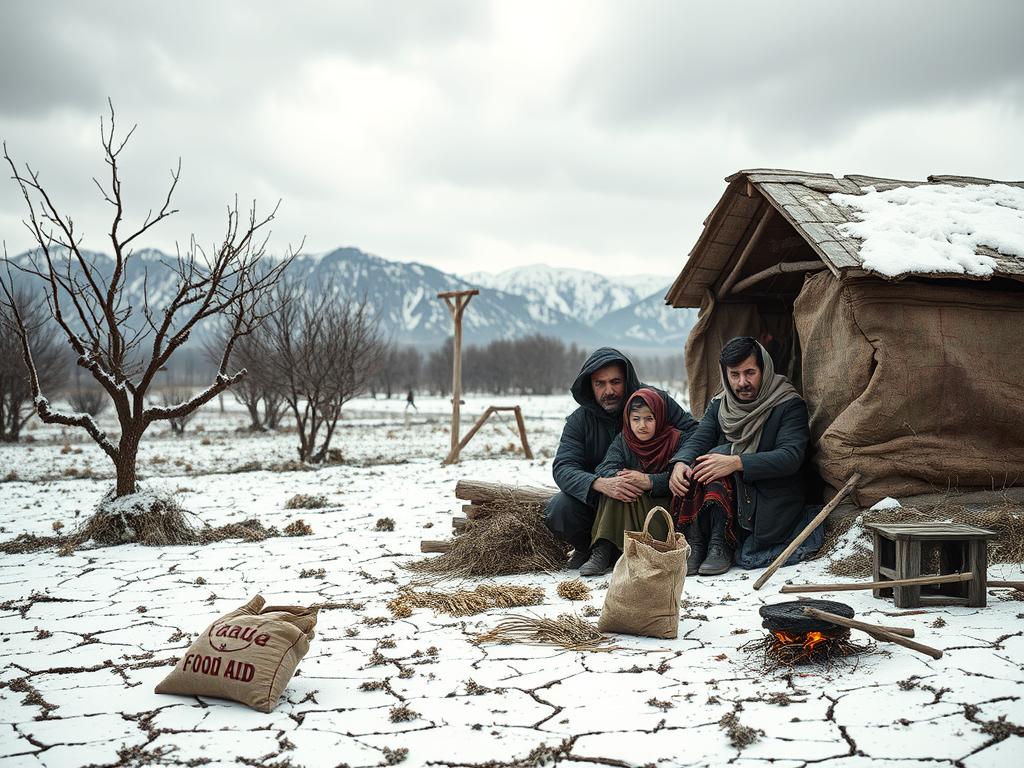
As the days grow shorter and the chill of winter begins to loom over Afghanistan, the specter of food insecurity is becoming an increasingly pressing concern. The combination of economic challenges, regional instability, and climatic influences has drawn a bleak picture for millions of Afghans. With winter at the doorstep, these vulnerabilities are poised to deepen, sparking a need for both immediate relief and long-term solutions.
Afghanistan’s struggles with food security are not new, yet recent developments have intensified the problem. The landlocked nation has long been dependent on agriculture, a sector vulnerable to the whims of nature. Erratic weather patterns, increasing temperatures, and unpredictable rainfall have disrupted harvests. Consequently, these disruptions have compounded existing challenges, with far-reaching effects seen in the rising number of individuals grappling with food shortages.
Economically, Afghanistan is in a precarious position. Political upheavals have caused significant ripples across its economic landscape. As international aid decreases and internal resources remain limited, the financial avenues to address food scarcity are dwindling. Inflation has surged, driving up the cost of basic goods beyond the reach of an average Afghan household, thus pushing the populace deeper into the clutches of poverty.
Addressing this growing crisis requires both immediate action and strategic foresight. On-the-ground aid is critical to meet imminent needs; however, sustainable solutions like investing in agricultural resilience and diversifying the economy could prove pivotal in the long run. Emphasizing community-based programs that empower local farmers can foster resilience, while international cooperation and investment are crucial to providing much-needed support.
As Afghanistan braces for the winter ahead, it is clear that the road to alleviating food insecurity will be neither quick nor easy. However, by combining immediate relief efforts with strategic, long-term planning, there stands an opportunity to not only relieve current hardships but also build a foundation for a more secure future. In this season of uncertainty, envisioning such a future requires a concerted effort from both national actors and the global community.