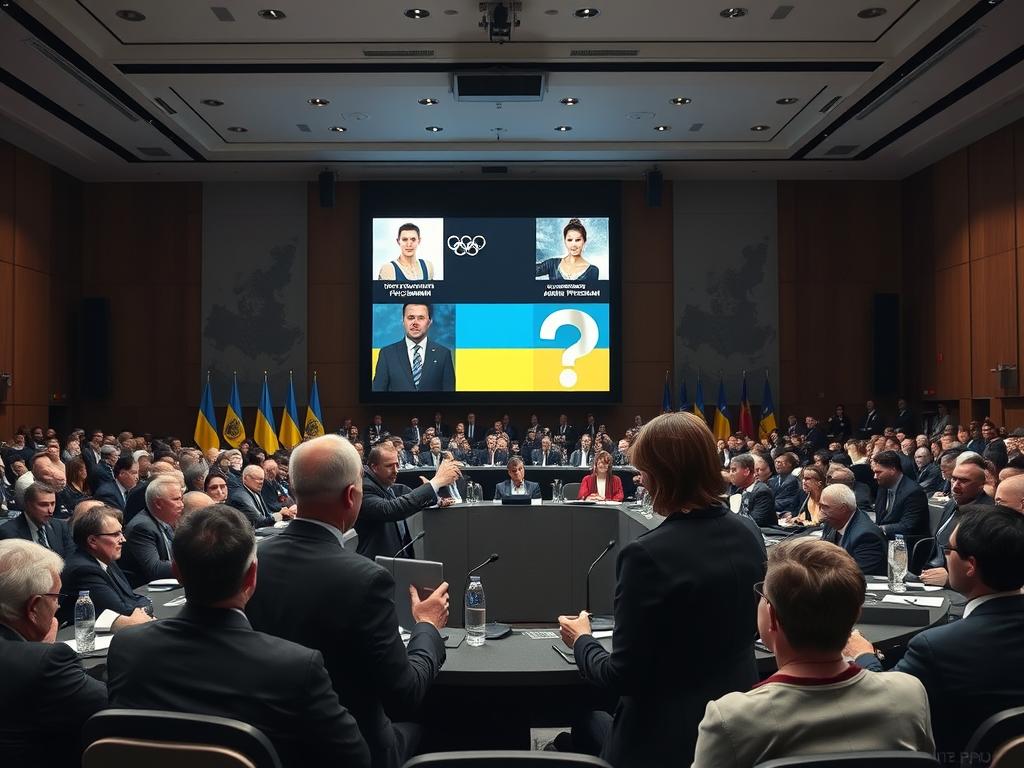
In a bold move, Ukraine has taken a stand against the decision made by prominent sports governing bodies to allow Russian athletes once again to compete on the international stage. The National Olympic Committee of Ukraine, alongside the Ukrainian Skating Federation, has officially requested the International Olympic Committee (IOC) and the International Skating Union (ISU) to reconsider the participation of Russian figure skaters Pyotr Gumennik and Adelia Petrosian in global events like the 2026 Winter Olympic Games. This request underscores the ongoing tension and complex interplay of sports and geopolitics.
The dispute over the participation of these athletes stems from broader geopolitical tensions that have persisted between Ukraine and Russia, particularly accentuated by Russia’s actions in recent years. Sports have often been seen as a neutral ground, yet they are heavily influenced by the political climates surrounding them. With Ukraine’s appeal, the question arises whether the realm of sports should remain untouched by these broader conflicts or whether the actions of a nation should impose a moral imperative on international sporting bodies.
Arguments can be made for both sides. Those in favor of banning Russian athletes argue that sports should not overlook the ethical ramifications of a country’s political behavior. On the other hand, there’s a robust counter-argument that athletes should not be penalized for their country’s policies, especially when many do not play a direct role in these actions. By allowing or disallowing certain athletes based on nationality rather than individual merit, sporting bodies walk a fine line between upholding a fair sport and acknowledging global sociopolitical dynamics.
The Ukrainian appeal serves as a poignant example of how interconnected our world has become, where the ripples of international politics inevitably touch all spheres of human activity, including sports. Such moves encourage reflection on whether the sporting world should establish a clear stance on moral issues or strive to maintain a strict focus on the spirit of competition and the celebration of athletic prowess. This is not a straightforward debate with simple solutions, but a complex discussion that will likely continue to evolve.
As the sporting community watches closely, the decisions of the IOC and ISU will be crucial in setting precedents for future interactions between geopolitics and international sports. Regardless of the outcome, Ukraine’s appeal has rekindled an important conversation about equity, justice, and the role of sports in a divided world. It serves as a reminder that while athletics can offer a temporary reprieve from political climates, they also carry potential for profound influence in shaping them.