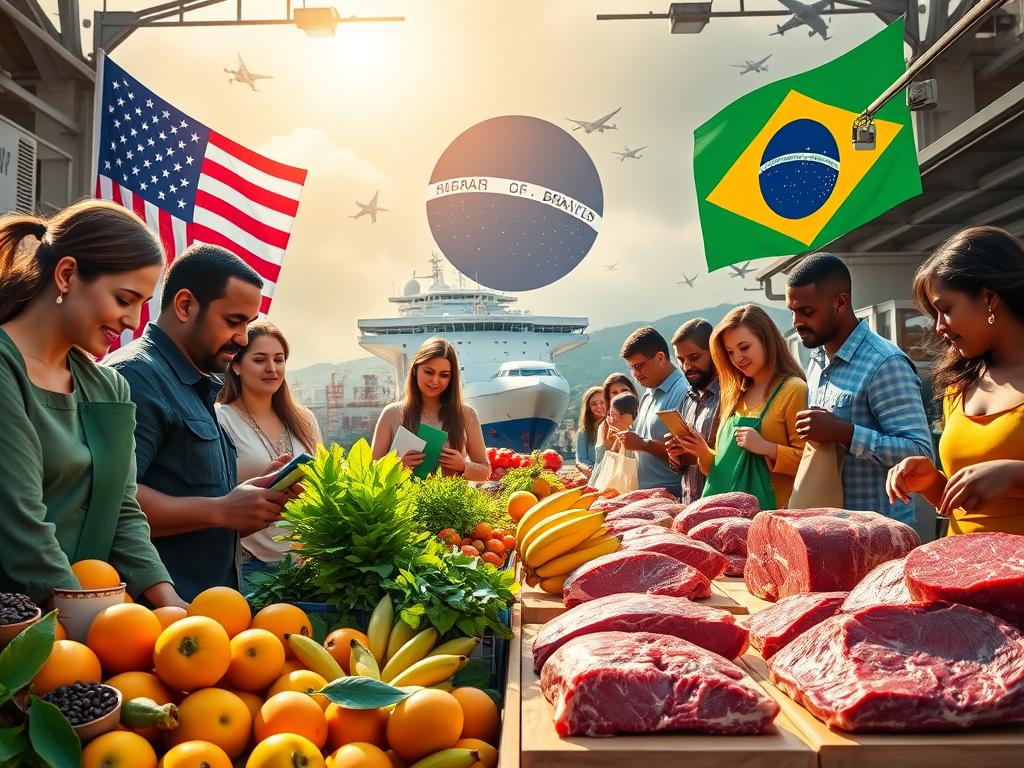
In a significant shift in trade policy, President Donald Trump has opted to ease tariffs on essential imports from Brazil, a decision that could potentially bring a breath of fresh air to American marketplaces. This strategic move comes at a time when consumers are grappling with high prices, and it specifically targets key imports like coffee, fruit, and beef, all staples in U.S. households. For coffee lovers and meat enthusiasts, this could translate into more affordable prices on store shelves, potentially rejuvenating consumer spending in these sectors.
The decision to lighten tariffs on Brazilian goods is not only a nod to American consumers but also a diplomatic gesture towards improving trade relations with Latin America’s largest economy. Brazil is a major producer of the world’s coffee and beef, so the easing of tariffs might encourage Brazilian exporters to increase their supply to the U.S., thus ensuring better prices and more variety. This move contrasts with previous stances that were more protectionist in nature, suggesting a possible shift in the administration’s broader economic strategy.
While consumer cost reduction is a critical benefit of this tariff adjustment, it also poses interesting questions about domestic production. Lower tariffs might challenge local producers of these goods, urging them to innovate and enhance competitiveness. The pressure could spur beneficial advancements in farming techniques and production efficiency within the U.S. agricultural sector. On the flip side, easing import barriers might discourage investment in domestic production if foreign goods become overwhelmingly cheaper.
Furthermore, the geopolitical implications of this decision are noteworthy. Strengthening trade links with Brazil could serve as a counterweight to China’s influence in the region. As tensions between the U.S. and China fluctuate, fostering closer ties with other global players becomes increasingly crucial. By enhancing economic ties through adjusted tariffs, the U.S. may strategically align with Brazil, potentially redefining alliances within the landscape of international trade.
In conclusion, the Trump administration’s decision to ease tariffs on Brazilian coffee, fruit, and beef is a multifaceted strategy aimed at benefiting American wallets and bolstering diplomatic ties. While it promises immediate relief in consumer costs, it also sets the stage for broader economic and geopolitical shifts. As these policies unfold, it will be crucial for both consumers and producers to adapt to the changes, ensuring that this opportunity leads to sustained growth and mutual benefits on both sides of the equator.