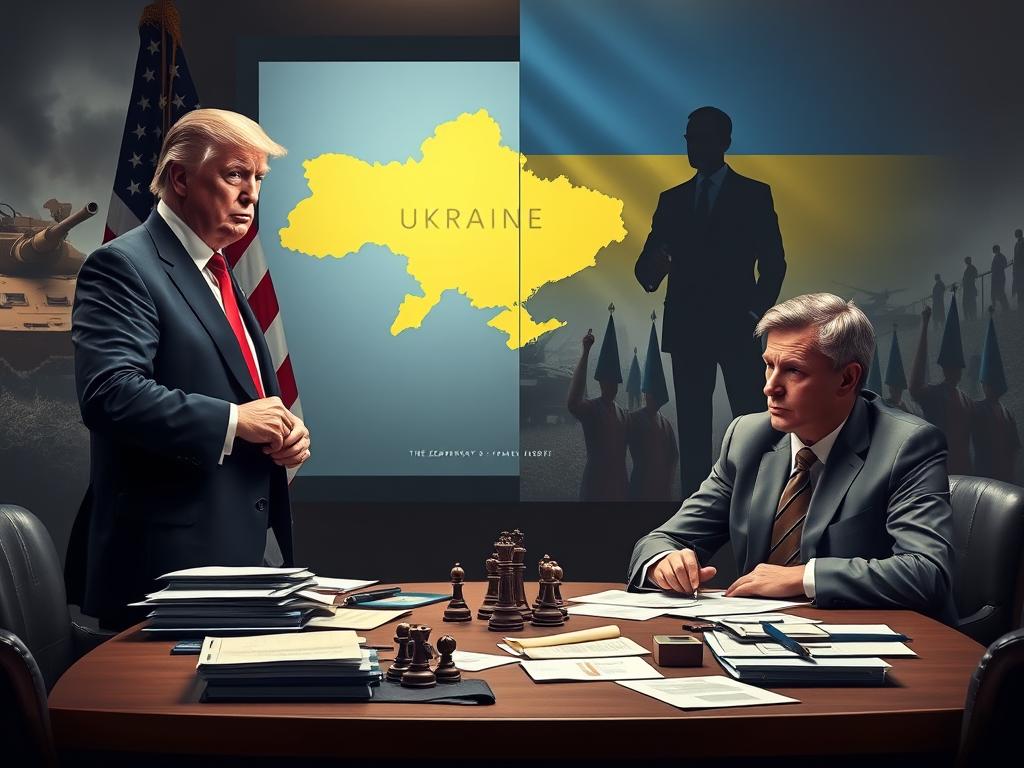
The latest headlines from Washington have been dominated by a former president’s ambitious attempt to draft a peace proposal for the ongoing conflict in Ukraine. Donald Trump’s 28-point plan aims to navigate the complex geopolitical terrain that has defined the world’s response to Russia’s aggressive stance toward its neighbor. As this plan makes its way into the public discourse, one cannot help but ponder the implications it carries for Ukrainian President Volodymyr Zelenskyy.
Central to Trump’s proposition is the sentiment that Zelenskyy is in a precarious position on the battlefield and may need to negotiate peace sooner rather than later. Trump suggests that Ukraine’s current military strategy is untenable and implies that the longer hostilities drag on, the fewer options Ukraine will have. This viewpoint, while speculative, raises important questions about the feasibility of continued military action versus diplomatic engagement.
However, the reality on the ground presents a more nuanced picture. Ukraine’s resistance efforts, backed by Western support, have been formidable thus far. Zelenskyy, whose leadership has been characterized by resilience and defiance, faces the complex task of balancing the drive to defend national sovereignty with the need to prevent further devastation. Trump’s plan appears to disregard the strategic calculations and lived experiences of the Ukrainian people, who have paid an enormous price in this conflict.
From an analytical perspective, Trump’s proposal underscores the perennial tension between diplomacy and force in international relations. His assertion reflects a traditional view of diplomatic negotiation driven by power dynamics, suggesting Zelenskyy needs to capitulate due to perceived military overextension. Nonetheless, this approach risks oversimplifying the deeply rooted motivations and historic grievances that fuel the Ukrainian struggle for autonomy and territorial integrity.
In conclusion, Trump’s peace proposal places Zelenskyy in a strategically challenging position, highlighting the delicate interplay of military and diplomatic decisions in wartime leadership. While the weight of continued conflict looms heavily, any path to peace will require careful consideration of both Ukrainian agency and broader geopolitical realities. Ultimately, the path to resolution must align with the aspirations and sacrifices of the Ukrainian people, ensuring that peace does not come at the expense of justice and sovereignty.