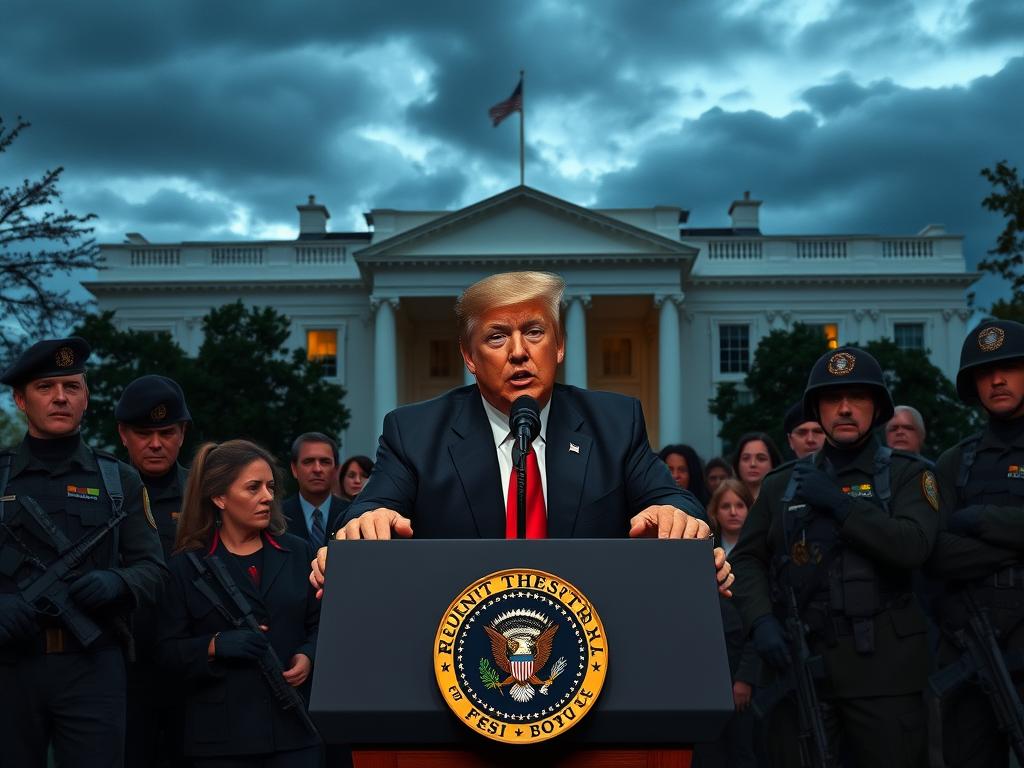
The Trump administration has once again tightened its grip on immigration policies, catalyzed this time by the recent shooting incident involving National Guard members in Washington. President Trump’s move to implement stricter immigration measures highlights his administration’s ongoing commitment to stringent border controls, a hallmark of his political stance since his initial campaign. This decision comes in the wake of an unfolding investigation by the FBI, tasked with deciphering the events that led to the critical injuring of two guards.
While the administration’s migration regulations continue to be rigidly enforced, the timing of this recent order raises important questions about policy motivation and public safety. Many are scrutinizing whether the tragic event is being used as a pivot point to reinforce existing policy agendas. Should this be the case, it wouldn’t be the first instance where a national security incident is leveraged to drive broader, pre-existing policy changes, especially those as contentious as immigration.
The context surrounding such policy announcements is crucial to dissect. As the investigation of the shooting unfolds, clearer insights into the circumstances and perpetrators will emerge, potentially reshaping the narrative around this directive. In the interim, many are feeling the weight of increased checks and heightened anxiety within immigrant communities, both legal and undocumented. It’s a delicate balance between ensuring national security and fostering an environment where people from diverse backgrounds feel safe and included.
From a governance perspective, this strategy might speak to the administration’s focus on apparent immediate responses rather than long-term planning. While a decisive approach in times of crisis can expose leadership strength, without substantive data to support the direct link between the incident and cross-border movement, such policy actions risk being viewed as reactionary. This could inadvertently polarize public opinion further, especially in a nation where immigration continues to be one of the most divisive topics.
Ultimately, the efficacy and ethics of swift policy shifts in response to national events remain up for debate. It calls for a measured approach, and perhaps more importantly, transparency regarding the connection between specific incidents and broader legislative actions. As the FBI delves deeper into the facts behind the Guard shooting, it’s imperative for all stakeholders to remain informed and engaged, ensuring that actions taken are justifiable beyond mere coincidence. Only then can national security and humane immigration protocols coexist effectively.