






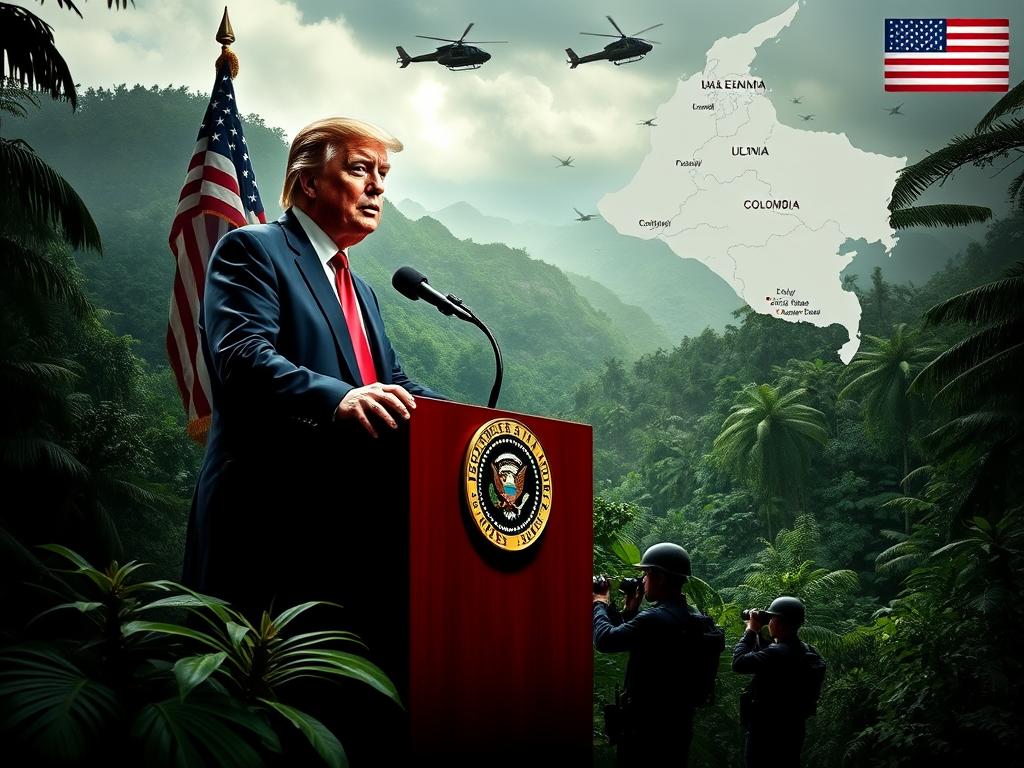
In a surprising statement that stirred global discourse, President Donald Trump declared his ambition to eliminate cocaine factories in Colombia. While this assertion showcases a strong stance against the drug trade, the specifics of his approach remain ambiguous. Trump’s comments reflect the complexities and perils of international drug policy, echoing decades-old efforts to curtail the cocaine supply from one of the world’s biggest producers.
Colombia has long been a focal point in the battle against narcotics. Despite persistent efforts to combat cocaine production, challenges remain daunting. The country’s dense jungles and rugged terrains often serve as a haven for illicit activities. While Colombian authorities have managed to dismantle some operations, the scale of the industry implies that a single-handed, unilateral approach from any external nation—no matter how powerful—may not suffice.
The potential for direct military intervention, though not explicitly stated by Trump, indirectly emerges from his forceful rhetoric. History provides numerous examples where heightened interventionism wrought unintended consequences. The war on drugs is as much about winning hearts and negotiations as it is about cracking down on illegal production. Cooperation with Colombia is crucial, as is a comprehensive strategy that addresses both supply and demand aspects, while taking care of socio-economic conditions that nurture this trade.
Critics of heavy-handed strategies often highlight the risks associated with escalation. The landscape involving organized crime is highly adaptive, with networks capable of pivoting in response to direct threats. Enhancing surveillance, intelligence sharing, and increasing socio-economic development assistance to affected regions may present more sustainable solutions. Trump’s comments thus raise the significant question of whether bold gestures are effective or mere political posturing.
As the conversation continues, it is essential for both U.S. and Colombian administrations to embody pragmatism over idealism. Sustainable progress will likely demand a multifaceted solution merging diplomatic, economic, and social interventions alongside security measures. As policymakers navigate these challenges, the quest for a drug-free future should foster cooperation, embracing strategies that balance assertiveness with mutual respect and understanding.