





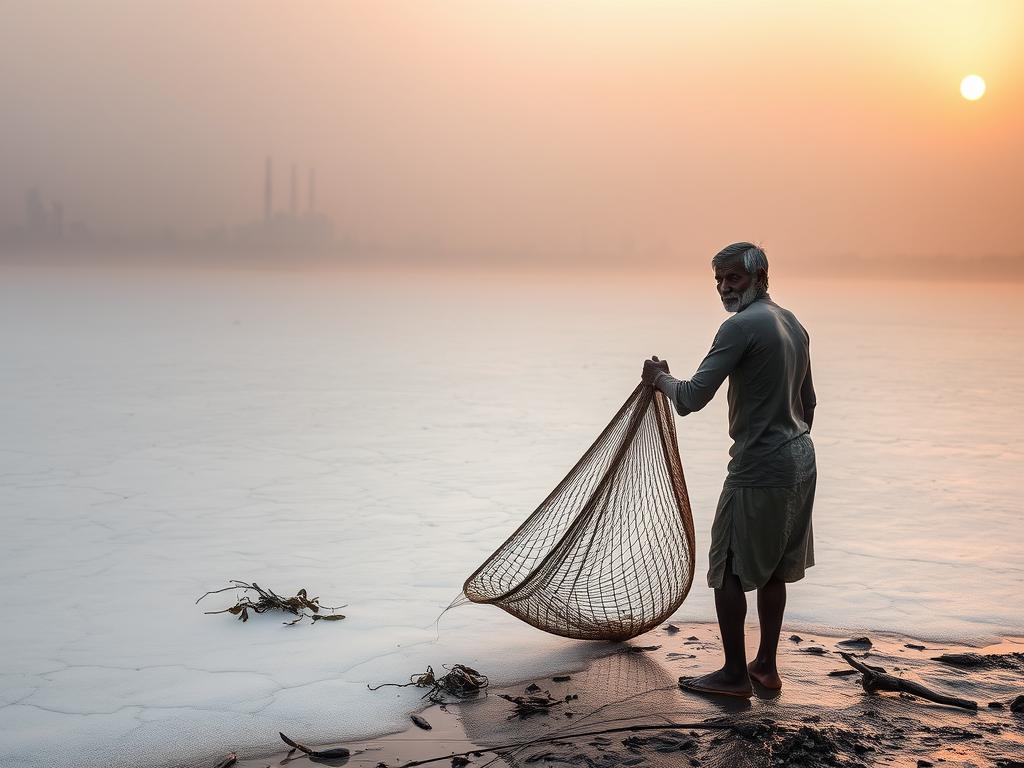
As dawn breaks over New Delhi, a fisherman stands on the brink of the Yamuna River, casting his net amid a surreal tableau. What could be mistaken for a scene of tranquil beauty is, in fact, a stark embodiment of environmental distress. The river, shrouded in a thick layer of foam, whispers tales of ecological neglect, leaving a lingering question for humanity: how did we forsake one of our most vital lifebloods?
The gleaming white foam that christens the river’s surface is no natural phenomenon. It is a manifestation of an environmental crisis brought on by the unchecked release of pollutants from industrial and municipal waste. Ammonia and phosphates, primary culprits in this aquatic degradation, are intricately linked to activities of modern development — but at what cost? These compounds disrupt the riverine ecosystem, endangering aquatic life and affecting the welfare of local communities who rely on the river for sustenance.
The implications of this pollution extend beyond the frothy banks of the Yamuna. The contaminants not only strip the waters of their purity but also usher in broader public health challenges. The air above, subdued by the omnipresent haze of urban smog, mingles with the river’s toxic cocktail, flagging as a sobering reminder of the critical intersection between water and air quality in urban landscapes. It brings us to a pivot, urging collective introspection about sustainable urban planning and environmental stewardship.
Yet, amid this grim narrative, the image of the fisherman, resilient and unyielding, casts a narrative of perseverance and survival. For many in New Delhi, the Yamuna is more than just a geographic feature; it is a vital resource for drinking, washing, and cooking. The fisherman symbolizes the human spirit’s innate drive to adapt, even as the stakes stack against nature’s once-boundless generosity. His presence is a wake-up call for urgent and transformative action to reclaim and restore the lush vibrancy of the Yamuna.
In pondering the future of the Yamuna, we must ask: how long can we afford to view such scenarios with apathetic detachment? The river’s plight is a clarion call for global efforts in rethinking how industrial processes align with environmental ethics. It is imperative that policies prioritize not just economic development but also ecological rehabilitation. We owe it to the future generations to act decisively, ensuring that rivers flow not with sorrow and foam, but with the vitality and clarity befitting their role as the veins of our planet.