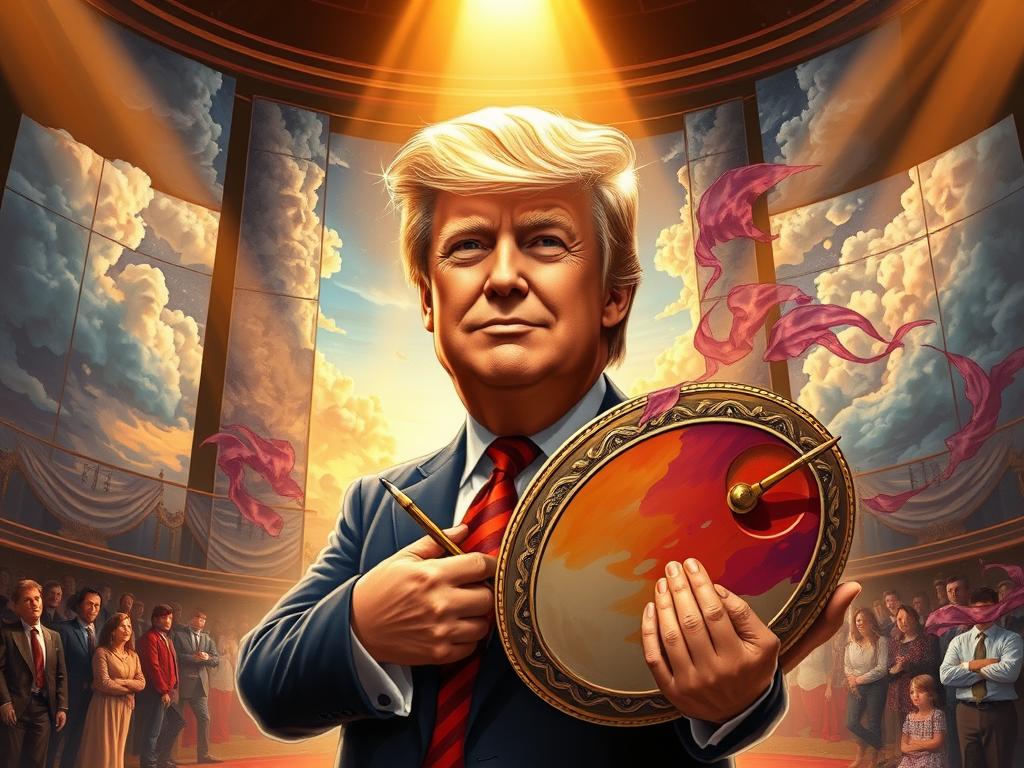
In the face of ongoing political setbacks, former President Donald Trump seems to be composing a narrative that only he could find convincing. While recent events might seem daunting for most political figures, Trump projects a message of unwavering optimism. “It’s all great,” he insists, relying on nebulous affirmations from unnamed individuals to bolster his claims. This technique, familiar to those who’ve watched his political journey, encapsulates a reality perceived through lenses unique to him alone.
Trump’s strategy of reframing challenges as victories is neither new nor surprising. It’s a hallmark of his political survival mechanism, one that transforms adversity into an opportunity to galvanize his base. This approach underscores a kind of rhetorical alchemy where loss is transmuted into perceived triumph, a narrative that echoes his infamous declaration of a ‘perfect call’ during his first impeachment inquiry. The story that emerges is not one of destruction but of defiance, a trait his supporters have come to admire.
However, Trump’s alternate reality poses significant risks not just for him but for the wider political landscape. By steadfastly ignoring the implications of these setbacks, he risks alienating moderate supporters who might be seeking concrete action rather than rhetoric. This detachment from reality could lead to the erosion of trust among those less swayed by pure charisma. Trump’s chosen path thus invokes a critical question: how sustainable is a narrative when reality is its toughest adversary?
Interestingly, this approach mirrors tactics often seen in the realms of performance art or industry marketing, where perception frequently trumps reality. Trump’s background in entertainment has undoubtedly honed his skills in crafting compelling narratives, regardless of their factual basis. It’s a tactic that serves him well in maintaining media attention and public intrigue, despite the tangible consequences trailing his recent political defeats.
In conclusion, Trump’s projection of success in the face of failure may be strategic, but it’s fraught with potential for misunderstanding and division. As he continues to articulate a self-assured alternate reality, observers must discern the line between political posturing and delusion. The concern remains not just for Trump’s political future but for the broader impact such narratives may have on political discourse, ultimately questioning whether steadfast optimism can genuinely shape reality or merely obscure it.