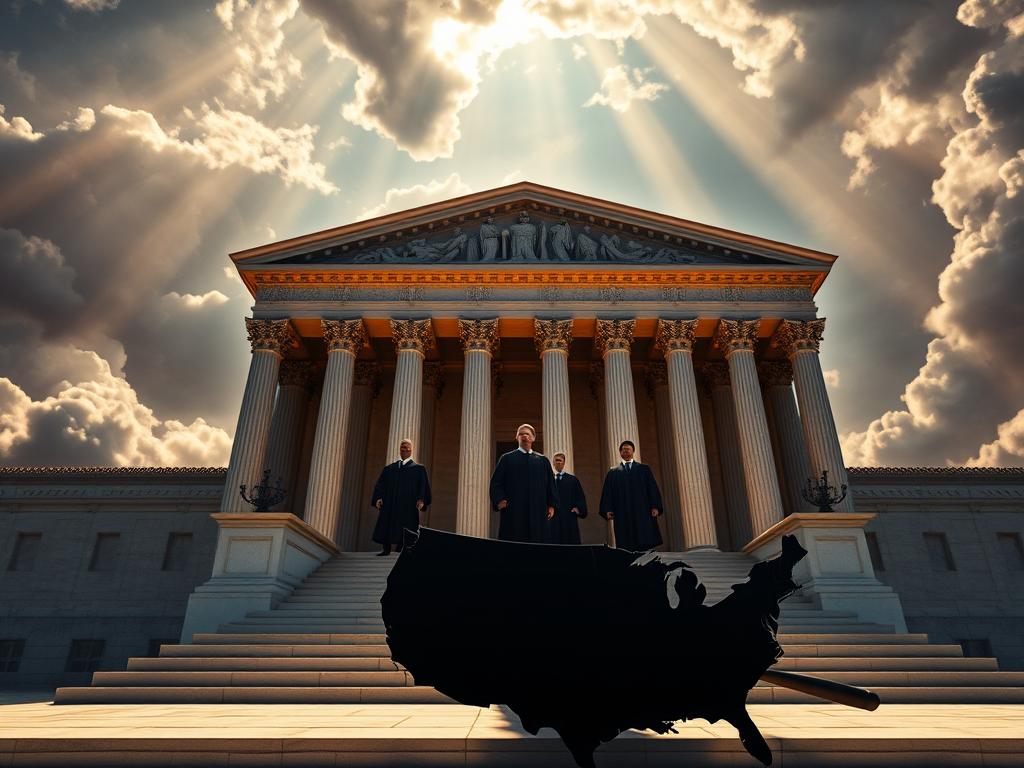
The original architects of the American government envisioned the judiciary as the least formidable of the three branches, lacking the executive’s force and the legislature’s financial sway. But as we navigate the complexities of the 21st century, the judiciary’s role has transformed in ways perhaps even the Founding Fathers couldn’t have predicted. What was once a body designed as a neutral arbiter has come to wield significant influence, reshaping societal constructs and testing the boundaries of judicial power.
One might argue that this shift was inevitable as societal issues grew more complex and interwoven with legal interpretations. Courts have found themselves at the forefront of defining contentious issues ranging from civil rights to corporate governance, often serving as the final word in the face of congressional gridlock. While some advocate for the judiciary’s active function in safeguarding individual rights and fortifying democracy, others express concern over unelected judges exercising unchecked rule over pivotal societal decisions.
This rising influence raises a pivotal question: Is the judiciary overstepping its intended bounds, or is it merely adapting to fill a leadership vacuum left by other branches? The answer may lie somewhere in between. Complex legal dilemmas demand nuanced understanding, and judiciary involvement is sometimes necessary to navigate them. However, when judges are perceived as pushing personal agendas or partaking in political activism, their roles evolve from interpreters of law to something resembling policymakers.
Moreover, the increasing frequency of judicial interventions has heightened tensions between state and federal jurisdictions, often placing the judiciary in the midst of political crossfires. This not only questions the impartiality that is the bedrock of judicial trust but also complicates the separation of powers that is crucial to democratic governance. The challenge lies in preserving the delicate balance between judicial interpretation and overreach, ensuring that courts do not inadvertently drift into realms meant for elected representatives.
In conclusion, the judiciary’s growing influence underscores a significant reexamination of its role in contemporary governance. While its power can act as a safeguard against excesses by the other branches, it is imperative to maintain its function within the parameters originally envisaged. This equilibrium is vital in ensuring that the judiciary remains a fair and impartial pillar of justice, guiding society without overshadowing the democratic process. As we continue to tread this delicate line, vigilance and dialogue will play crucial roles in maintaining a balanced distribution of power.