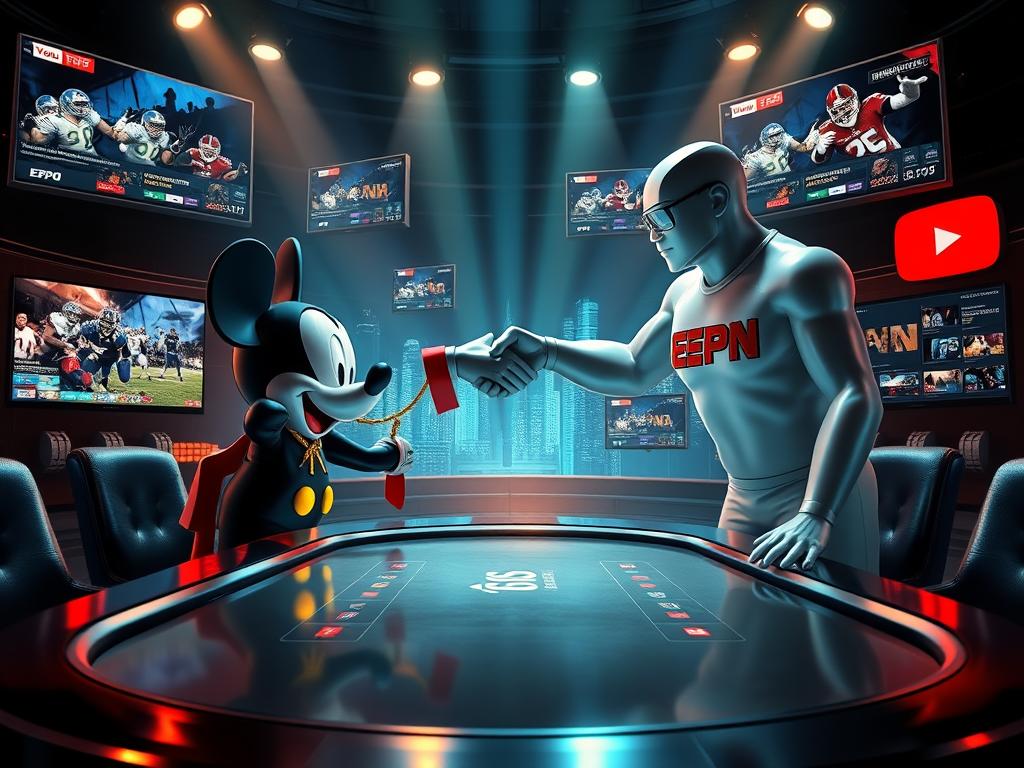
The digital streaming battleground has once again witnessed a showdown between two entertainment giants. After a brief but intense standoff, Disney and YouTube TV have reached a resolution over their contract dispute, restoring beloved channels like ESPN to eager subscribers. This resolution marks the end of a short-lived frustration for sports enthusiasts and Disney aficionados who temporarily lost access to their favorite shows and live events. What seemed like a high-stakes poker game over control and content proved, in the end, to seek a mutual understanding of today’s media landscape.
At the heart of the dispute was Disney’s assertion of leverage over content distribution, which initially led to a standstill. For YouTube TV, this situation was critical not only for maintaining its subscriber base but also for keeping its streaming portfolio robust and competitive. The deal’s announcement is a sigh of relief for both companies, each realizing that despite their negotiating power, consumer satisfaction ultimately drives their success. Both parties seem to have recognized that collaboration, rather than conflict, serves their interests and those of their diverse audiences.
The recalibrated deal underscores the increasing importance of strategic partnerships in the streaming industry. With a plethora of platforms fighting for consumer attention and loyalty, content providers and distributors must often recalibrate their strategies. The agreement sets a precedent for other standing negotiations in the industry; perhaps reinforcing that while financial terms are vital, sustained viewer engagement is paramount. This should serve as a reminder to all within the streaming space that flexibility and understanding are crucial in this dynamic digital age.
While the dispute may have ended amicably, it also highlights the ever-evolving challenges that arise as traditional media companies navigate newer, tech-driven landscapes. Disney’s approach, leveraging its broad array of content, shows a fundamental shift in how old media interacts with modern streaming giants. For YouTube TV, this agreement ensures it remains a key player in providing comprehensive and diverse content, critical in attracting and retaining subscribers in an increasingly competitive market.
As we reflect on this resolution, one can’t help but wonder about future disputes and how companies might further innovate their strategies. This deal not only represents a win for subscribers, who regain their cherished content, but also a strategic victory for both companies as they future-proof their operations in a fiercely competitive sector. Through resolutions like these, it becomes evident that while the media landscape will forever be in flux, partnerships that prioritize consumer interests can yield positive outcomes for all stakeholders.