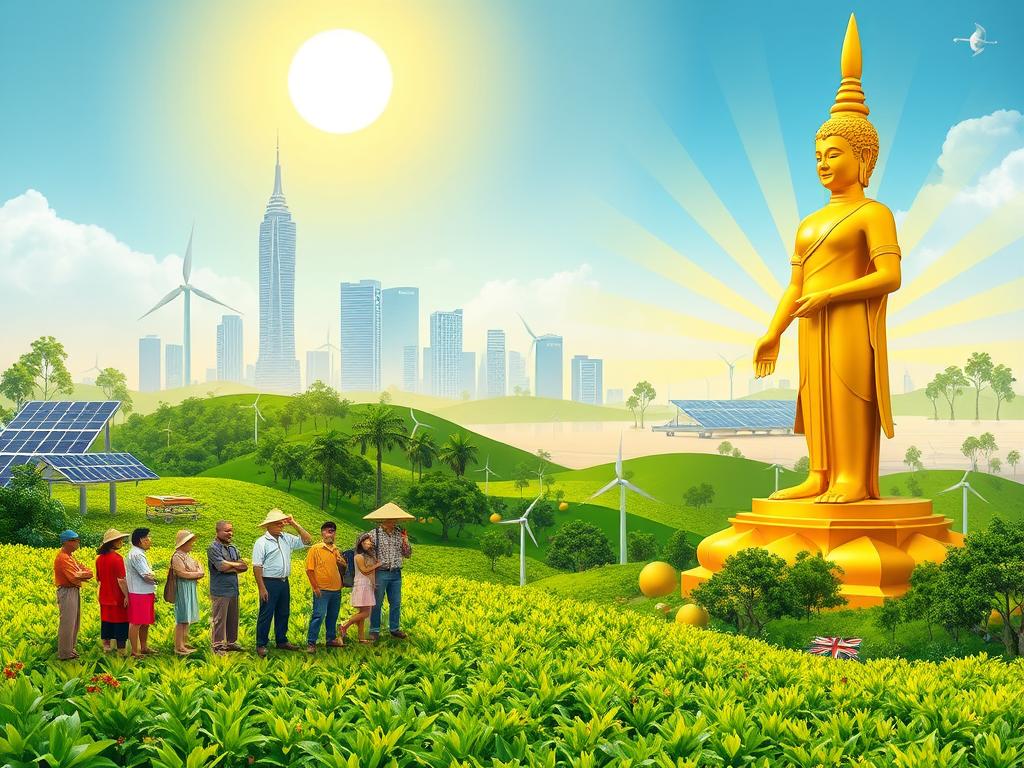
In a significant stride towards environmental reform, Thailand has recently taken a profound step by submitting its Nationally Determined Contribution (NDC 3.0) to the UNFCCC. This pivotal move not only marks Thailand’s dedication to the global climate agenda but also underscores its commitment to fostering equitable growth and justice for its citizens. By participating actively in the global discourse, Thailand is demonstrating leadership in the region and setting an example for other developing nations grappling with the impacts of climate change.
Thailand’s NDC 3.0 is more than a policy document; it is a testament to the nation’s intent to balance economic growth with environmental sustainability. The strategy outlined in this document emphasizes a reduction in greenhouse gas emissions, a shift towards renewable energy, and enhancements in resilience against climate impacts. Such measures are essential for Thailand, a country whose diverse ecosystems and agricultural sectors are particularly vulnerable to climate variation and extreme weather events.
One of the most intriguing facets of Thailand’s climate strategy is its focus on justice. The concept of ‘climate justice’ acknowledges that climate change impacts are not evenly distributed and recognizes the need to support those most affected by environmental degradation. Thailand’s acknowledgment of this principle shows an understanding of the intersection between social equity and environmental policy, highlighting a framework that not only aims to mitigate climate change but also redistributes opportunities and resources to marginalized communities.
The implications of Thailand’s submission are profound. By committing to these ambitious targets, Thailand is positioning itself as a key player in the regional and global effort to combat climate change. Moreover, this contribution can inspire other emerging economies to pursue similar pathways, fostering a collective push towards sustainable development. International cooperation and financial support mechanisms will be crucial in supporting these nations’ initiatives, as they work to keep their economies robust while curbing their carbon footprint.
Ultimately, Thailand’s NDC 3.0 serves as a beacon of hope, illustrating how nations can align their economic aspirations with environmental stewardship. It is a blueprint for how climate finance and policy can converge to create a more balanced and equitable world. As we reflect on Thailand’s commitment, the global community must continue to support and replicate such frameworks, ensuring that the fight against climate change is comprehensive, inclusive, and just. The journey towards sustainability is shared, and with efforts like Thailand’s, the goal of climate justice for all is undeniably within reach.