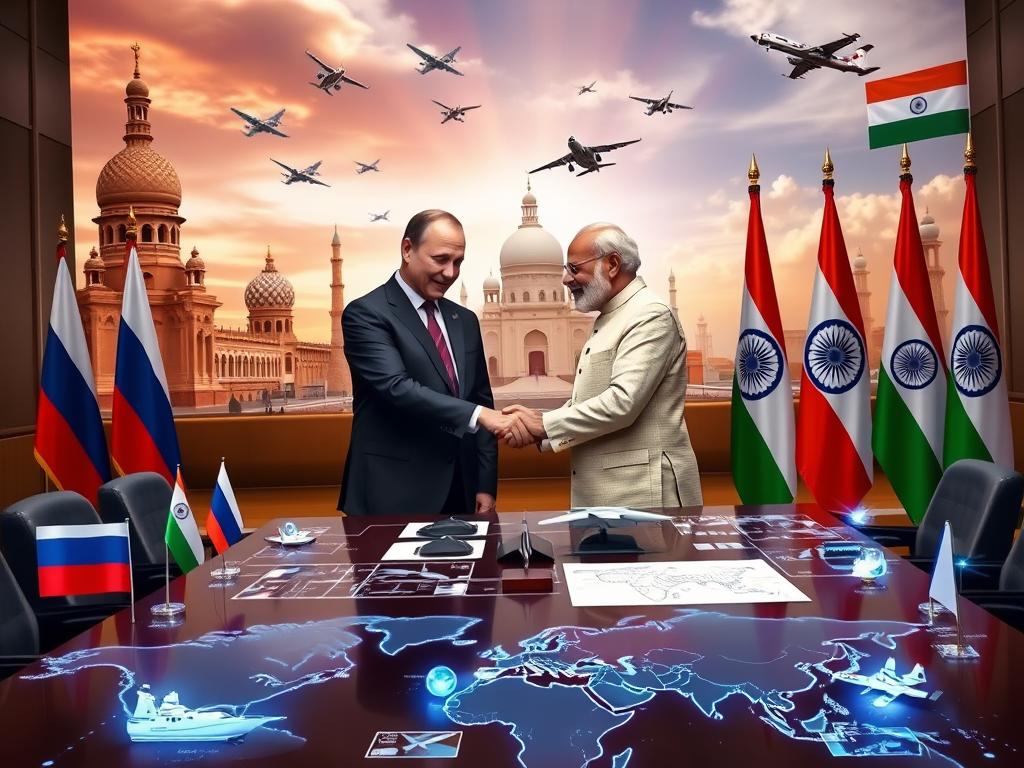
Russian President Vladimir Putin’s upcoming visit to India marks an important chapter in international diplomacy, with both nations poised to expand their collaboration across various technological and economic sectors. As global dynamics shift, such alliances underscore the significant role regional partnerships play in promoting not just economic growth, but also geopolitical stability. This visit offers a window of opportunity for India and Russia to strengthen their cooperation, particularly in the spheres of defense and technology.
The discussions are expected to focus heavily on joint ventures in military and civilian technologies, with a particular emphasis on aerospace and maritime innovations. Both nations have a historical precedent of arms trade and technology sharing, but this visit aims to take these partnerships to new heights. Putin and Indian leaders will deliberate on a slew of deals, from fighter jet production to the development of enhanced trade routes connecting Asia and Europe. Such efforts highlight an understanding that technological alliances can serve as a catalyst for broader economic integration.
India stands at a critical juncture where diversifying its defense ties could reduce dependency on Western technologies. Russia, long established as one of India’s main arms suppliers, offers not only technical expertise but also a willingness to produce equipment locally. This complements India’s ‘Make in India’ initiative, aimed at bolstering domestic manufacturing capabilities. The collaboration potentially paves the way for advancing India’s indigenous defense sector while also creating ample job opportunities.
Moreover, the cooperation isn’t confined to defense and aerospace. With eyes set on space exploration and advanced telecommunications, both countries are exploring partnerships that extend to satellite technology and digital infrastructure. This could significantly boost India’s ambitions in becoming a key player in global digital transformation and space research. By harnessing Russian expertise in these areas, India could make significant progress toward its goal of achieving technological self-reliance.
In conclusion, President Putin’s visit to India is more than a mere continuation of defense deals; it is a strategic alignment aimed at fostering comprehensive development and shared prosperity. As both countries navigate the complex landscape of global politics and economics, stronger bilateral ties will not only benefit the two nations but could also serve as a model for other countries looking to enhance their trading and technological capacities through collaboration. Such engagements highlight the importance of connectivity and mutually advantageous partnerships in an increasingly multipolar world.