





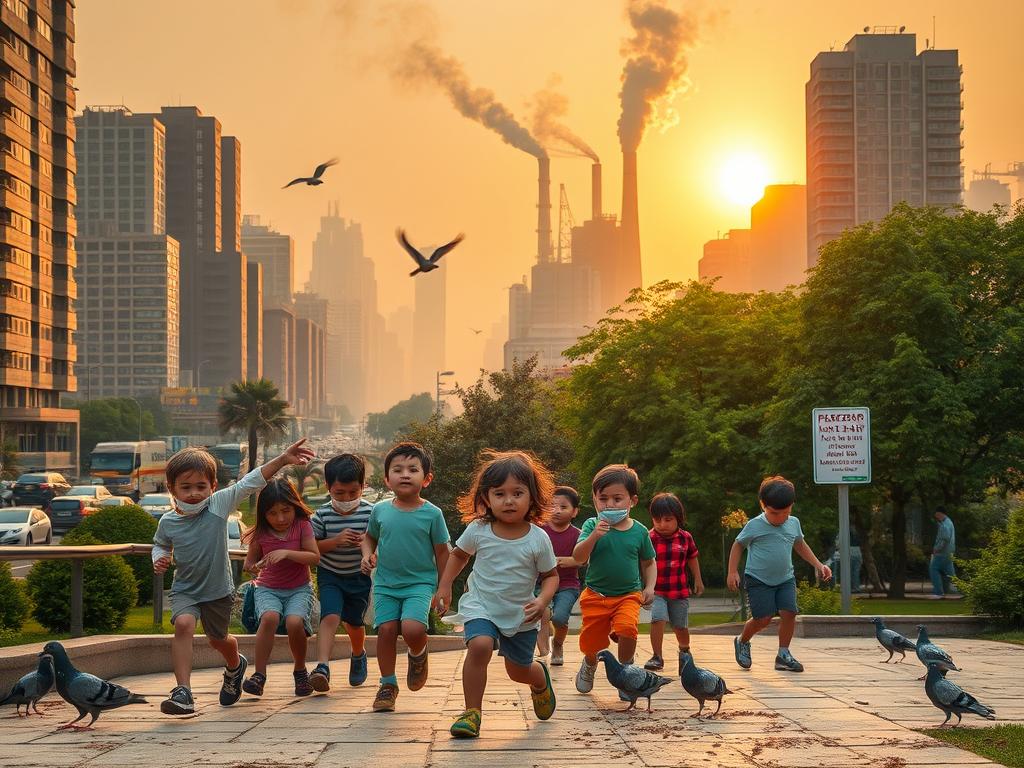
In the bustling backdrop of urban life, children’s respiratory health often goes unprotected, lurking under the radar amidst the cacophony of modern living. Experts are sounding an alarm over two inconspicuous yet pervasive threats: air pollution and pigeon droppings. While the former has been a well-documented environmental foe, the latter emerges as a surprising instigator of respiratory issues, especially concerning in densely populated areas.
Air pollution, a perennial enemy of public health, is an insidious blend of vehicular emissions, industrial discharges, and particulate matter that infiltrates the very air we breathe. Children’s developing lungs, coupled with their higher respiration rate compared to adults, make them uniquely susceptible to the harmful effects of polluted air. Short-term exposure can lead to irritated airways and asthma, while chronic contact sets the stage for more severe, lifelong respiratory ailments. Despite regulatory measures, pollution continues to permeate urban environments, pressing the need for vigilant improvement.
Perhaps more surprisingly, pigeon droppings have been identified as a stealthy adversary within the urban landscape. These seemingly innocuous remnants of city-dwelling birds contain fungi and pathogens that, when inhaled, can trigger respiratory issues in children. In cities where pigeons are a ubiquitous presence, their droppings accumulate on buildings and public spaces, effectively becoming airborne pollutants themselves. Awareness of this risk is crucial for parents and city planners alike, as even indirect contact with these droppings can exacerbate asthma and other respiratory conditions in children.
Addressing these dual threats requires a two-pronged approach: enhancing air quality management and incorporating wildlife management within urban design. Urban planners and policymakers must collaborate to implement stricter air quality regulations and encourage the development of green spaces that act as natural air filters. Simultaneously, humane and effective strategies must be devised to control pigeon populations and ensure that public spaces are regularly sanitized to reduce health risks associated with bird droppings.
While the challenges are formidable, they are surmountable through concerted efforts and community engagement. Parents, educators, and local governments have a shared responsibility to safeguard the environments in which children grow and thrive. By prioritizing clean air initiatives and proactive urban hygiene, we can curtail these silent invaders and ensure that the youngest among us can breathe freely and lead healthier lives. Only then can we claim to build cities that truly foster wellbeing, beginning with the most vulnerable members of our society: our children.