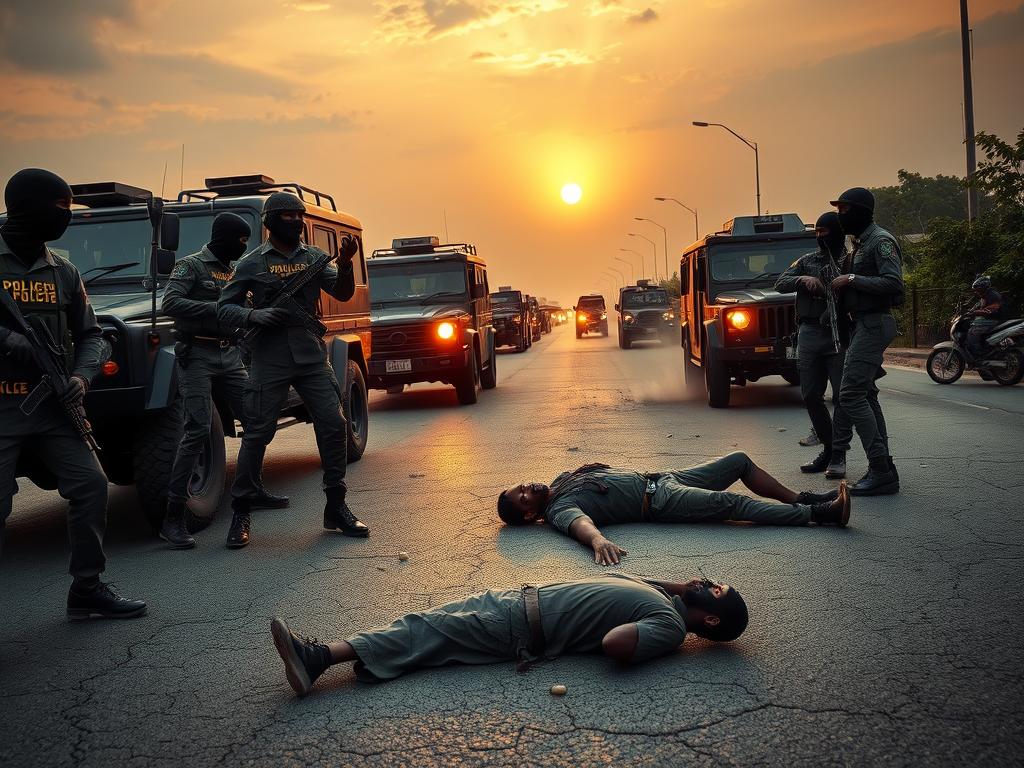
In a chilling reminder of the fragility of personal security, former Anambra State Governor and past Minister of Labour, Senator Chris Ngige, recently recounted the harrowing attack on his convoy. The incident, which took place as his aides were returning from an errand, turned fatal with the loss of a civilian life and left his police orderly injured and stripped of his equipment. Ngige, addressing the media, dispelled any misinformation about his demise, asserting that he emerged unscathed from this malevolent encounter.
The perpetrators, wearing disguises as law enforcement personnel, intercepted Ngige’s convoy and engaged in a heated altercation with his security team. The confrontation escalated until Ngige’s orderly was disarmed and injured. What stands out in this tragic episode is the audacity of the attackers to openly accuse the security personnel of serving what they branded as a ‘zoo government’, a term often used by separatist organizations to disparage the Nigerian state. This raises critical concerns about the intentions of opportunistic elements undermining the region’s civility.
Senator Ngige speculates on the attackers’ motives, weighing the possibility of a targeted assault against perhaps an opportunistic quest for ammunition and uniforms. His long-serving pilot driver, known for his consistent proximity to Ngige, prompts a question of deliberate target premeditation. However, there is also a chance this could have been a tragic case of mistaken identity or an opportunistic attack by criminals seeking armament. No matter the motive, the brazen assault signifies a broader threat to peace and raises the stakes for local authority to clamp down on such rogue factions.
The political landscape’s complexity is further compounded by Ngige’s reference to the contentious detainment of Nnamdi Kanu, leader of the Indigenous People of Biafra (IPOB). The attackers’ rhetoric draws curious parallels to IPOB’s derogatory characterization of the Nigerian state, suggesting discontent that blurs into radical action. Ngige’s reflections hint at a deep-seated need for political resolution and rehabilitation for Kanu, whose mental health status remains contentious, urging for a reassessment from mere criminalization to a more nuanced understanding.
As Ngige navigates personal threats amid public responsibilities, his experience underscores the delicate balance of maintaining peace and security. With the festive season approaching, ensuring safety becomes paramount for Anambra’s citizens returning home. This incident is a clarion call for intensified vigilance and proactive measures to secure a region that has seen months of relative calm, a calm that now sees itself under potential threat. The hope is that local authorities will swiftly bring the culprits to justice, thereby reinforcing an atmosphere of peace and safety for all.