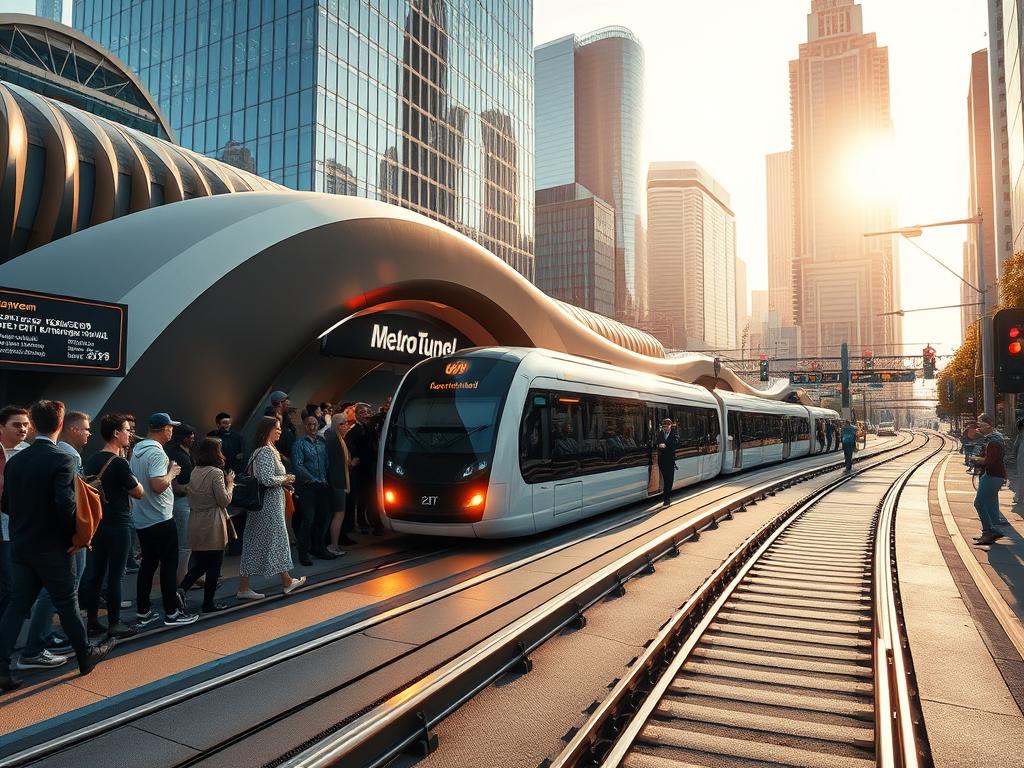
Melbourne’s bustling city life has long been both its charm and its challenge. With countless commuters relying on the city’s rail network, the daily shuffle from one end of Melbourne to the other often tests the patience of even the most seasoned travelers. However, change is on the horizon with the introduction of Melbourne’s new Metro Tunnel, a project that promises to significantly alter the dynamics of daily commutes. For individuals like Harveen, this means shaving an impressive 40 minutes off their daily travel time—a substantial reprieve for busy schedules.
The Metro Tunnel’s impact is expected to ripple far and wide, promising quicker and more direct travel options by reducing congestion on existing lines. By integrating this cross-city line, Melbourne aims to alleviate the pressure on the city’s transport infrastructure while connecting previously separate rail lines. This new connectivity is set to simplify transit for many, allowing for smoother transitions and less time spent waiting for connections. It’s a testament to the city’s commitment to modernization and efficiency in public transport.
Despite these sweeping benefits, some commuters may experience longer journeys as the network undergoes a period of adjustment. These changes, however unanticipated they might appear, are often necessary growing pains in the overarching goal of a longer-term benefit. As with any major infrastructure shift, certain routes may require recalibration as the new system beds in, but the overall expectation is an enhanced network that supports Melbourne’s growing population in the years to come.
Innovations like the Metro Tunnel are critical not only for easing current transit woes but also for future-proofing the city against further commuter growth. As urbanization continues, investments in infrastructure such as this are crucial to maintaining the quality of life and economic vitality. The Metro Tunnel should not be seen merely as a functional addition but as a strategic enhancement that aligns with broader urban planning initiatives aimed at sustainability and resilience.
In conclusion, while not without its teething issues, the Metro Tunnel is set to be a transformative project for Melbourne’s public transport landscape. It heralds a shift towards a more efficient and interconnected rail service, with substantial time savings for many and a broader impact that will unfold over time. As with any substantial change, patience and adaptation will be key, but the promise of more time and fewer transit frustrations will undoubtedly appeal to the countless Melburnians navigating their daily commutes.