






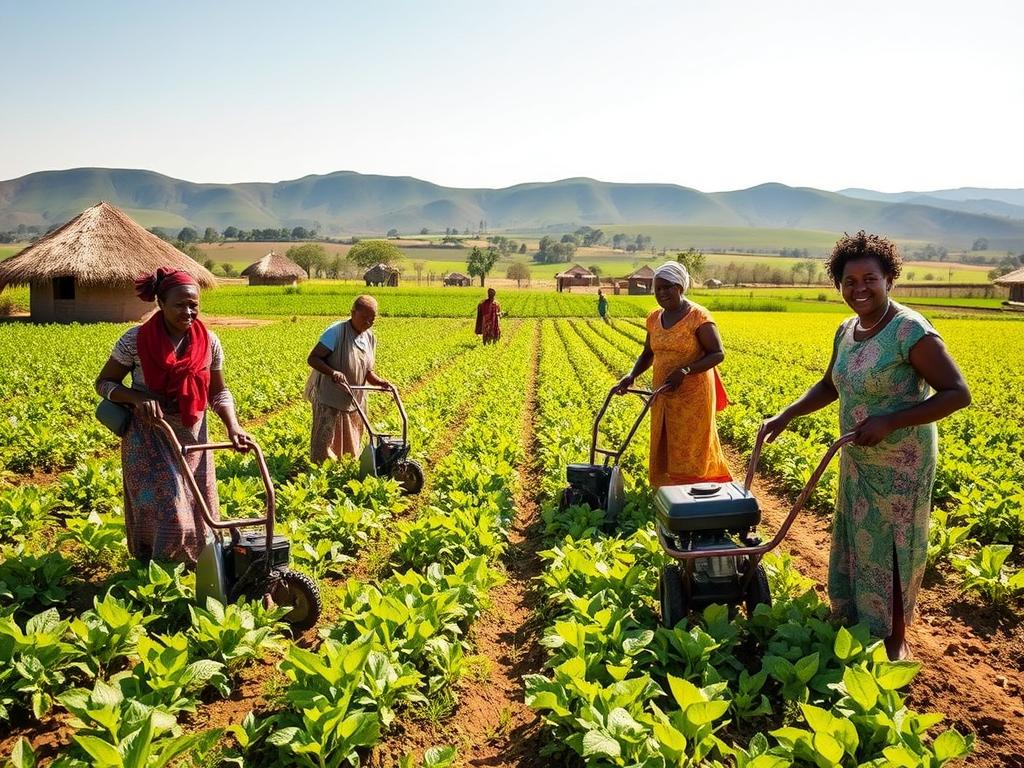
In the heart of Gwanda, a remarkable transformation is underway as villagers enthusiastically adopt mechanized solutions to elevate their agricultural practices. Historically, the region’s farmers approached the Pfumvudza/Intwasa farming model with skepticism, primarily due to its laborious demands. However, recent strides by the Ntanye Women’s Farming Group have turned hesitation into enthusiasm, showcasing a promising future for sustainable farming in the area.
The introduction of mechanization tools has been a game-changer for these local farmers. Instead of the manual toil of digging numerous planting holes, modern equipment now alleviates the physical burden, making the cultivation process more efficient. As resources and time are saved, this shift allows farmers to focus on improving crop quality and yield, essential factors for ensuring food security and economic resilience within the community.
Mechanization is not only revolutionizing the way these villagers farm but also improving their livelihoods. By reducing the labor intensity, more members of the community can engage in agricultural activities, including women and the elderly. This inclusive approach not only empowers various demographics within Gwanda but also increases household incomes, broadening the socio-economic impact of modern farming practices.
The successful adaptation of mechanized Intwasa could also inspire neighboring regions to follow suit, potentially transforming agricultural landscapes across Zimbabwe. As climate change presents challenges to traditional farming methods, innovation is crucial. With Gwanda setting an encouraging example, there is a beacon of hope that agriculture can be both productive and sustainable amidst evolving environmental conditions.
In embracing mechanization, Gwanda’s villagers are not just cultivating crops; they are sowing the seeds for a vibrant, self-sufficient future. Their journey stands as a testament to the power of community initiative and adaptation in overcoming challenges. As they lead the way in modernizing agriculture, they also inspire a broader movement towards agricultural resilience and sustainability across the continent.