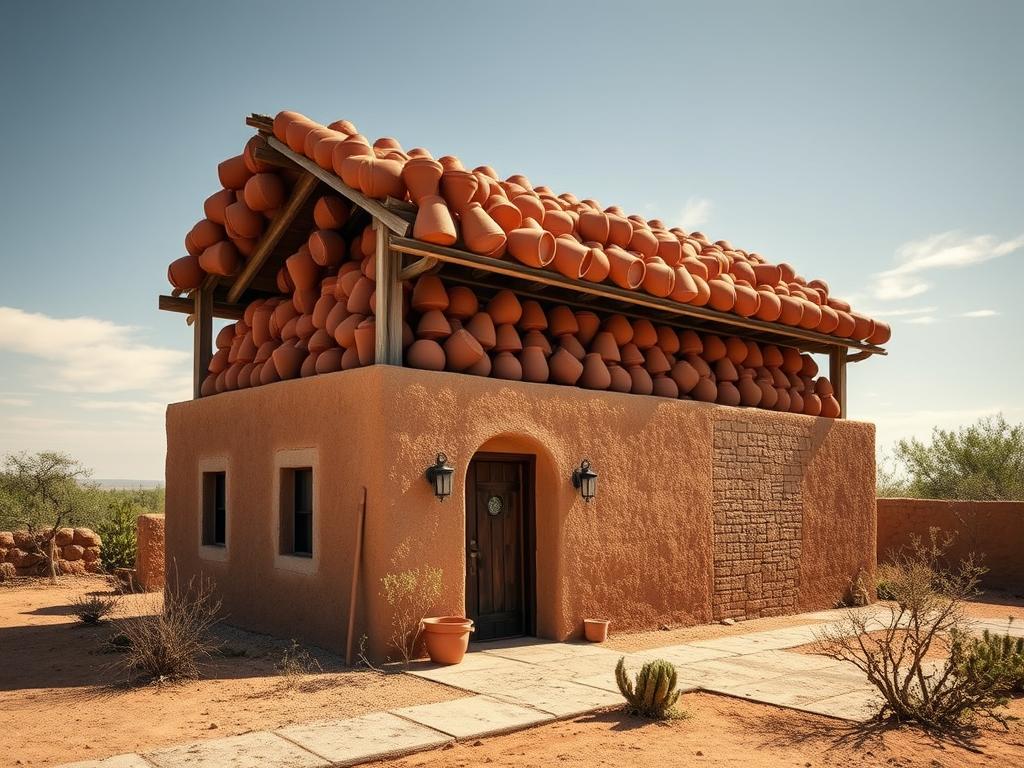
In a world where architectural beauty often comes with a hefty price tag, a remarkable innovation is turning heads, not for its opulence but for its ingenious simplicity and affordability. This $2,500 home, which has captured the attention of the architectural community, uses traditional materials in a modern context to combat high temperatures. But what sets it apart? The creative use of clay pots—a method that might seem unconventional yet proves to be both effective and sustainable.
At first glance, the design may not fit the mold of what many envision when thinking of award-winning structures. There’s no glimmering façade or sprawling grounds; instead, it’s a testament to thoughtful engineering and environmental harmony. The layout combines rustic charm with cutting-edge problem-solving; an intriguing juxtaposition where old techniques meet contemporary needs.
With climate change manifesting in more extreme weather patterns, the role of sustainable architecture has never been more pressing. This design does not rely on high-tech cooling systems but rather incorporates an eco-friendly strategy that utilizes clay pots to naturally regulate indoor temperatures. The concept capitalizes on the pots’ ability to retain moisture and cool down the air as it passes through, demonstrating an age-old technique that modern applications had almost neglected.
What makes this project even more fascinating is its accessibility. Costing only $2,500 to construct, it challenges the notion that cutting-edge, sustainable living is only attainable for the wealthy. This model serves as an inspiration for communities across the globe that are looking for affordable housing solutions without compromising on quality of life or environmental impact. It’s a reminder that innovation doesn’t always stem from groundbreaking technology but often from reimagining what we already have.
In conclusion, the $2,500 home leveraging clay pots for cooling exemplifies the intersection of back-to-basics ingenuity and sustainability. It prompts a rethink of our understanding of value in architecture—not just in terms of investment, but also in how it enriches lives, respects the planet, and redefines luxury as harmony and efficiency. This approach not only addresses today’s challenges but could also be a blueprint for a more conscious and inclusive future in housing design.