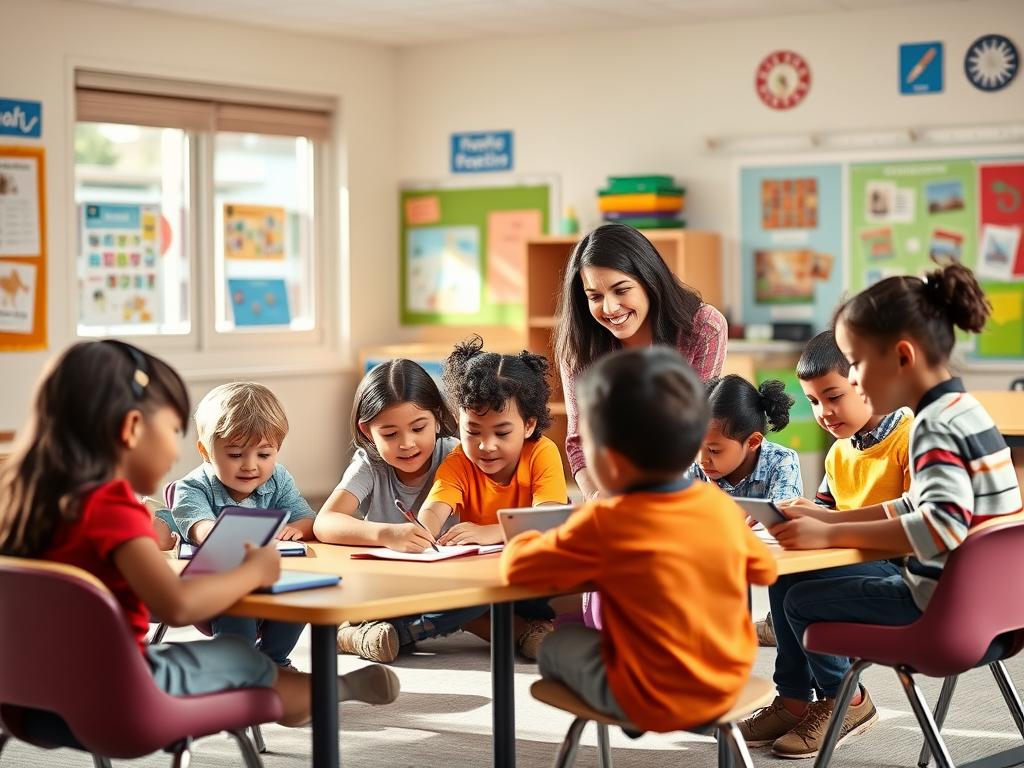
The concept of labeling children as ‘gifted’ has sparked an ongoing debate in educational circles across the United States. Traditionally, the term has been used to identify students who exhibit exceptionally high levels of aptitude or competence compared to their peers. However, as school districts strive for inclusivity and equity, the utility and fairness of this moniker are under scrutiny. Are we setting gifted students apart in a manner that might create unintended consequences?
On one hand, specialized programs for advanced learners can offer immense benefits, catering to students who might otherwise feel unchallenged in a standard classroom environment. These programs often provide a curriculum that nurtures their intellectual capabilities, fostering creativity and critical thinking. However, critics argue that this segregation of talent can inadvertently create an educational hierarchy that stigmatizes average or differently-abled students, potentially impacting their self-esteem and educational opportunities.
The question then arises: should the focus shift from labeling students to creating robust, individualized learning opportunities for all? By eliminating labels, schools might focus more on tailored educational strategies that address the needs of every student, gifted or not. This approach encourages a broader understanding of intelligence and talent, recognizing that each child has unique strengths and potential outside conventional academic evaluations.
Moreover, the socio-economic factors that often influence who gets labeled as gifted cannot be ignored. Students from underprivileged backgrounds might miss out on such opportunities due to limited access to resources or subjective bias in evaluations. A shift from traditional gifted programs to more comprehensive models of student support could bridge gaps in education and ensure a more equitable distribution of resources and attention.
While there is no one-size-fits-all answer, reassessing how we categorize and educate so-called gifted students could spark a positive transformation within our educational systems. Moving towards an approach that values and nurtures diverse abilities without confining students to predefined labels could lead to a more inclusive and dynamic learning environment for all. As we rethink these paradigms, we take steps toward harnessing the full potential of every child in our classrooms.