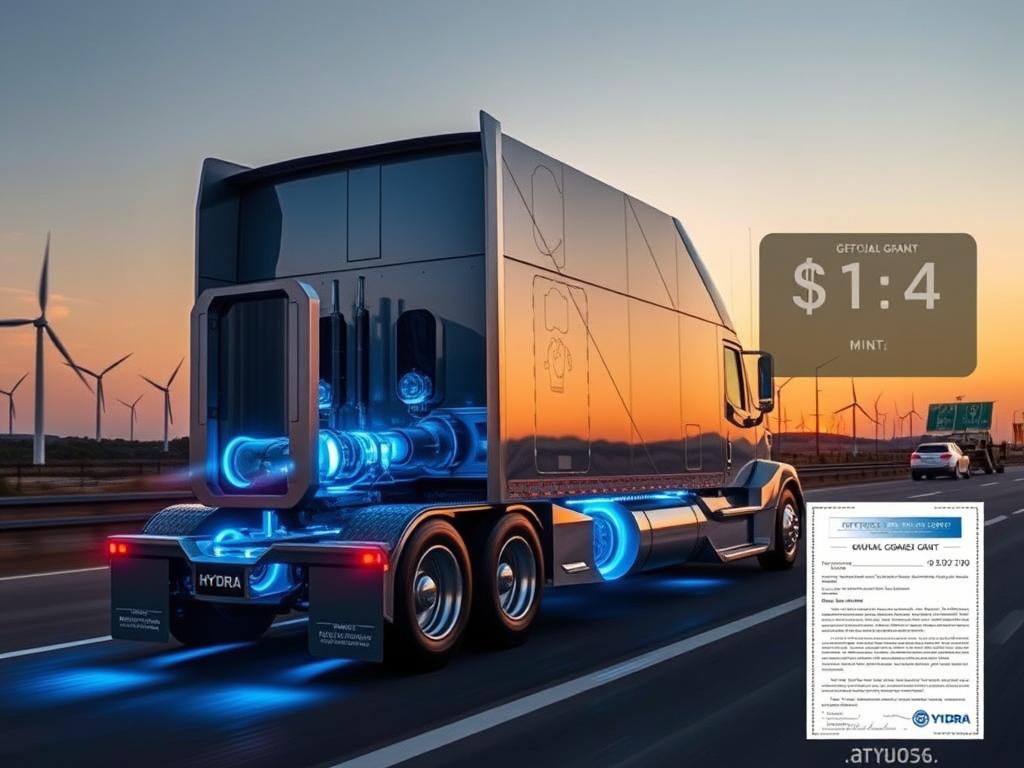
In a bold stride towards a cleaner future, Delta’s Hydra Energy has been awarded $1.4 million by the federal government to revolutionize the trucking industry with hydrogen technology. This significant investment marks a pivotal moment as the transportation sector seeks viable solutions to curb emissions while maintaining operational efficiency. Hydra Energy is taking on the ambitious task of enhancing hydrogen co-combustion engines, setting a fascinating precedent for eco-friendly advancements in heavy-duty vehicles.
The essence of Hydra Energy’s mission is to retrofit existing diesel engines in trucks, allowing them to burn hydrogen simultaneously. This innovative approach turns these vehicles into more sustainable machines, significantly lowering their carbon footprint without the need for entirely new infrastructure. Such transformational technology is not only economically sensible but also essential for meeting stringent environmental regulations and public demand for greener industry practices.
Hydrogen, dubbed by many as the ‘fuel of the future,’ offers a promising path to zero-emission transportation. However, the path is not without challenges. Key among them is the need for robust technology to store and deliver hydrogen efficiently, outside of building a widespread network for refueling stations. Hydra Energy’s initiative addresses these hurdles by optimizing existing infrastructure, which could lead to faster adoption and less resistance from industry stakeholders looking to minimize transition costs.
Beyond technological challenges, there is a significant cultural shift that must accompany these innovations. The trucking industry, a backbone of global commerce, is traditionally risk-averse due to high operational costs and tight margins. Agencies such as Hydra must not only prove the economic viability of hydrogen retrofitting but also ensure that the transition is as seamless as possible for the end users. By focusing on both performance and ease of integration, Hydra Energy could pave the way for more companies to follow suit.
This federal investment in Hydra Energy symbolizes more than financial backing—it’s a vote of confidence in a future driven by sustainable transportation. As this partnership develops, it could open the doors to more public and private sector collaborations, accelerating advancements across other sectors dependent on heavy-duty vehicles. Ultimately, initiatives like these remind us that achieving a sustainable future requires innovative thinking grounded in practical application, ensuring that environmental responsibility goes hand in hand with economic progress.