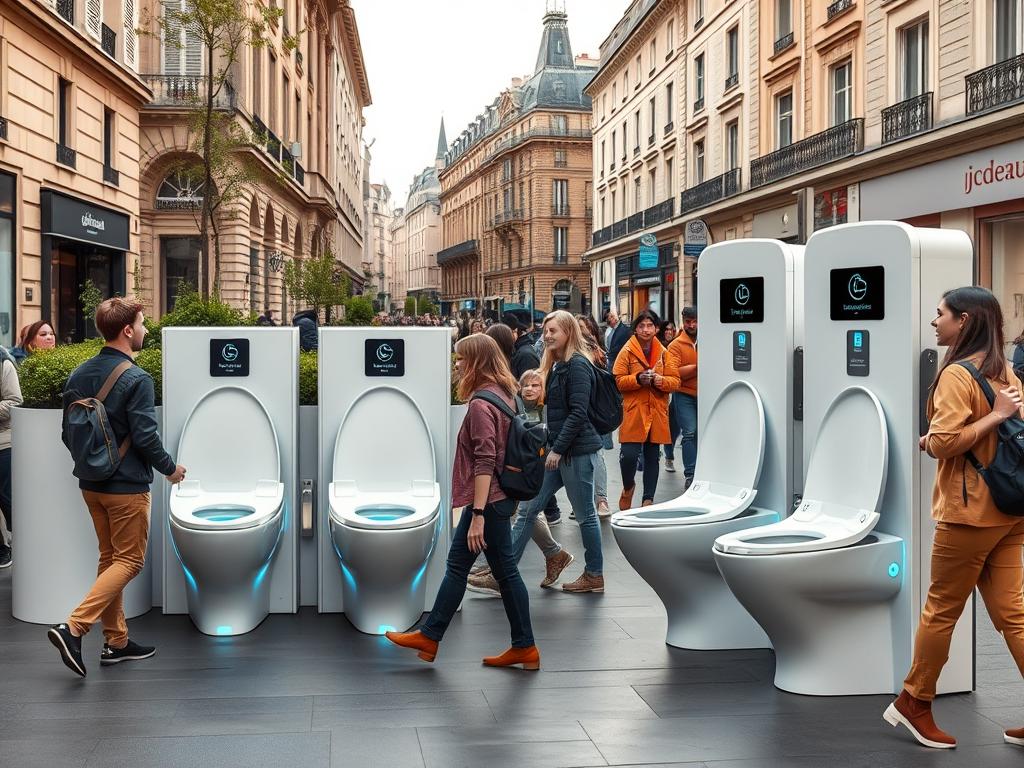
As World Toilet Day rolls around, Paris is making waves with an innovation that promises to raise the bar for urban hygiene and convenience. The city has completed the installation of the world’s largest network of self-cleaning public toilets, spearheaded by JCDecaux, a global leader in street furniture and public facilities. This impressive feat is not only a technological marvel but also a significant step towards enhancing public sanitation infrastructure across the globe.
These state-of-the-art facilities are designed to elevate the everyday experience of city dwellers and tourists alike. Each toilet is equipped with a futuristic self-cleaning mechanism that cleans both the seat and floor after each use, ensuring that hygiene standards are consistently maintained. This approach aims to diminish the stigma often associated with public restrooms, transforming them into spaces that are as clean as private bathrooms.
The rollout of these toilets in Paris is a prime example of how urban infrastructure can keep pace with our evolving societal needs. The bustling metropolis is often recognized for its artistic and cultural contributions; now, it has become a pioneer in public sanitation as well. With each toilet employing automatic cleaning systems along with sustainable features such as water-saving technologies, Paris has set an example in efficiently marrying functionality with environmental consciousness.
This development also presents an opportunity for other cities worldwide to reconsider their public restroom facilities. Many urban areas struggle with inadequate sanitation services, especially in densely populated regions. JCDecaux’s success in Paris could be a catalyst for change, inspiring cities everywhere to innovate and prioritize the health and well-being of their residents through similar sustainable projects.
Ultimately, while self-cleaning toilets may seem like a small advancement in the grand scheme of urban infrastructure, they signify a progressive step towards the improvement of public amenities. As more cities watch Paris lead this charge, we can hope for a future where such facilities become the norm rather than the exception. With increased attention towards public hygiene and innovative solutions, Paris has once again set a precedent for others to follow—a commitment to progress that is as refreshing as it is necessary.