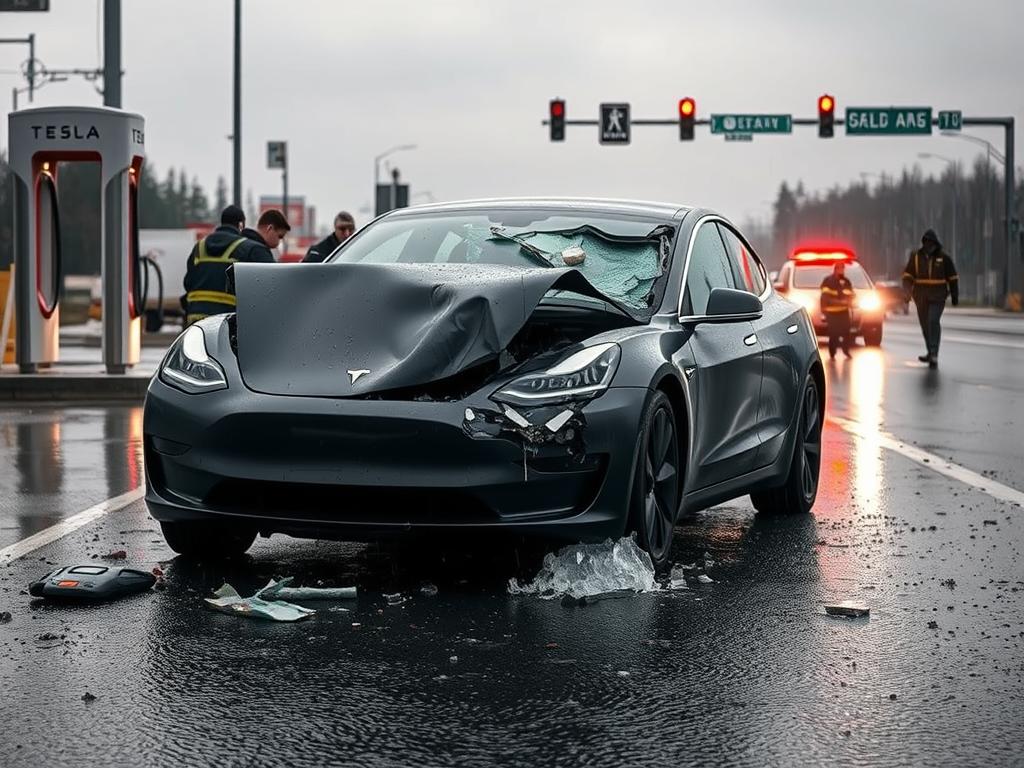
In the ever-evolving landscape of automotive innovation, Tesla has long stood at the forefront, championing electric vehicles and advanced automotive technology. However, the recent lawsuit stemming from a tragic incident in Washington state serves as a stark reminder of the challenges that accompany pioneering breakthroughs. The lawsuit claims that a design flaw within a Tesla Model 3 led to its sudden, uncontrollable acceleration, culminating in a devastating crash that claimed the life of a woman and left her husband gravely injured.
As automakers delve deeper into the realm of autonomous driving features, the balance between human oversight and technological control becomes increasingly crucial. Tesla’s reputation is built upon its commitment to pushing the boundaries of what’s possible on the road, often integrating cutting-edge technology that promises enhanced safety and convenience. Yet, this incident raises critical questions about the company’s design protocols and the reliability of their systems when it comes to extreme, unexpected scenarios.
For consumers, trust in automotive technology hinges not only on innovation but also on the assurance of safety. The allegations suggest a potential flaw in Tesla’s Model 3—a vehicle celebrated for its sophistication and performance. Should these claims be substantiated, the implications could be significant, both in terms of consumer confidence and the industry’s approach to AI-driven vehicle design. While Tesla has often been in the spotlight for its trailblazing efforts, moments like these underscore the importance of continually reassessing and improving safety standards.
Beyond the immediate impacts of the lawsuit, there’s a broader conversation to be had about the role of accountability and transparency in technological advancements. While consumers fawn over the latest features, those innovations carry inherent risks that must be mitigated responsibly. This tragic incident serves as a somber opportunity for the automotive industry to scrutinize and reinforce the robustness of their safety measures, ensuring that rapid development does not outpace stringent safety considerations.
The journey towards a future populated by autonomous vehicles is filled with promise, yet it is fraught with challenges that demand thoughtful resolution. As this lawsuit unfolds, it serves as a poignant reminder of the delicate interplay between innovation and responsibility. For Tesla, and the industry at large, the path forward must be paved with an unwavering commitment to safety, as technology only truly advances when it uplifts and protects those it serves.