






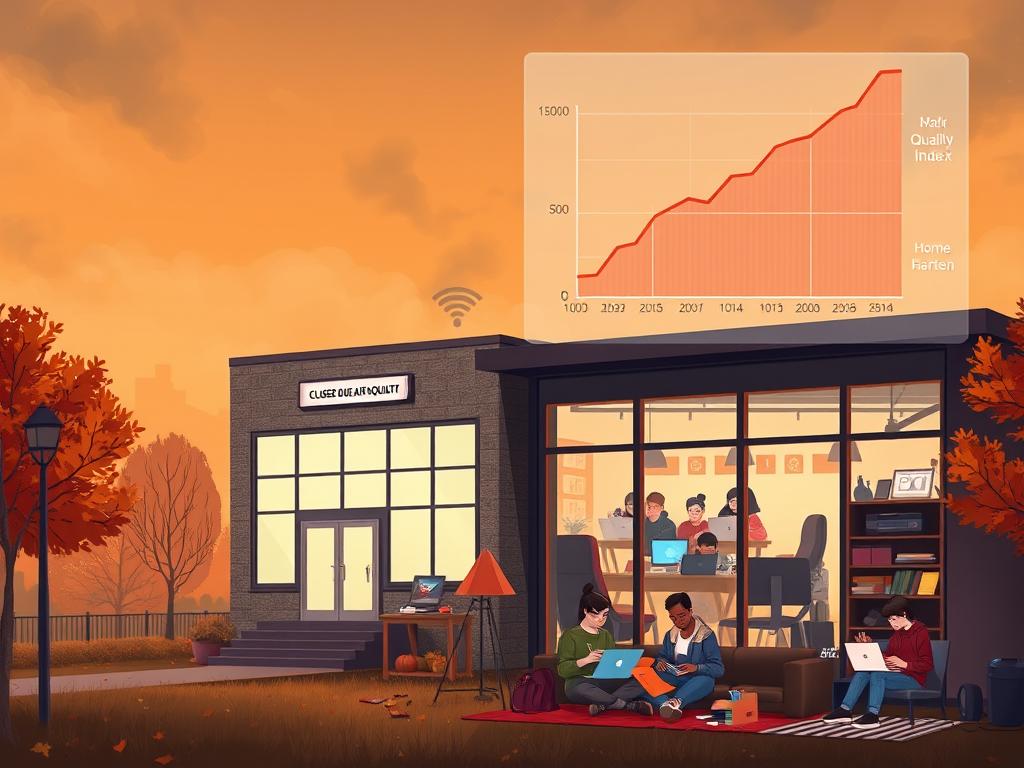
The intersection of health and education has reached a critical juncture this November as poor air quality forces several states to make tough decisions about school operations. With the air quality index (AQI) hitting alarming levels, a number of schools have announced closures or pivots to online learning, effective November 13. This move aims to safeguard the health of students and staff, while maintaining educational continuity. But what does this mean for families and how are different states responding?
As environmental concerns intensify, the education sector is adapting swiftly to meet new challenges. For students in states affected by high pollution levels, the shift to online learning has become a necessary measure to avoid health risks tied to prolonged exposure to poor air. States known for severe air quality issues, especially during this time of year, are at the forefront of implementing these drastic measures to ensure student safety.
Parents and guardians are advising students to take heed of these changes, preparing to juggle the demands of at-home learning while managing work-from-home arrangements themselves. This abrupt shift commands resilience and adaptability from both students and educators, who are re-syncing to the rhythm of virtual classrooms. However, this situation also presents an opportunity to innovate and refine digital learning methodologies for future use.
The decision to switch to online education rather than traditional snow days signals a broader trend towards integrating technology with emergency planning in schools nationwide. Air quality may force temporary closures, but it accelerates a conversation about sustainable, long-term solutions for the school calendar in the face of environmental unpredictability. The current scenario has underscored the importance of having robust digital infrastructures in place—not only as a reactive measure but as a proactive educational strategy.
Ultimately, these school closures serve as a crucial reminder of the role of environmental issues in our daily lives. As communities adapt to the new normal, embracing digital education can lead to enhanced preparedness and resilience. Schools are not just looking at today’s AQI readings but planning for tomorrow’s challenges, shaping an educational environment that remains flexible and responsive to global changes, thereby ensuring no student is left behind.