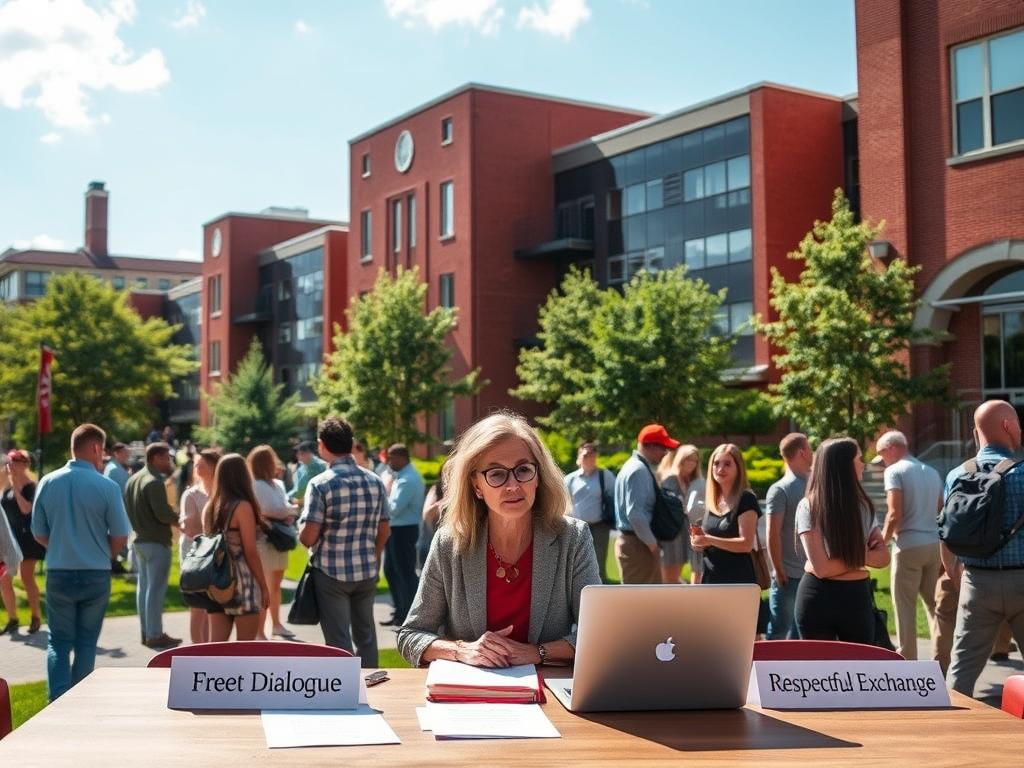
Free speech, a cornerstone of democratic society, is under scrutiny at Indiana University, where President Pamela Whitten has charged the University Faculty Council with a significant task. As the institution grapples with modern challenges to expression both on campus and online, Whitten seeks their guidance on whether to formally adopt principles that will underscore the university’s commitment to free expression. This move signals a deliberate approach to handling such a pivotal issue, ensuring that the voices of educators and thinkers are woven into the very fabric of policy-making.
The initiative reflects a growing trend among academic institutions to revisit their stance on free speech, adjusting policies to meet the evolving landscape of dialogue and debate. As classrooms and campuses become arenas for diverse opinions and robust discussions, universities are increasingly tasked with balancing the protection of free speech with the need for a respectful, inclusive environment. Indiana University’s step in this direction highlights its proactive stance in shaping an academic space that embraces critical discourse while safeguarding against harm.
Analyzing the potential adoption of free speech principles offers the university community an opportunity for self-reflection. Are current policies sufficient, or does the institution need a stronger framework to support open dialogue? Moreover, how can Indiana University cultivate a culture that encourages diverse viewpoints while minimizing potential conflicts arising from such engagements? These questions are pivotal as the council deliberates on recommendations that could redefine campus culture.
As Indiana University embarks on this journey, it faces the challenge of ensuring that any new principles reflect a wide spectrum of perspectives. Engaging not only faculty but also students and staff in the conversation can lead to a more comprehensive understanding of what free speech should mean in the 21st-century academic world. By fostering a dialogue that includes all stakeholders, the university can create a policy that truly resonates with its community.
In conclusion, as President Whitten looks to the University Faculty Council for guidance, there’s a sense of anticipation about the paths this endeavor might carve out. It is an opportunity not just to outline principles, but also to demonstrate leadership in cultivating an environment where free speech and respect coexist. Indiana University stands on the brink of a potentially transformative period, one that reaffirms its dedication to an inclusive and dynamic academic experience.