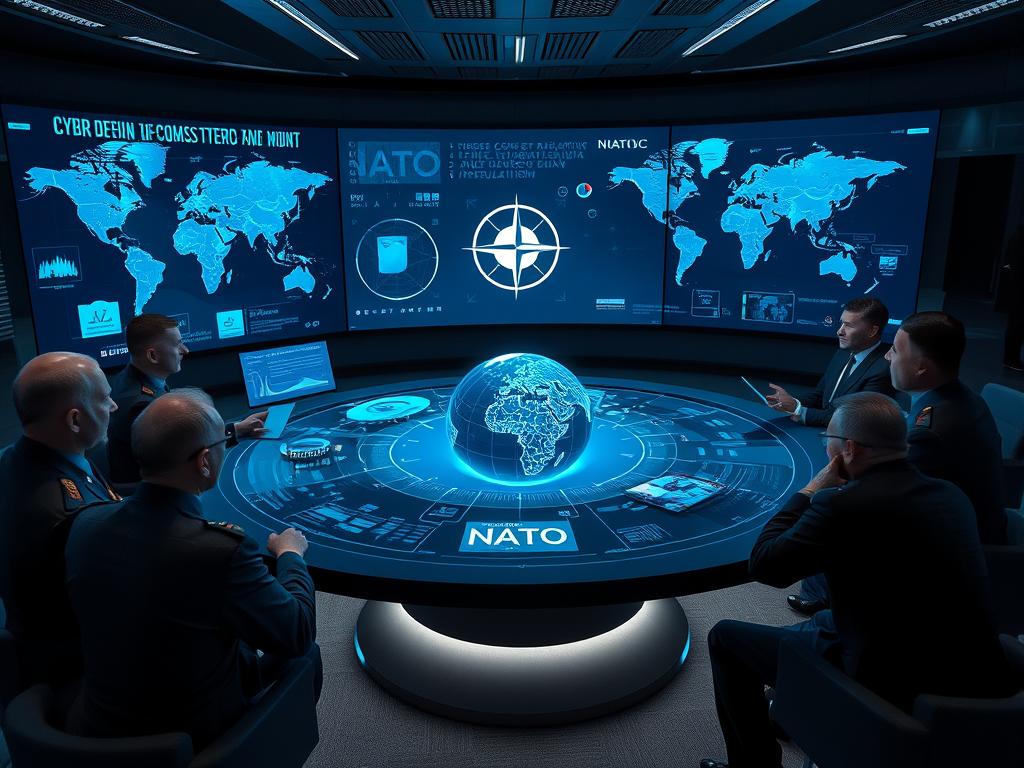
As geopolitical tensions simmer globally, NATO is reevaluating its strategies to counteract what it describes as Russia’s ‘hybrid threats’. These threats include cyberattacks and information manipulation which, unlike direct military confrontations, blend subtlety with impact. It’s a confrontation not of soldiers and tanks, but codes and bytes, demanding a recalibration of defense strategies. This shift towards pre-emptive cyber operations suggests NATO is ready to take an assertive stance in the invisible but potent digital battlefield.
Russia’s alleged hybrid warfare strategies have been a persistent thorn in NATO’s side, with actions ranging from cyber sabotage to disinformation campaigns designed to undermine democratic structures. This new reality requires NATO to not only develop sophisticated defensive measures but also to consider ‘more aggressive’ responses. By adapting to this new form of warfare, NATO might engage in cyber operations designed to neutralize threats before they fully materialize, turning defense into a proactive endeavor.
NATO’s response to these challenges reflects a broader shift towards recognizing cyberspace as a critical domain of modern warfare. Just as the alliance has fortified its land, sea, and air defenses, it now must similarly bolster its cyber capabilities. The implications of escalating cyber confrontations are profound, potentially reshaping the rules of engagement in international conflicts. Yet, this raises questions about the fine line between deterring threats and provoking further escalation in the digital realm.
However, these considerations are not without ethical and strategic complexities. Pre-emptive cyber operations could set a precedent that other nations may follow, leading to an unpredictable digital arms race. Moreover, defining clear parameters for such operations is challenging, as the intangible nature of cyberspace complicates traditional concepts of sovereignty and defense. NATO must therefore balance its need for effective deterrence with a commitment to international norms and stability.
In conclusion, as NATO deliberates on its approach to Russia’s hybrid threats, it stands at a crossroads where cutting-edge strategy meets diplomatic caution. The alliance’s decisions in the coming years could shape not just the future of cyber warfare, but also the broader framework of international peace and security. The task at hand is not only to protect member states but to do so in a manner that upholds the principles of a rules-based international order amid evolving technological challenges.