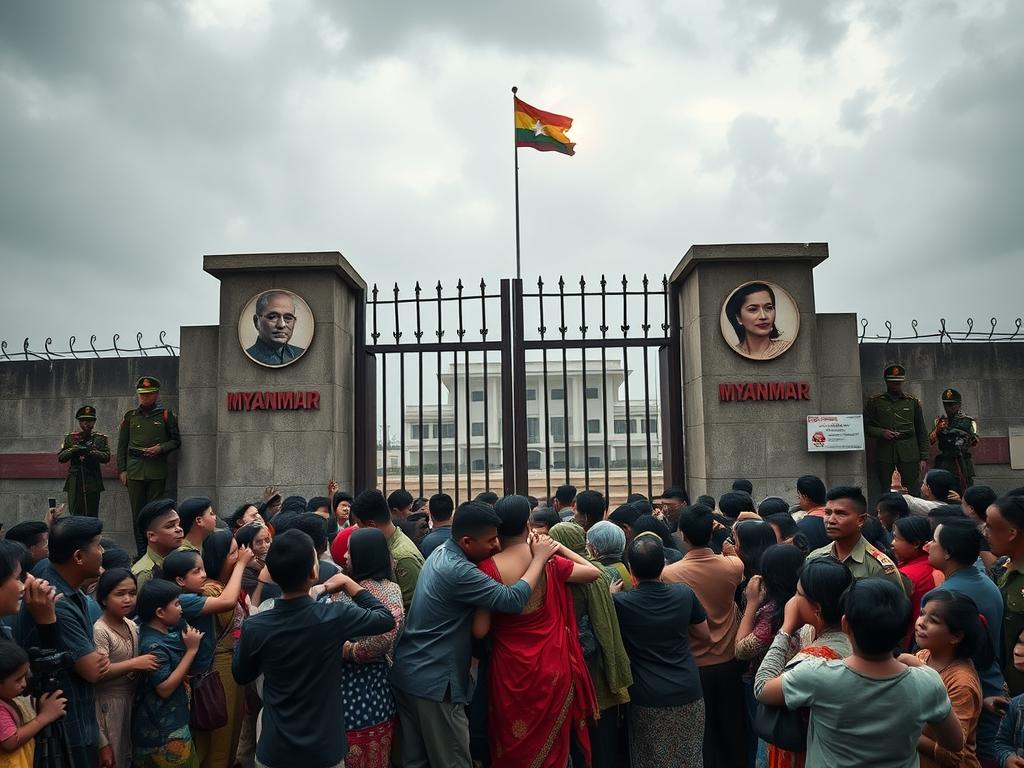
In a dramatic move that has caught the world’s attention, Myanmar’s military regime has announced the release of over 3,000 prisoners. This comes just weeks before the country is set to hold elections, an event many hope will steer the nation towards a more democratic path. The amnesty, which also sees the dropping of charges against more than 5,500 individuals, signifies an attempt by the junta to present a more lenient facade. However, questions remain about whether this gesture is genuine or simply a strategic maneuver to gain international favor.
The timing of this mass release, occurring right before the December elections, suggests a calculated effort to placate both domestic and international critics. By freeing those convicted under the incitement law—an often-criticized statute used to silence dissent—the military appears eager to improve its standing and possibly even influence voter turnout. Yet, the absence of prominent figures like Aung San Suu Kyi from the list of released prisoners underscores the selective nature of these amnesties. Her continued detention highlights a contentious electoral landscape marred by the lack of true political freedom and fairness.
For the families of those released, the moment is bittersweet. While they celebrate their loved ones’ newfound freedom, there is an overarching sense of uncertainty about the future. Among those freed are influential individuals like Kyi Toe, who remains steadfast in his dedication to the NLD’s ideals. This resilience among former detainees suggests that the seeds of political struggle remain deeply rooted, even as the military attempts to cultivate a more controlled political environment.
The prospect of free and fair elections remains shadowed by concerning factors. Critics highlight the absence of a free press and the detention of numerous NLD leaders as major impediments. Despite the seeming magnanimity of the junta’s amnesty, the broader political environment still teeters on the edge, with over 22,000 political prisoners like Suu Kyi serving sentences that many believe are politically motivated. Such conditions question the legitimacy of the electoral process and challenge any illusion of genuine progress.
In conclusion, Myanmar’s pre-election amnesty can be perceived as a strategic ploy designed to project an image of reconciliation and political softening. However, with key opposition figures still imprisoned and a media landscape far from liberated, the move does little to mask the underlying autocratic grip. As Myanmar approaches its election day, the world watches with caution, hoping for meaningful change but remaining wary of superficial gestures.