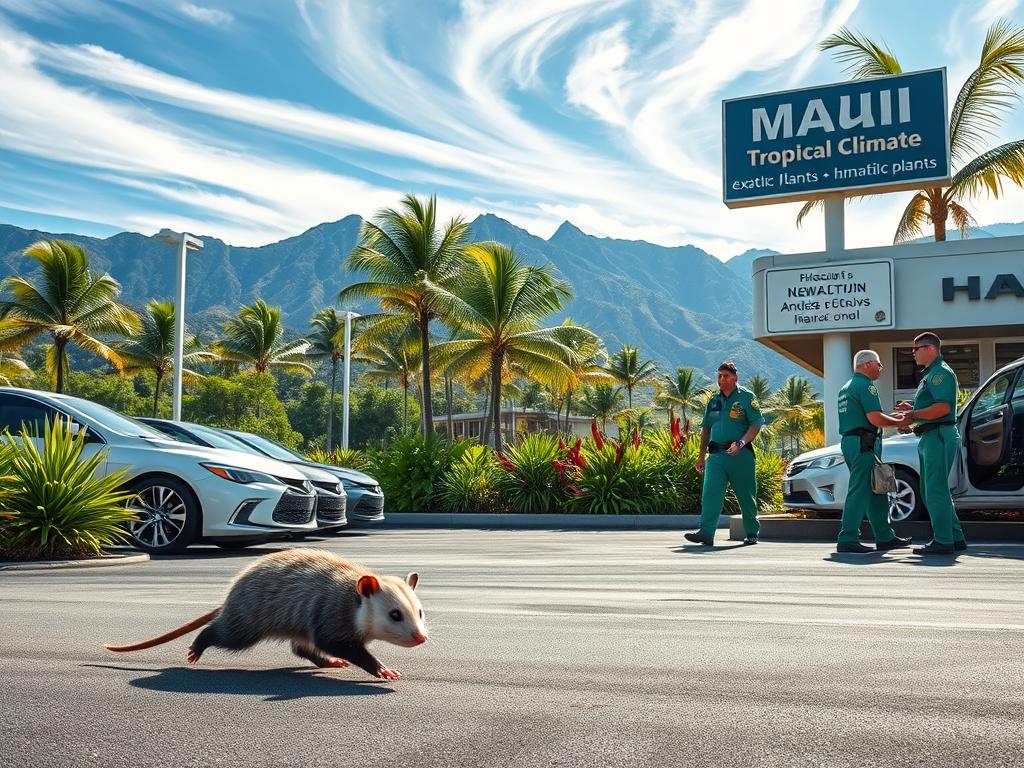
Maui is widely celebrated for its breathtaking landscapes and unique wildlife, but the ecosystem’s delicate balance is often threatened by invasive species. Recently, an incident at a local car dealership spotlighted this issue when an opossum made an unexpected appearance on the premises. Authorities were promptly alerted, and the opossum was euthanized as part of standard procedure for handling non-native species. This decisive action underscores the ongoing battle to preserve Hawaii’s native habitats.
An opossum encountering a car dealership might sound like an adventurous case of roadkill prevention gone wrong, but the reality is far more serious. Opossums, native to North America, pose significant risks to Hawaii’s native plant and animal life. Invasive species like these can upset the ecological balance, outcompete native creatures for resources, and introduce unfamiliar pathogens.
The concern over rabies was also a pivotal factor in the authorities’ swift response. While Hawaii is fortunate to maintain a rabies-free status, the introduction of potentially infected animals could have disastrous consequences for both humans and animals. The opossum in question was sent for rabies testing as a precaution, aligning with Hawaii’s stringent biosecurity measures aimed at preventing zoonotic diseases from entering the islands.
While the decision to euthanize the opossum might seem harsh to some, it reflects a broader strategy of wildlife management that prioritizes the protection of Hawaii’s native species. By controlling and mitigating the impact of invasive animals, authorities aim to safeguard the region’s biodiversity. This approach may sometimes lead to difficult choices, but it’s critical for maintaining the ecological balance that supports both Maui’s environment and its economy.
In conclusion, the incident at the Maui car dealership serves as a vivid reminder of the intricate web of challenges in preserving Hawaii’s unique ecosystems. As local wildlife officials continue their efforts to prevent the introduction and spread of invasive species, public awareness and cooperation become key. Each encounter with non-native species is not just an isolated event but part of a larger narrative highlighting the need for vigilance in protecting the islands’ natural heritage for future generations.