






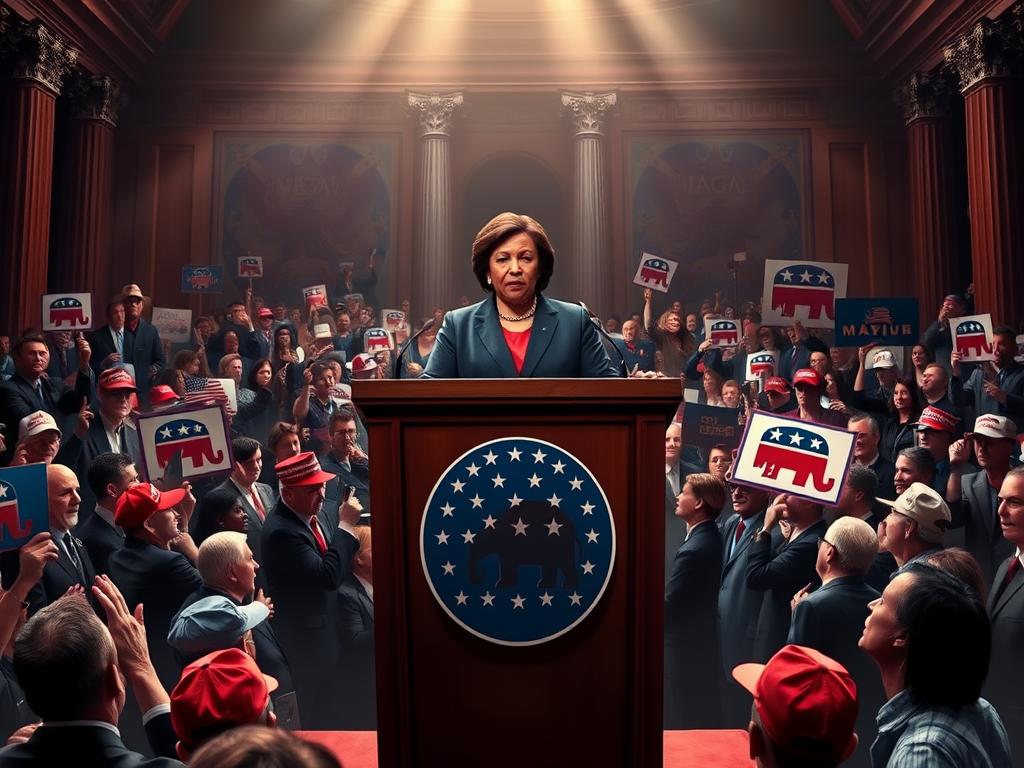
In a surprising turn of events, Congresswoman Marjorie Taylor Greene, a notable political figure from Georgia, has announced her departure from the House of Representatives. This development marks a significant shift within the Make America Great Again (MAGA) movement, especially given her past alignment and subsequent clashes with former President Donald Trump. Greene’s decision has raised eyebrows and sparked discussions on the future direction of the MAGA platform.
Greene’s political journey has been anything but conventional. Her initial rise to prominence was fueled by her staunch support for Trump’s policies and her combative presence in the political arena. However, her recent disagreements with Trump indicate underlying divisions within the MAGA movement. This split is noteworthy as it suggests a possible reconfiguration of political alliances and priorities among the movement’s adherents.
The nature of Greene’s departure points to a broader theme in politics: the difficulty of maintaining ideological purity in a fast-evolving landscape. While the MAGA movement was unified under Trump’s leadership, Greene’s exit hints at new factions vying for influence. This splintering could lead to a more heterogeneous political environment where different sects of the movement assert their own visions and agendas, possibly leading to both increased innovation and fragmentation.
From a strategic standpoint, Greene’s resignation opens up new opportunities for both established and emerging figures within the political spectrum to redefine what the movement represents. As Greene exits, there may be an influx of new voices eager to reshape the narrative, potentially bringing fresh perspectives to the fore. It remains to be seen how these dynamics will play out, but they offer a captivating glimpse into the constantly shifting American political theater.
As Greene steps down, the implications for the MAGA movement are profound. Her departure begs the question of how movements that once thrived on unified messaging and leadership adapt when faced with internal discord. It also highlights the role of individual agency in shaping political narratives. Ultimately, Greene’s choice underscores a transformative moment in American politics where faith in one’s convictions may indeed stand in defiance of imposing political mountains, setting the stage for new narratives yet to unfold.