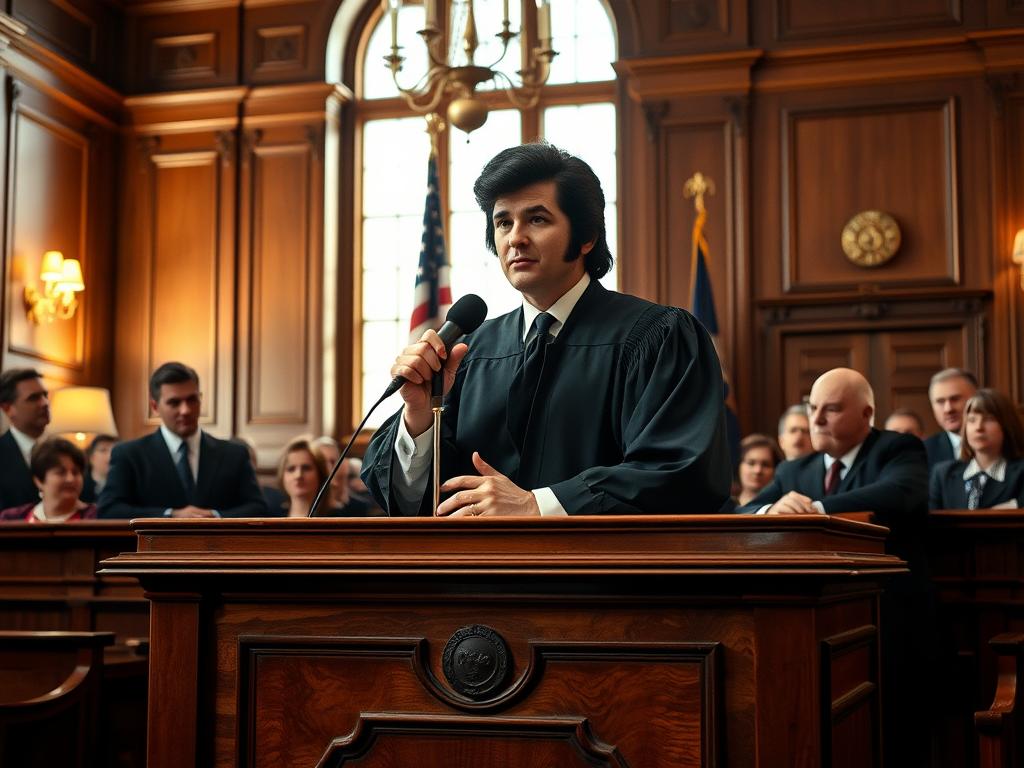
In an unexpected blend of law and rock ‘n’ roll, St. Charles County Circuit Judge Matthew Thornhill has agreed to leave the bench following a suspension. Known for donning an Elvis wig and serenading his courtroom with The King’s hits, Thornhill was more than just a jurist; he was a showman in robes. However, his medley of music and justice hit a sour note with the Missouri judicial oversight body, leading to an agreement that spells the end of his unorthodox judicial career.
The agreement allows Thornhill to avoid a potentially grueling disciplinary hearing, which could have been as troubling as the critical legal battles he presided over. Opting for a six-month unpaid suspension, Thornhill will return to his courthouse stage for 18 months before making a final exit. During this tenure, he presumably will keep his Elvis attire in the closet, focusing instead on conventional courtroom decorum.
Judges are often icons of sobriety and seriousness, embodying the law with every gavel strike. Hence, Thornhill’s flair for impersonation raises questions about the balance between personality and professionalism. While some may argue that his antics were a harmless effort to ease the fledgling nerves of courtroom attendees, others see them as undermining the gravitas of judicial proceedings. Justice, after all, is supposed to be served plain without theatrics.
This incident suggests a broader discourse around the expectations of those who hold public office, especially in roles that demand the utmost respect and objectivity. While humanizing the judiciary could facilitate better public relations, it’s crucial to delineate between relatable humanity and potential disrespect of the justice system. Thornhill’s story is a reminder of the constant tightrope that public figures walk, balancing visibility with the gravity of their responsibilities.
As Judge Thornhill prepares for his final act on the bench, his Elvis escapades are bound to be remembered with mixed emotions—a chuckle from some and a headshake from others. His departure is a chance for reflection on why courtroom traditions exist and the importance of maintaining a certain level of decorum. Though this chapter closes, it invites further dialogue on judicial conduct and the evolving face of those who arbitrate our laws.