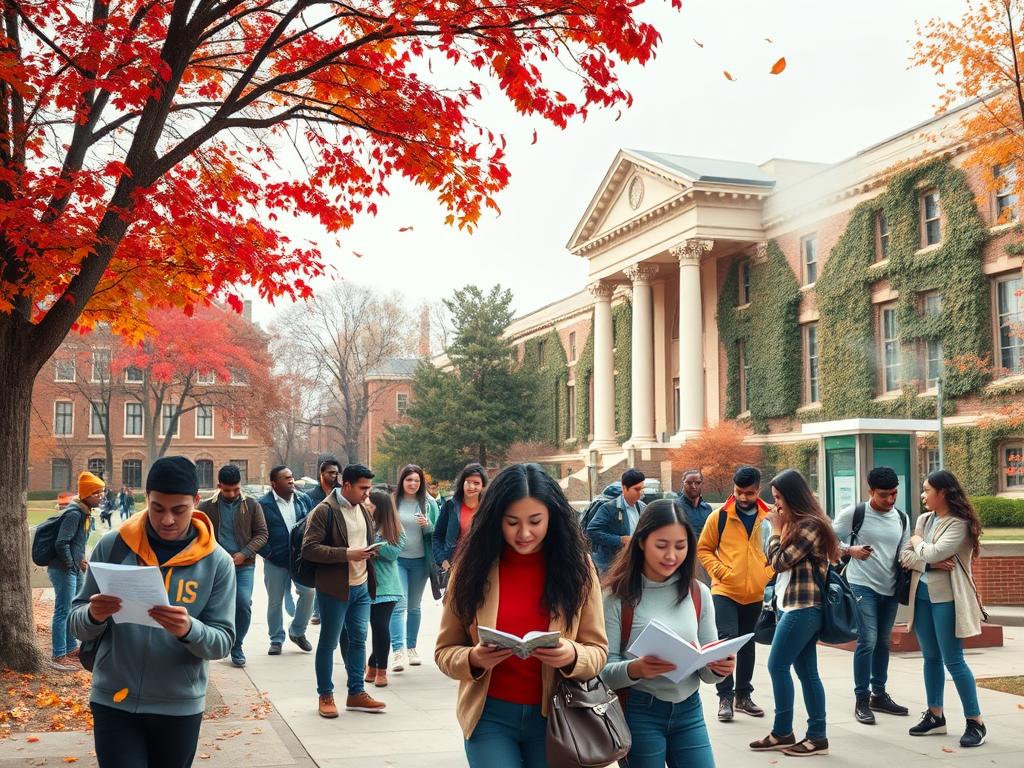
In a seemingly paradoxical turn of events, U.S. colleges have witnessed a persistently strong enrollment of international students this fall. This trend comes despite widespread concerns about stringent visa policies under the Trump administration, which many feared might deter foreign scholars. Surprisingly, the overall decline in the number of international students is minimal, suggesting a robust inclination towards U.S. education. However, the real story lies in the subtle shifts within these statistics, as the number of first-time enrollees has notably dipped.
This nuanced change in enrollment patterns reveals underlying uncertainties that foreign students face. The allure of American universities remains strong, driven by their global reputation and extensive academic offerings. Yet, the climate of apprehension regarding visa policies has led to hesitancy among prospective students. This predicament has not only impacted first-time enrollees but has also cast a shadow over the decision-making processes of those still considering where to pursue their higher education.
While the impact of visa challenges is tangible, other factors are likely influencing these enrollment dynamics. Global economic conditions, geopolitical tensions, and the lingering effects of the COVID-19 pandemic may play significant roles. These issues are contributing to an educational landscape where once guaranteed international trust and enthusiasm for U.S. institutions are now tinged with caution. In such an environment, diversifying recruitment strategies and reinforcing the support systems for international students becomes imperative for U.S. colleges.
Colleges must proactively address these challenges to sustain and potentially grow their international populations. Strengthening international partnerships, offering transparent pathways to secure student visas, and assuring a welcoming environment are critical steps. By adopting inclusive policies and practices, institutions not only demonstrate their commitment to global diversity but also enrich the academic experience for all students, cultivating a truly internationalized campus culture.
The current steadiness of international enrollment can be seen as both a testament to the enduring draw of U.S. education and a clarion call for adaptation amidst an evolving global context. As educational policies continue to shift, institutions must balance tradition with innovation, fostering an environment that remains attractive even against the backdrop of political and economic uncertainties. By doing so, they can ensure that international enrollment not only holds steady but thrives, safeguarding the cultural and intellectual wealth it brings to U.S. campuses.