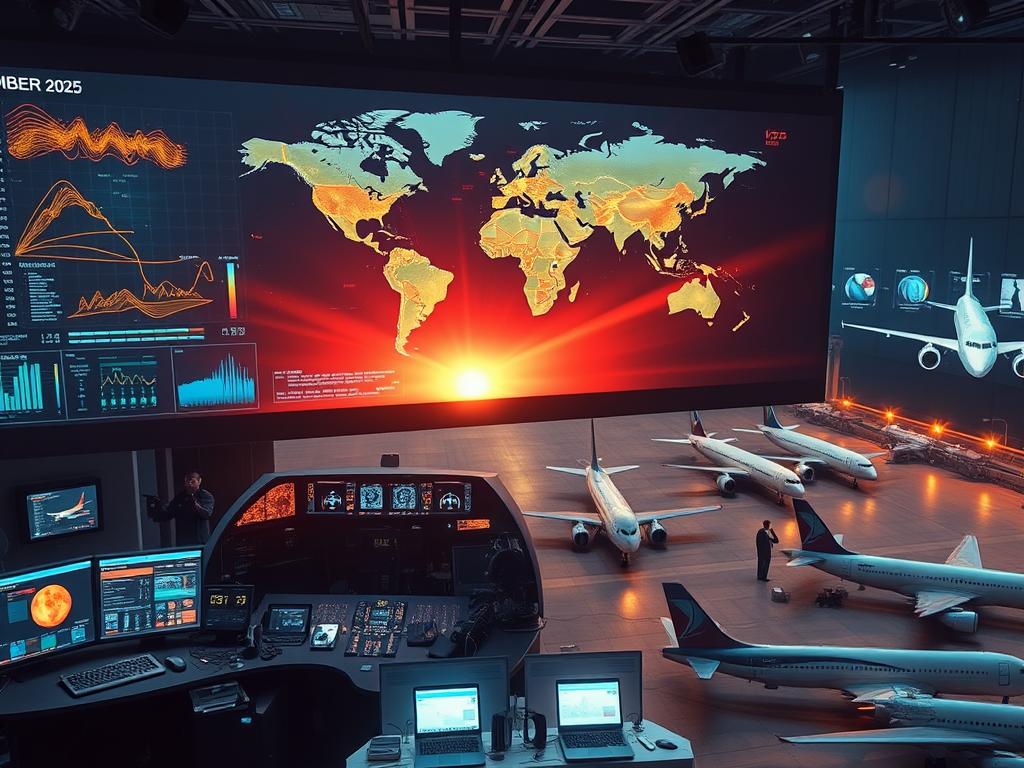
The aviation world is always abuzz with the hustle of innovation and challenges, and November 2025 is no different as India’s Directorate General of Civil Aviation (DGCA) makes a decisive call to ground the Airbus A320 family. This action stems from a global alert concerning potential corruption of vital flight data due to solar radiation. This precautionary grounding is aimed at addressing concerns over the safety of operations, a testament to the aviation industry’s commitment to passenger safety amidst unpredictable cosmic conditions.
At the heart of this issue is a peculiar but serious glitch related to solar activity affecting sophisticated onboard systems. Intense solar radiation, a sporadic and natural phenomenon, has the potential to interfere with the advanced avionics of aircraft such as the A320. Data corruption within flight management systems can lead to inaccurate flight paths and erratic system responses, scenarios that naturally lead to heightened safety concerns. While modern aircraft are equipped with robust shielding against such environmental disturbances, the unpredictability of radiation levels necessitates a cautious approach.
This global aviation hiccup has prompted airlines to scramble for solutions to address routes, reschedule flights, and manage passenger expectations diplomatically. The industry heavily relies on the Airbus A320 family, known for their efficiency and reliability, making this grounding particularly disruptive. Airlines now face the dual challenge of implementing the necessary software updates while managing logistical hurdles. Across the world, teams of engineers work tirelessly to deploy these fixes, aiming to mitigate the effects of solar interference and restore full operational capacity swiftly.
In stepping up to this challenge, the responsibilities of both regulators and manufacturers are being put to the test. The DGCA’s proactive stance highlights the intricate balance between operational efficiency and safety imperatives. The directive serves as a reminder of the collaborative nature of global aviation, where issues arising from technological vulnerabilities call for collective resolutions. Airlines are urged to implement the necessary software patches as a matter of urgency, forging a path to resuming normalcy with upgraded resilience against future solar disruptions.
In conclusion, the grounding of the A320 family over solar radiation concerns is a temporary but necessary measure to ensure passenger safety, reflecting the complexities of modern aviation. It serves as a crucial learning point about the unpredictable challenges posed by cosmic forces, reminding all stakeholders of the continuous need for vigilance and innovation. As engineers work on implementing technological solutions, passengers and airlines alike look forward to a time when the skies are once again open for all, free from the shadow of solar disturbances.