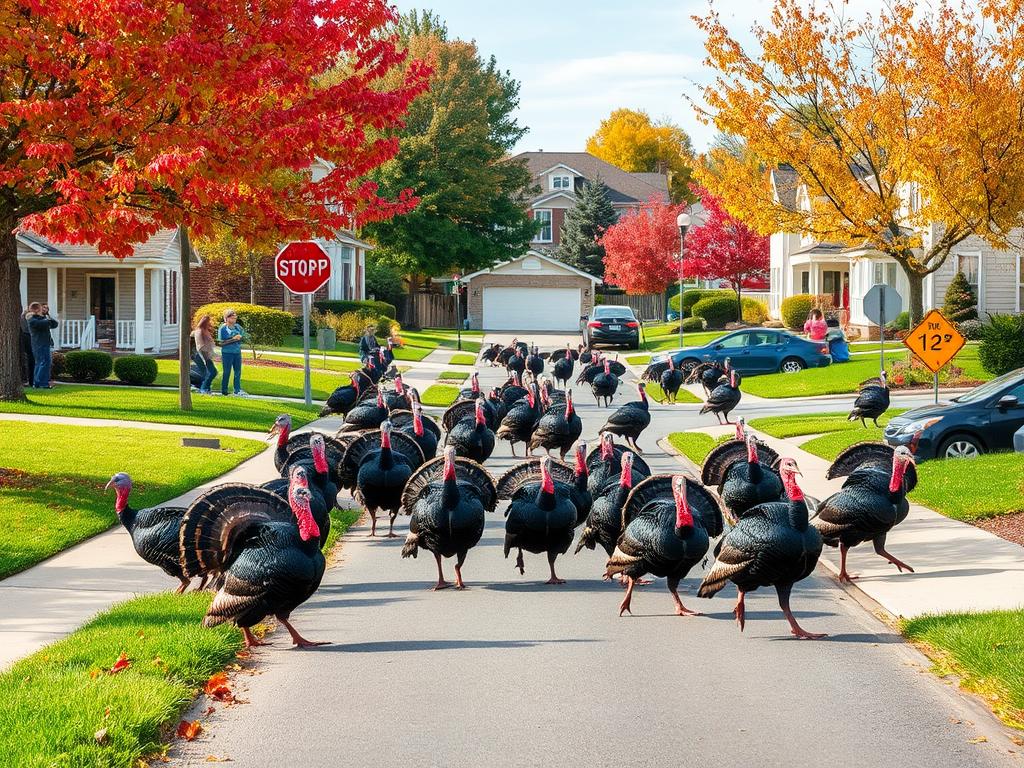
With the turning of leaves and the crisp air setting in, it seems that turkeys are not just reserved for our Thanksgiving tables but are making appearances much earlier this year. In certain regions, it’s becoming increasingly common to see flocks of wild turkeys strutting about in neighborhoods and parks, sparking both amusement and curiosity among locals.
The phenomenon of turkeys venturing into suburban areas may initially appear charming, yet it offers a fascinating glimpse into wildlife adaptation. As urban areas expand and natural habitats become fragmented, many wildlife species, including turkeys, are finding themselves navigating their way into human territories. This has led to interesting encounters but has also raised questions about how we share our spaces with these visitors.
This increased visibility of turkeys can provide an excellent educational opportunity for children and adults alike. Observing these birds in their pseudo-natural habitat can spark curiosity and provide a tangible connection to nature amidst the concrete. Engaging with these sightings can lead to a broader understanding of local ecosystems and encourage the community to consider conservation efforts to help wildlife thrive amidst human developments.
However, the march of the turkeys isn’t without its challenges. Residents might find themselves startled by the sudden appearance of these large birds, which can sometimes obstruct traffic or cause minor disturbances in gardens. Balancing respect for local wildlife and ensuring a harmonious coexistence is vital. Encouraging communities to be mindful and considerate of these turkeys is the first step towards a peaceful cohabitation.
Ultimately, the presence of turkeys in our neighborhoods is a reminder of the delicate balance between urban growth and wildlife preservation. Their gobbles may not be commonplace, but the sight of them can serve as a gentle nudge, reminding us that nature is all around. Embracing this visit with understanding can enrich our lives and spur actions towards maintaining the integrity of local wildlife habitats.