






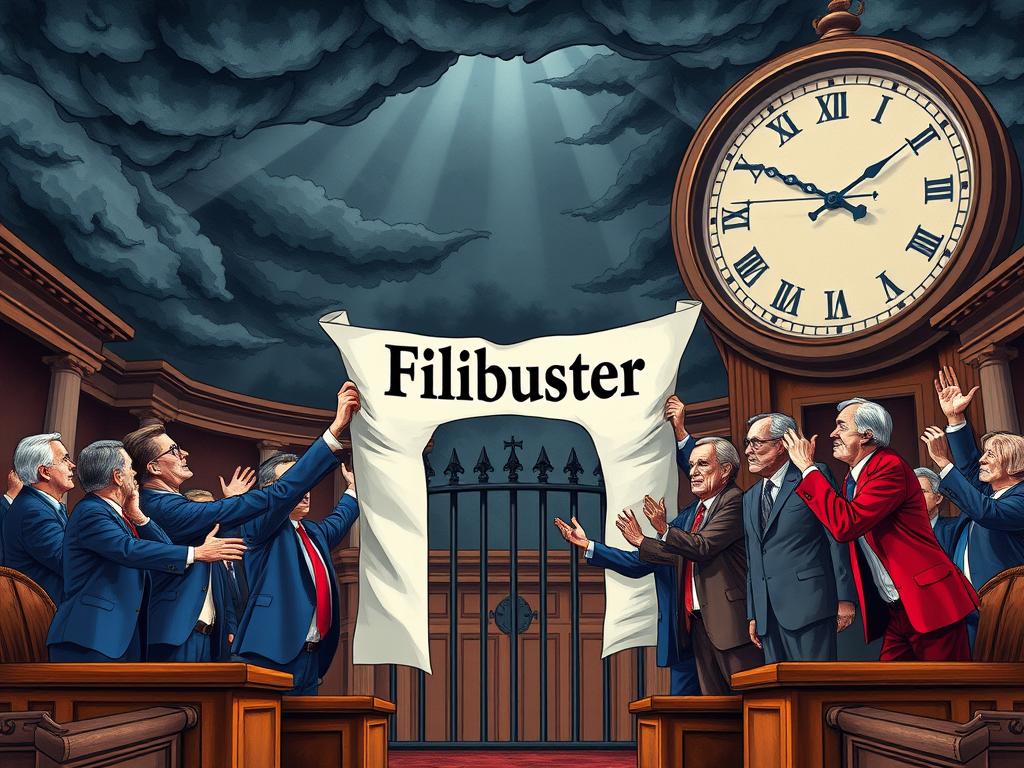
In recent years, the political landscape in the United States has been characterized by stark division and frequent stalemates, which have left many citizens frustrated. At the heart of this gridlock is often the filibuster—a Senate rule that allows a minority to extend debate indefinitely, effectively halting legislative progress. As Congress grapples with the consequences of an extended government shutdown, some voices are calling for the elimination of the filibuster to expedite decision-making processes. However, is dismantling this procedural tradition necessarily the best path forward?
The filibuster is sometimes disparaged as an arcane procedural weapon, but its purpose lies deeper than merely obstructing legislation. It acts as a safeguard, ensuring that major policy shifts are not made solely on fleeting majority whims. By requiring a supermajority to close debate on a bill, the filibuster encourages wider consensus and more robust discussion. This deliberative process can prevent rushed decisions that might overlook minority viewpoints, fostering a more balanced legislative outcome.
Critics of the filibuster often argue that it stymies progress, citing instances where important legislation languished due to minority objections. While it’s true that the filibuster can slow down the legislative process, such delays ensure that the legislation passed is more thoroughly vetted. History offers multiple examples where hasty, unopposed decisions led to unintended consequences. The requirement for extended debate can thus provoke careful consideration and, ideally, result in more thoughtful and comprehensive laws.
Moreover, the abrupt removal of the filibuster could further politicize the Senate, transforming it into a mirror of the more partisan-driven House of Representatives. Historically, the Senate has been seen as a moderating force, leveraging the filibuster to ensure that all voices, regardless of party strength, are heard. Eliminating this procedural rule might encourage a tyranny of the majority, where the leading party pushes through its agenda unilaterally, leaving little room for bipartisan engagement and negotiation.
In conclusion, while the temptation to remove the filibuster to break through legislative gridlock is understandable, it is essential to consider the long-term implications of such a move. Maintaining the filibuster respects the democratic principle of protecting minority opinions and encourages thorough policymaking processes. As the nation moves past the latest shutdown, lawmakers should reaffirm their commitment to dialogue and consensus—not haste—for the sake of more enduring and equitable governance.