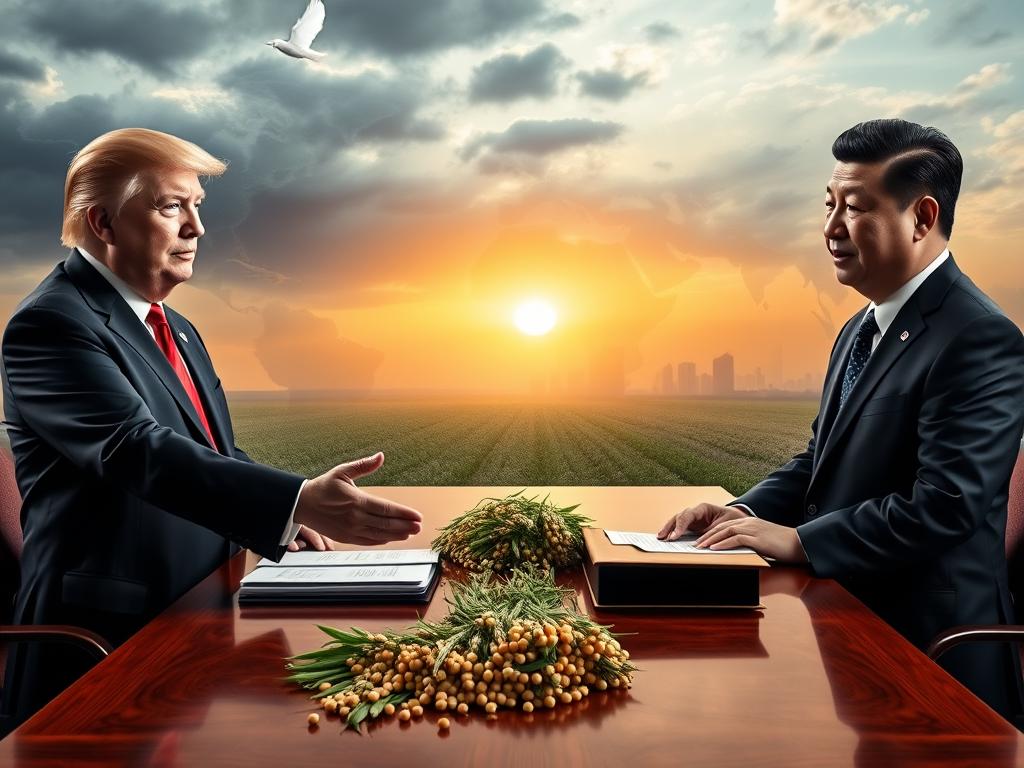
In a surprising yet strategic move, Donald Trump recently announced his intention to visit China in April, followed by hosting Chinese President Xi Jinping later in the year. This announcement comes on the heels of a phone conversation between the two leaders primarily centered on the ongoing Russia-Ukraine conflict and the dynamics of agricultural commerce, notably soybeans—a critical export for the United States. This planned exchange highlights a potential thaw in relations amidst geopolitical tensions and offers a glimmer of hope for continued diplomatic engagement.
Trump’s diplomatic overture signals a complex interplay of international relations, where economic interests interlace with political strategies. The focus on soybeans reflects a long-standing economic diplomacy tool, as agricultural exports often serve as both a point of contention and collaboration between the two nations. With the backdrop of the Russia-Ukraine war, these conversations may take on added significance, potentially impacting global trade dynamics as well as domestic economies in the U.S. and China.
As Trump prepares for his visit, the world will be watching carefully to interpret the nuances of this rendezvous. From tackling trade imbalances to addressing broader geopolitical concerns, the interactions between these global leaders could set the tone for future U.S.-China relations. Given the strained relations in recent years, this meeting represents a pivotal moment for both countries to reassess and recalibrate their approach to mutual cooperation and conflict resolution.
Analyzing past interactions between the U.S. and China, it’s clear that diplomatic efforts are often fraught with challenges. However, they also reveal opportunities for synergies in key sectors. Although the focus might be on agriculture and conflict resolution now, the ripple effects can touch technology, climate change, and even human rights dialogues. Thus, this visit could serve as a catalyst for broader discussions that transcend the immediate topics at hand.
This upcoming season of diplomacy has the potential to redefine the U.S.-China narrative, transitioning from a stance of cautious engagement to more open dialogue. As both nations stand at the crossroads of concerted efforts and competing interests, the decisions made in these high-level exchanges will likely echo across the global stage for years to come. One can only hope that this diplomatic initiative leads to constructive outcomes, fostering a more stable and cooperative international landscape.